
In the early 20th century, there was an increasing push for self-government in Jamaica, fueled by dissatisfaction with the Crown Colony system and the hardships faced by the island’s population. In 1938, widespread unrest and strikes led to the formation of the first labour unions and political parties.
The Bustamante Industrial Trade Union (BITU), founded by Sir Alexander Bustamante, and the National Workers’ Union, founded by Norman Manley, played pivotal roles in Jamaica’s journey towards self-rule. The first general elections under Universal Adult Suffrage were held in 1944, marking a significant step towards independence.
The West Indies Federation and the road to independence
Jamaica joined nine other UK territories in the West Indies Federation in 1958. The union aimed to promote regional unity. However, this arrangement was short-lived, as Jamaicans voted against continued membership in a 1961 referendum. This move led to the eventual collapse of the federation.
Sir Alexander Bustamante, a labour leader who became prime minister when Jamaica achieved full independence, urged Jamaica’s withdrawal.
On 6 August 1962, Jamaica finally achieved independence from Britain with a new constitution enshrining its citizens’ rights and freedoms. This event marked the culmination of centuries of struggle, resistance, and determination by the Jamaican people.
Cuban crisis
Since gaining its independence, Jamaica has had its economic and political ups and downs, most notably in the 1970s when Prime Minister Michael Manley’s leftist statements and affiliations with Cuba led other nations to fear the country would become Communist.
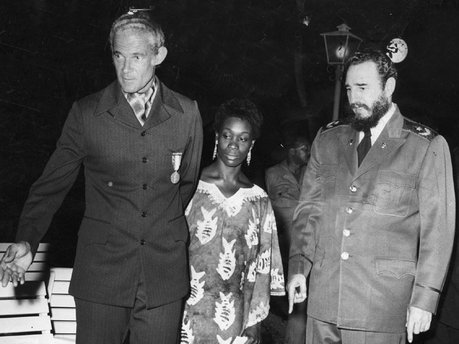
Manley, leader of the People’s National Party (PNP), became prime minister in 1972 and instituted wide-ranging socialist reforms. The resulting trade deficit brought Jamaica near bankruptcy by 1980. When he proved unable to revitalise the economy, Manley was voted out in 1980 following a turbulent election campaign that left about 800 Jamaicans dead, mainly due to clashes between political gangs. Election-related violence remained a part of Jamaica’s political scene into the 1990s.
The elections brought the conservative Labour Party, led by Edward P. G. Seaga, to power. Seaga was a former finance minister who repudiated socialism. He severed relations with Cuba, established close ties with the United States, and tried hard to attract foreign capital. However, weak prices for Jamaica’s mineral exports impeded economic recovery. In September 1988, Hurricane Gilbert caused an estimated $8 billion in property damage, leaving some 500,000 Jamaicans homeless.
Reelected in 1983, Seaga was defeated by Manley in the 1989 elections. Manley, who adopted free-market economic policies during his second term, resigned in 1992 due to ill health. He was succeeded as party head and prime minister by Percival J. Patterson, who led the PNP to a landslide victory in the 1993 elections. In 1997, the PNP won an unprecedented third consecutive electoral victory, capturing 56 per cent of the vote and taking most of the 60 seats in Jamaica’s Parliament.
Although sporadic violence did occur during the campaign, international observers reported that the 1997 election was one of the least violent elections in Jamaica’s recent history.
Jamaican identity and the legacy of the past
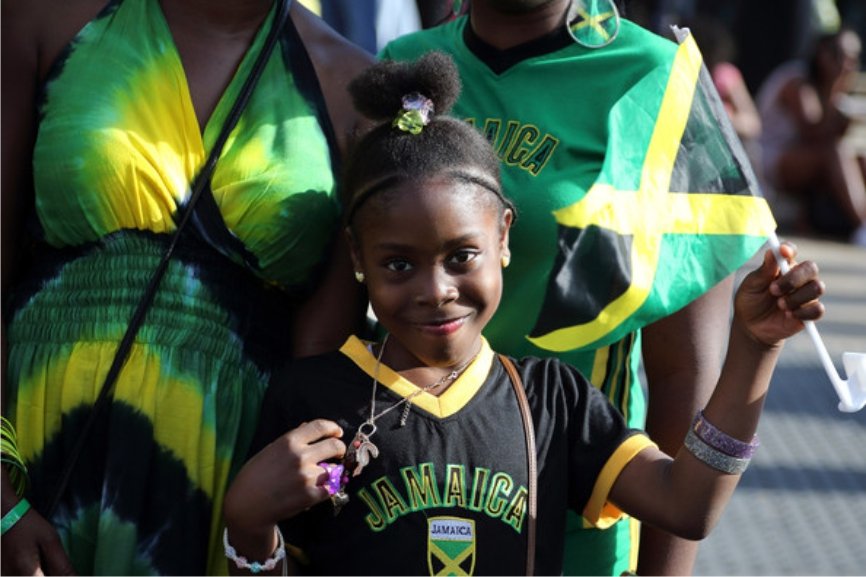
Jamaica’s history is a tapestry of diverse influences, from the indigenous Taino people to the European colonisers, African slaves, and other immigrant communities. This rich blend of cultures has given rise to a unique Jamaican identity, evident in the island’s language, music, cuisine, and traditions.
Jamaica is home to 2.5 million people. While the majority are of African descent, others are of Indian, Chinese, European, Lebanese and Jewish descent. Because of intermarriage and the mixture of all these cultures, Jamaica’s motto is “Out Of Many One People.”
It is also estimated that another 2.5 million Jamaicans and their descendants live outside of Jamaica. Historically, Jamaican emigration has been heavy. Since the United Kingdom restricted emigration in 1967, the significant flow has been to the United States and Canada. Jamaicans living overseas can be found in almost every country worldwide, but the majority live in Britain, Canada and the United States.
The history of Jamaica is a story of triumph over adversity, as its people have fought for freedom, justice, and self-determination in the face of colonisation, slavery, and oppression. From the Indigenous Tainos to the Maroons, from the British conquerors to the heroes of independence, Jamaica’s journey has been marked by courage, resilience, and an unyielding spirit. Today, the island stands as a proud and independent nation with a unique cultural identity that is a testament to its rich and diverse history.


Leave a Reply