

Britain often tells its modern story as one of gradual tolerance, polite reform, and multicultural evolution. Compared to the dramatic confrontations of the American civil rights era, the UK’s struggle for racial justice can seem quieter, less organised, even accidental. But that impression is misleading.
From the docks of Edwardian Liverpool to the streets of 1970s Brixton, Black Britons repeatedly organised, protested, fought discrimination, and built political movements. Far from being passive subjects shaped by empire, Black communities in Britain resisted racism, challenged state power, and demanded equality, sometimes through courts and campaigns, sometimes through strikes and riots, and sometimes through revolutionary politics.
The UK did have a Black civil rights movement. It simply looked different.
Early resistance: Liverpool and the first race riots
Long before post-war immigration reshaped Britain, Black communities already existed in port cities like Liverpool, Cardiff, London, and South Shields. Many were sailors, dock workers, or former colonial servicemen.
After World War I, competition for jobs and housing intensified. In 1919, Liverpool saw one of Britain’s earliest major racial flashpoints. White mobs attacked Black residents in the docks area, fuelled by unemployment, xenophobia, and tabloid agitation.
The violence culminated in the murder of Bermudian sailor Charles Wootton, who was chased into the River Mersey and drowned by a racist mob.
What matters historically is not just the violence, but the response. Black residents organised for protection, petitioned authorities, and demanded the right to remain in Britain. Their struggle established an early pattern: Black Britons asserting citizenship decades before the Windrush era.
The Windrush generation and the birth of organised activism
After the arrival of Caribbean migrants on the Empire Windrush in 1948, Britain entered a new phase.
Black migrants were invited as workers, but faced:
- housing discrimination (“No Irish, No Blacks, No Dogs” signs)
- workplace exclusion
- police harassment
- racist street violence
Tensions exploded in the 1958 Notting Hill riots, where white gangs attacked Caribbean residents over several nights.
But again, the key story is resistance.
Out of these experiences came early civil rights campaigning:
- community defence organisations
- legal challenges to discrimination
- Caribbean newspapers exposing racism
- grassroots political networks
One major figure emerged here:
Claudia Jones
Claudia Jones, a Trinidad-born communist and journalist deported from the United States, became one of the most influential Black political organisers in Britain.
She founded the West Indian Gazette, Britain’s first major Black newspaper, and organised what became the precursor to the Notting Hill Carnival, not as a party, but as a political response to racist violence.
Jones framed Black Britons not as immigrants begging acceptance, but as citizens demanding rights.
Radical politics: The British Black Panthers
By the late 1960s, younger Black Britons rejected slow reform and embraced militant activism.
The British Black Panther Movement, founded in 1968, was not a direct copy of the American Panthers, but a distinctly British organisation.
Its leaders included:
Their demands included:
- an end to racist policing
- better housing
- educational equality
- immigration rights
- community self-defence
They organised demonstrations, legal defence campaigns, and political education programmes.
One defining moment came with the Mangrove Nine trial, where activists were arrested after protesting police harassment of the Mangrove restaurant in Notting Hill.
For the first time in British legal history, a court formally acknowledged evidence of racial prejudice within the Metropolitan Police.
This was Britain’s equivalent of a landmark civil rights courtroom victory.
The streets erupt: Brixton and the urban uprisings
By the late 1970s and early 1980s, tensions between police and Black youth had reached breaking point.
Aggressive stop-and-search policing under the “sus law” disproportionately targeted Black men.
In April 1981, Brixton exploded.
The 1981 Brixton riot saw:
- hundreds injured
- widespread street battles
- buildings burned
- mass arrests
Similar uprisings followed in:
- Toxteth (Liverpool)
- Handsworth (Birmingham)
- Moss Side (Manchester)
These were not random riots but political explosions rooted in unemployment, policing, and systemic racism.
The government commissioned the Scarman Report, which, for the first time, acknowledged racial disadvantage and institutional problems in policing.
Let’s not forget the Black People’s Day of Action following the devastating fire in New Cross that killed 13 young people. Or the Battle of Lewisham, where anti-fascists confronted racism head-on.
Again, protest forced reform.
From Brixton to Stephen Lawrence: Institutional racism named
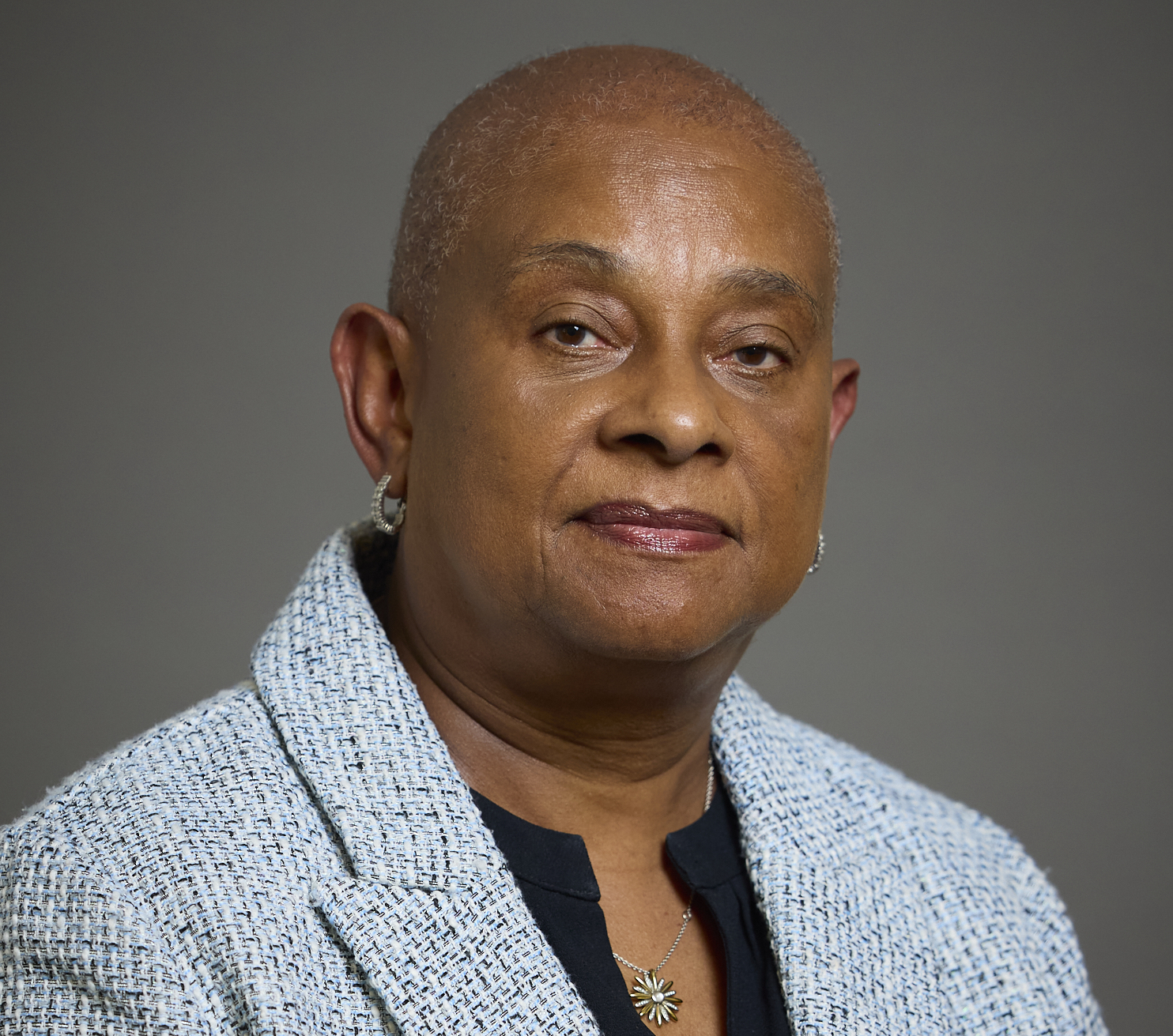
The struggle did not end with the 1980s uprisings. In 1993, the racist murder of Black teenager Stephen Lawrence in southeast London became a watershed moment. The initial police investigation was marred by incompetence and indifference, and no one was convicted. But Stephen’s mother, Doreen Lawrence, refused to accept silence. For years, she pursued justice through the courts, the media, and Parliament, transforming personal grief into national accountability.
Her persistence led to the 1999 Macpherson Inquiry, which concluded that the Metropolitan Police was “institutionally racist” — the first time such language was formally used in British public life. The inquiry reshaped policing standards, evidence rules, and race relations policy. Doreen Lawrence’s campaign proved something fundamental about Black British resistance: it was not only expressed through protest and uprising, but through relentless, strategic engagement with the state itself. Her work extended the civil rights struggle into the heart of British institutions.
Beyond riots: everyday legal and political victories
The British civil rights movement was not only about street confrontation.
It also achieved structural change through sustained activism:
- The 1965, 1968, and 1976 Race Relations Acts
- creation of the Commission for Racial Equality
- anti-discrimination employment protections
- legal limits on racist housing practices
Grassroots organisations, trade union alliances, Black women’s groups, and youth movements all contributed.
Figures such as:
- Paul Stephenson (leader of the Bristol Bus Boycott)
- Roy Hackett
- Yvonne Conolly
proved that British civil rights activism included boycotts, electoral victories, and institutional breakthroughs, not just radical protest.
The Bristol Bus Boycott of 1963 successfully forced the end of a colour bar in public employment.
It was Britain’s Montgomery Bus Boycott moment.
Why the British movement looks “invisible”
Three reasons explain why many people assume Britain had no Black civil rights struggle.
First, the UK never had formal segregation laws like Jim Crow, so the injustice was less legally explicit but still deeply real in housing, employment, and policing.
Second, British political culture prefers the myth of gradual reform over confrontation, thereby downplaying the role of protest.
Third, American civil rights history dominates global media, overshadowing British activism.
But the historical record shows clearly that Black Britons organised. They resisted, and they forced change.
The real legacy
The British Black civil rights struggle was not a single movement led by one charismatic leader.
It was a century-long continuum.
From dock workers in Liverpool defending their homes in 1919, to Caribbean journalists building political networks in the 1950s, to Panthers confronting the courts in the 1970s, to youth uprisings forcing national inquiries in the 1980s, the message remained consistent:
Black Britons were never passive subjects of empire.
They were political actors who demanded their place in the nation.
The story of Britain’s racial equality is not one of generosity from above.
It is one of pressure from below.


Leave a Reply