

Geographically, the term America doesn’t refer to a single country. It refers to a vast landmass stretching from the Arctic Circle to the southern tip of Patagonia, which English speakers usually divide into North America and South America, with Central America and the Caribbean forming the connecting region.
Together, these regions contain 35 sovereign countries:
- North America: Canada, United States, Mexico
- Central America: 7 countries (Belize, Guatemala, El Salvador, Honduras, Nicaragua, Costa Rica, Panama)
- Caribbean: 13 independent island nations (including Cuba, Jamaica, Haiti, Dominican Republic, Barbados, Trinidad and Tobago, and others)
- South America: 12 countries (including Brazil, Argentina, Colombia, Peru, Chile, Venezuela)
In addition, the Americas include numerous territories under the control of European states. Several European countries maintain territories in the Americas, primarily in the Caribbean, North Atlantic, and South America, as overseas departments, collectivities, or constituent countries.
Major examples include French Guiana, Greenland (Denmark), various British Overseas Territories (e.g., Bermuda and the Cayman Islands), and Caribbean islands belonging to France and the Netherlands.
US territories include Puerto Rico and the US Virgin Islands (Caribbean), Guam, the Northern Mariana Islands, and American Samoa (Pacific). These are unincorporated, meaning the US Constitution does not fully apply, and residents have limited voting rights, though they are US citizens (except in American Samoa).
From a purely geographic standpoint, anyone living anywhere in these regions could correctly be called American — meaning a person from the Americas.
But that is not how the word is normally used today.
How the name “America” came into existence
The name “America” originates from the Italian explorer Amerigo Vespucci, whose writings convinced European mapmakers that the newly encountered lands were not Asia but an entirely separate continent.
In 1507, the German cartographer Martin Waldseemüller published a world map labelling the new southern continent “America” in Vespucci’s honour. The name later spread to include the northern continent as well.
Originally, then, “America” referred only to the continents themselves — not to any country.
That shift came centuries later.
Why the United States became uniquely identified as “America”
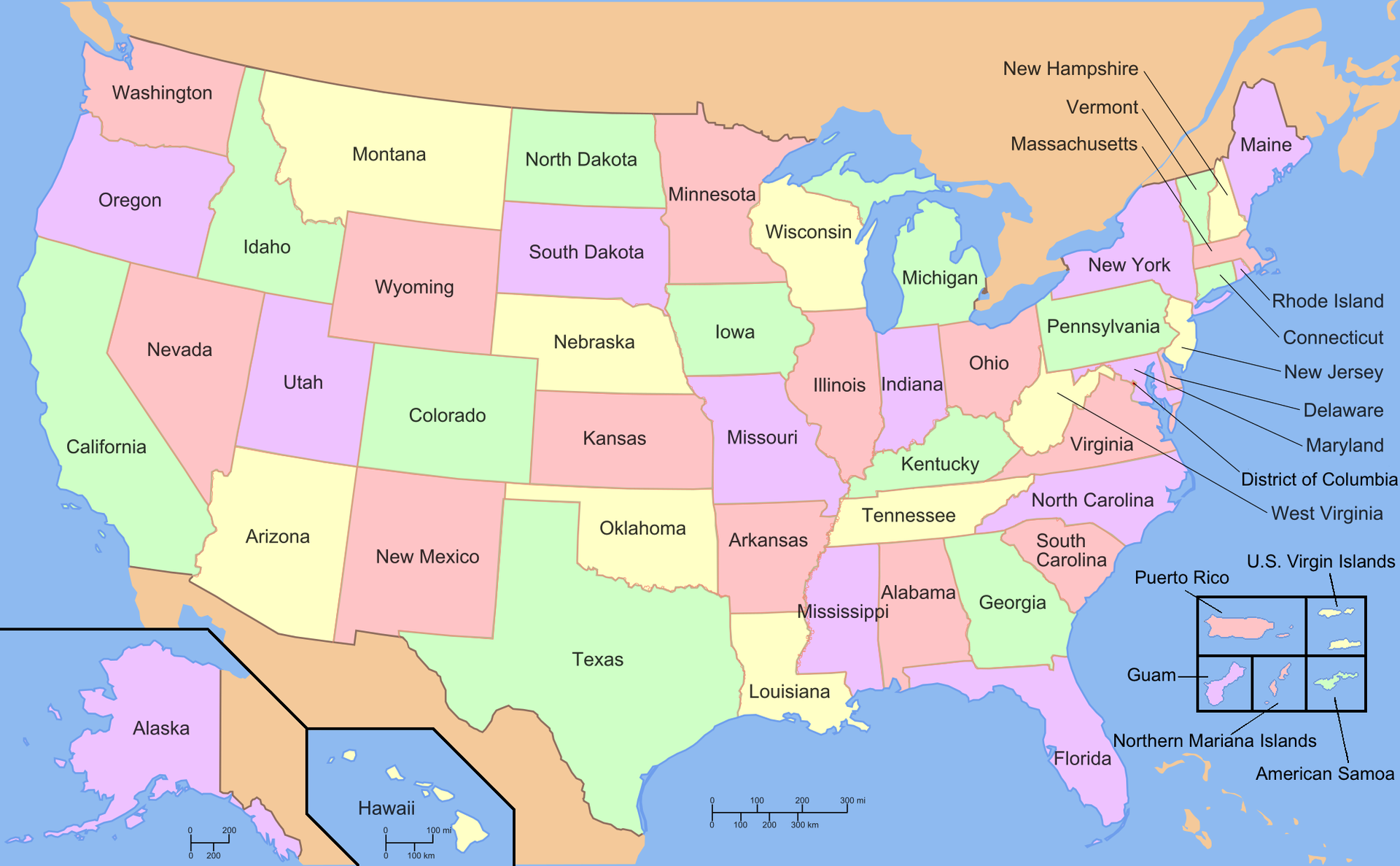
When the thirteen British colonies declared independence in 1776, they named their new nation the United States of America.
This created an immediate linguistic problem: “United States” describes a political structure; “of America” describes the location, but there was no shorter national name.
Citizens needed a group identifier. The simplest solution was American. No alternative stuck. Terms like “United-Statesian” never entered real usage.
Over the 19th and 20th centuries, several forces cemented this association:
1. Political power
As the US expanded westward, industrialised rapidly, and became a global power, it dominated international diplomacy, finance, and military alliances.
2. Cultural influence
Hollywood, American television, pop music, and advertising spread US terminology worldwide. When global audiences heard “America,” it almost always meant the United States.
3. World wars and superpower status
After 1945, the United States emerged as one of the two dominant superpowers. In global discourse, “America” became shorthand for the Western bloc itself.
By the late 20th century, the linguistic takeover was complete.
How Latin America views the issue
In much of Latin America, the US monopoly on the word “America” has long been politically and culturally controversial.
Linguistic differences
In Spanish and Portuguese, América usually refers to the entire continent. Someone from the US is more precisely called estadounidense (Spanish), and norte-americano is sometimes used, though imperfectly. This reflects a continental identity that predates modern US dominance.
Historical resentment and power imbalance
The disagreement over the word “America” cannot be separated from the long and complicated political relationship between the United States and Latin America. Language, in this context, is tied to history, power, and repeated intervention.
Throughout the nineteenth and especially the twentieth century, the United States played a decisive role in the political and economic life of many Latin American countries. Under policies such as the Monroe Doctrine and later the Roosevelt Corollary, Washington asserted a right to intervene in the hemisphere, framing its actions as necessary for stability or to keep European powers out. In practice, this led to a series of direct military occupations and interventions in countries including Haiti, the Dominican Republic, Nicaragua, and Cuba. During the Cold War, US involvement often took more covert forms, with American intelligence agencies supporting or facilitating coups against governments viewed as hostile to US interests, most famously in Guatemala in 1954 and Chile in 1973. Economic pressure, trade leverage, and backing for friendly regimes also became regular tools of US foreign policy across the region.
Because of this history, the United States has often been seen in Latin America not simply as another country in the Americas but as the dominant external power shaping the region’s political and economic trajectory. Against that backdrop, the US habit of referring to itself simply as “America” can carry symbolic weight. For some critics, the terminology appears to mirror the broader imbalance of influence, reinforcing the idea that one nation has claimed the identity of an entire hemisphere. In that sense, the debate over the word is not purely linguistic. It reflects a deeper historical memory in which the struggle has been not just over territory or policy, but over who gets to define what “America” itself means.
The linguistic dispute cannot be separated from politics.
Throughout the 19th and 20th centuries, the United States repeatedly intervened in Latin American affairs:
- military occupations
- CIA-supported coups
- economic pressure
- Cold War proxy conflicts
Because of this history, some Latin Americans see the US claim to “America” as symbolising broader dominance, political, economic, and cultural.
To them, it can feel like not just a word, but a form of symbolic ownership.
Cultural responses
In Latin American intellectual and political writing, you often see phrases like:
- “Nuestra América” (“Our America”)
- “América Latina” is emphasised as a civilisational region
These are ways of reclaiming continental identity separate from US influence.
This tradition dates back to 19th-century thinkers like José Martí, who argued that Latin America represented a distinct historical and cultural world.
The modern reality: language vs geography
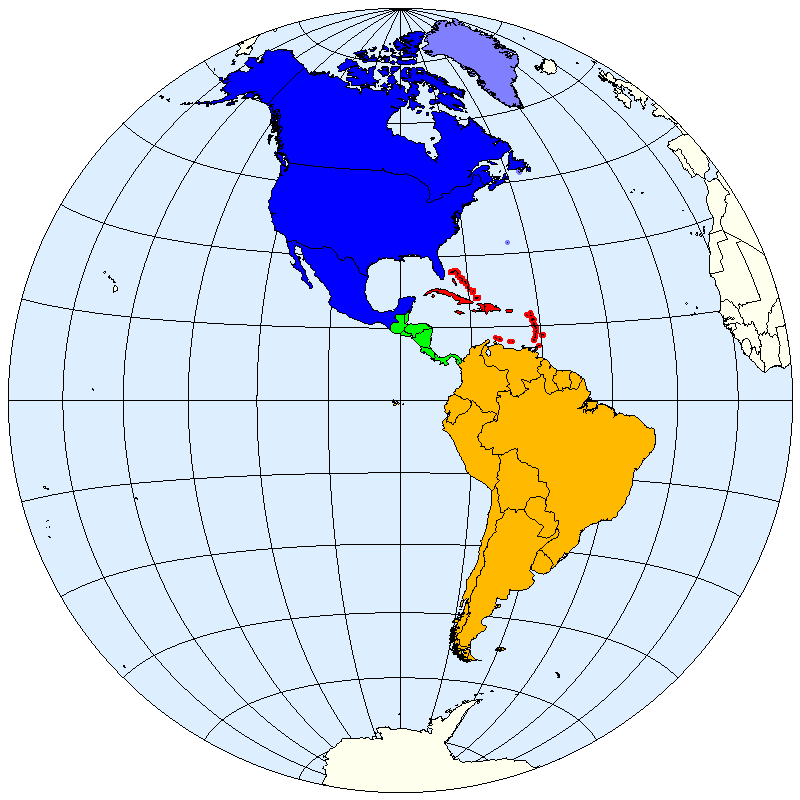
Today, two truths exist at the same time, and understanding the word “America” requires recognising both. In strictly geographic terms, America refers to the landmass comprising North and South America, Central America, and the Caribbean, encompassing 35 independent countries. From that perspective, “American” could logically describe anyone living anywhere across these continents.
In everyday English usage, however, the word has taken on a much narrower meaning. In political discussion, journalism, and popular culture, “America” is commonly used as shorthand for the United States, and “Americans” for its citizens. This convention developed historically and has become deeply embedded in global communication, even though it does not reflect the full continental definition.
Neither meaning is technically incorrect; they simply operate in different contexts. In geographic or academic discussions, the continental sense tends to dominate, while in political speech and media coverage, the national meaning usually prevails. The difference illustrates a broader reality about language itself: words do not always follow strict logical definitions; instead, they evolve according to historical power, cultural influence, and long-established usage.
Conclusion
The word “America” began as the name of a continent, not a country. Yet through historical circumstance, political influence, and global cultural dominance, the United States gradually absorbed the term into its national identity.
For many outside the US, particularly in Latin America, this linguistic shift remains politically charged, a reminder of unequal influence across the hemisphere.
Understanding this history doesn’t just clarify geography. It explains how words themselves can reflect power, identity, and the way the world has been shaped.


Leave a Reply