• Skip to main content
  • Skip to after header navigation
  • Skip to site footer
Our history archive

Our History

Our History Archive, where history comes to life

  • Home
  • Colonisation
  • World History
  • Civil Rights
  • World cultures
  • Features
  • Wellbeing
  • Popular Culture

Walking in the cold could help burn calories

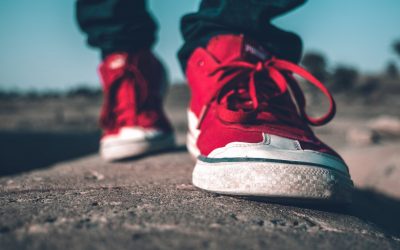
photo of person wearing red shoes
Wellbeing
5 June, 2012

Going for a walk in the cold after a meal could help people lose weight as low temperatures prompt the body to burn calories, research suggests.

Cool temperatures may activate “good” fat in the body that burns calories and ultimately leads to weight loss, according to a new study.

The “good fat” is called brown adipose tissue, or brown fat, and is naturally found in humans. It takes calories from normal white fat, which stores energy, and burns it. Past trials have shown that brown fat can be stimulated in mice, showing promising signs for future weight-loss therapies, but scientists have not shown how to successfully stimulate it in humans.


Researchers from the Joslin Diabetes Center in Boston wanted to compare the effects of ephedrine, a stimulant that is used in weight-loss drugs, versus the cool temperatures, which scientists predicted would activate the brown fat.

The team tested 10 study participants in three different ways. They were given injections of ephedrine, or saline solution as a control, or made to wear a “cooling vest,” which had 57-degree water pumping through it. Their fat activity was then measured.

Researchers found that brown fat was the same following both the ephedrine and saline injections. However, after the subjects wore the cooling vests for two hours, their brown fat activity was stimulated significantly.

Both interventions – ephedrine injections and the wearing of the cooling vests – did result in the same number of calories being burned, Dr Cypess noted.

He said: “But we found that ephedrine was not using brown fat to do it.


“This is the first time it has been found that ephedrine does not turn on brown fat.”

Both methods had effects on the sympathetic nervous system — which activates the fight or flight response — such as increased blood pressure.

But only the cold activated brown fat.

Dr Cypess said harnessing the cold effects could help reduce calories without the side effects associated with ephedrine.


He said: “Mild cold exposure stimulates (brown fat) energy expenditure with fewer other systemic effects, suggesting that cold activates specific sympathetic pathways.

“Agents that mimic cold activation of (brown fat) could provide a promising approach to treating obesity while minimizing systemic effects.”

One method may be simply to design cooling vests that people can wear to help them lose weight.

A future study will have subjects wear the vests for several weeks to see what happens, Dr Cypess said.

But Dr David Katz, director of the Yale Prevention Center, said neither ephedrine nor any type of cooling vest should be the go-to intervention for exercise and a good weight loss regime.

“One is unsafe, the other is uncomfortable,” said Katz. “If people are willing to put with discomfort, how about they try eating better and being more active?”

Share this:

  • Share on Facebook (Opens in new window) Facebook
  • Share on X (Opens in new window) X
  • Share on Reddit (Opens in new window) Reddit
  • Share on Pinterest (Opens in new window) Pinterest
  • Share on WhatsApp (Opens in new window) WhatsApp

Related

You May Also Like…

Work overload - woman sitting at desk stressed

Managing work overload: Why we’re still busier than ever

self care isn t selfish signage

The Wellness Revolution: How small changes can create big transformations

Understanding sickle cell disease

Understanding sickle cell disease

person in black pants and black shoes sitting on brown wooden chair

Cognitive behavioural therapy: How CBT can help you


Reader Interactions

Leave a ReplyCancel reply

Sidebar

This Day In History

Events in History
On this day in 1856 The Treaty of Paris (1856) was signed, marking the end of the Crimean War. This historic agreement was reached between Russia and a coalition of nations, including France, Great Britain, Sardinia-Piedmont, and Turkey, effectively closing a tumultuous chapter in European history.

Wellbeing recent post

Work overload - woman sitting at desk stressed

Managing work overload: Why we’re still busier than ever

self care isn t selfish signage

The Wellness Revolution: How small changes can create big transformations

Trending

  • Holy Wars: The blood-soaked legacy of conflicts fought in the name of Christianity
    Holy Wars: The blood-soaked legacy of conflicts fought in the name of Christianity
  • History of Canada - From colonisation to independence
    History of Canada - From colonisation to independence
  • Multicultural London English: Evolution from cockney to a global linguistic mosaic
    Multicultural London English: Evolution from cockney to a global linguistic mosaic
  • The rise and fall of the Persian Empire
    The rise and fall of the Persian Empire
  • The rise and fall of the Ottoman Empire: Six centuries of imperial power
    The rise and fall of the Ottoman Empire: Six centuries of imperial power
  • Bay of Pigs 1961: The CIA’s failed invasion that changed the Cold War
    Bay of Pigs 1961: The CIA’s failed invasion that changed the Cold War
  • The Banana Wars: America's forgotten military interventions in Central America
    The Banana Wars: America's forgotten military interventions in Central America
  • The First Red Scare: America's post-WWI fear of Communism and radical change
    The First Red Scare: America's post-WWI fear of Communism and radical change
  • What are British values?
    What are British values?
  • Women's suffrage movement in Britain
    Women's suffrage movement in Britain

Connect

  • YouTube
  • TikTok
  • Bluesky

ABOUT

CONTACT

PRIVACY POLICY

COOKIES

Copyright © 2026 · Our History · All Rights Reserved