
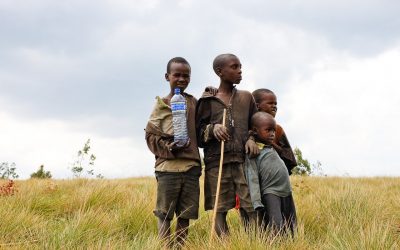
Burundi, a landlocked country in East Africa, is known for its rich history and complex ethnic relations. From its pre-colonial era to the present day, the region has witnessed a series of political upheavals and ethnic tensions.
Pre-colonial Burundi: A land shaped by indigenous peoples
The history of Burundi stretches back to the 16th century when the foundations of the Burundian monarchy were laid. Unlike many other countries in sub-Saharan Africa, Burundi’s borders were not determined by European powers but rather emerged from the development of the indigenous Burundian state. The region was initially inhabited by the Twa, a Pygmy hunter-gatherer population. However, around 1000 CE, the Hutu farmers migrated into the area, eventually constituting the largest proportion of the population. Later, the Tutsi people arrived, and a Tutsi monarchy was established in the 16th century by Ntare Rushatsi (Ntare I). The relationship between the Tutsi, Hutu, and the monarchy was intricate, with a princely class acting as intermediaries between the king and the masses.
The identification of individuals as Tutsi or Hutu was not solely based on physical appearance but was also influenced by social status and wealth. While Tutsis were traditionally cattle owners, symbolising wealth, Hutus were predominantly agriculturalists. However, intermarriage and the use of a common language, Rundi, blurred the lines between the two groups. A wealthy Hutu could be identified as a Tutsi, and a poor Tutsi could be identified as a Hutu.
Colonisation
Burundi’s destiny changed in the early 20th century when Germany claimed the region as its colony. After Germany’s downfall in World War I, Belgium took control, uniting Burundi and Rwanda under the European colony of Ruanda-Urundi. On 1 July 1962, Burundi regained its independence and embraced a monarchy. However, political turmoil escalated through assassinations, coups, and regional instability, leading to the birth of a one-party republic in 1966.
The First Republic: Ethnic conflict and political instability
Burundi’s journey towards independence was marred by discord and violence. Although not on the scale of its neighbour, Rwanda, Burundi experienced its fair share of ethnic conflicts, resulting in significant loss of life and displacement. The first major incident occurred in January 1965 when Pierre Ngendandumwe, a Hutu prime minister, was assassinated before he could establish a government. The subsequent political turmoil led to Leopold Biha, a Tutsi, being appointed prime minister, despite the Hutu majority in the National Assembly. The constitutional monarch, Mwami Mwambutsa, supported this decision, reinforcing the power of the Tutsi elite.
The Tutsi domination intensified in the following years, with the monarchy being overthrown and replaced by the First Republic under President Michel Micombero. The First Republic, however, is stained by the genocidal killings in April and May 1972. What initially began as Hutu attacks on Tutsis quickly escalated into widespread violence, resulting in the deaths of an estimated 100,000 to 200,000 Hutus and 10,000 Tutsis. This brutal episode not only deepened the ethnic divide but also sowed seeds of tension within the Tutsi minority, ultimately leading to the overthrow of Micombero in 1976.
The Second Republic: Struggles for stability and political transformation
The overthrow of Micombero marked the beginning of the Second Republic, with Jean-Baptiste Bagaza assuming the presidency. Bagaza, a Tutsi-Bahima from Bururi province, aimed to rejuvenate the Union for National Progress (UPRONA) party and consolidate Tutsi control. Concurrently, the government sought to exert control over the Roman Catholic Church, which they believed favoured the Hutu population. This led to the repression of church activities, further exacerbating tensions within the country.
While Bagaza’s presidency saw some stability, it also perpetuated ethnic divisions and political suppression. However, in 1987, a military coup led by Pierre Buyoya, a Tutsi officer, ousted Bagaza and ushered in a new era of political transformation. Buyoya implemented democratic reforms and initiated a power-sharing agreement between the Tutsi-dominated military and the Hutu political parties. This marked a significant shift toward inclusivity and multiculturalism in Burundi’s political landscape.
The road to democracy: A fragile balance
The 1990s witnessed a gradual move towards democracy in Burundi. The Arusha Accords, signed in 1993, aimed to end the ethnic conflict and establish a power-sharing government. However, the assassination of the first democratically elected Hutu president, Melchior Ndadaye, in 1993 plunged the country into chaos. This event triggered a series of massacres, resulting in the deaths of thousands of people and the displacement of many more.
Despite the setbacks, Burundi continued its journey towards democracy. In 2005, the country held its first democratic elections under the Arusha Accords, and Pierre Nkurunziza, a former rebel leader, was elected president. However, Nkurunziza’s presidency was marred by controversy and political instability. His decision to run for a controversial third term in 2015 sparked widespread protests, leading to further violence and a subsequent political and humanitarian crisis.
Present-day Burundi: Striving for peace and prosperity
Burundi’s recent history has been characterised by ongoing efforts to achieve lasting peace and stability. In 2020, President Nkurunziza, who had been in power for 15 years, passed away, and his successor, Evariste Ndayishimiye, assumed office. Ndayishimiye has expressed a commitment to national unity and has taken steps to improve relations with neighbouring countries and the international community.
However, challenges remain. Burundi continues to face socio-economic disparities, political polarisation, and human rights concerns. The government’s commitment to inclusivity and reconciliation will be crucial in overcoming these obstacles and forging a brighter future for the people of Burundi.


Leave a Reply