
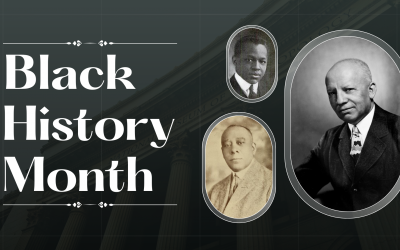
In 2026, the United States commemorates a significant milestone: 100 years of Black History Month celebrations. The official theme for this year, A Century of Black History Commemorations, marks 100 years since Negro History Week was first introduced in 1926 by a group of Black scholars and leaders determined to ensure that the full story of Black Americans would be known and taught.
The roots of Black History Month trace to Dr Carter G. Woodson, often called the “Father of Black History,” and to his founding of the Association for the Study of Negro Life and History in 1915 (later renamed the Association for the Study of African American Life and History, or ASALH). Alongside Woodson, figures such as George Cleveland Hall, William B. Hartgrove, Jesse E. Moorland, Alexander L. Jackson, and James E. Stamps worked to ensure that Black history was thoroughly researched, taught, and celebrated during a time when mainstream education largely overlooked and often misrepresented the lives and contributions of Black Americans.
Woodson launched Negro History Week in February 1926, strategically choosing the second week of the month to coincide with the birthdays of Abraham Lincoln (February 12) and Frederick Douglass (February 14). These dates already held special significance in Black communities. The celebration spread gradually, adopted by schools, churches, and local communities seeking ways to teach and honour the history and culture that had been marginalised.
Over the subsequent decades, grassroots educators, historians, civic leaders, students, and activists sustained the tradition. In the 1960s and early 1970s — fueled by the energy of the Civil Rights Movement and growing Black consciousness on college campuses — the week-long observance grew into a month-long celebration. In 1976, during the United States’ bicentennial year, President Gerald Ford officially recognised Black History Month, encouraging Americans to honour “the too-often neglected accomplishments of Black Americans in every area of endeavour throughout our history.” Since then, every American president has issued annual proclamations designating February as Black History Month.
As Black History Month has matured, it has also become part of a wider cultural and educational landscape. Community organisations, schools, libraries, and cultural institutions across the United States (and increasingly around the world) use the month to spotlight not only historical achievements but also ongoing struggles and contributions of Black people to society. For many, it is more than a commemorative observance; it is a call to deeper understanding, civic engagement, and collective memory.
Yet the significance of this centennial comes at a moment of tension in how history itself is contested. Recent efforts by the U.S. federal administration to reshape historical and cultural institutions, including executive actions aimed at recasting the nation’s historical narrative, removing slavery-related exhibits from national parks, and restoring Confederate monuments, highlight how the past remains a political battleground. Critics argue these moves risk erasing uncomfortable truths about slavery, racism, and the systemic oppression that has shaped American life, undermining the very foundation of honest historical inquiry.
In this context, the legacy of Black History Month, rooted in the insistence that history must reflect the full complexity of human experience, is especially vital. The celebration that began with Dr Woodson’s humble but visionary Negro History Week stands as a powerful reminder that history is not just a record of facts, but a reflection of whose stories are valued and who gets to tell them. As debates over education and public memory intensify, Black History Month’s centennial underscores the importance of understanding history in all its dimensions to confront injustice, foster inclusion, and build a more equitable future.


Leave a Reply