• Skip to main content
  • Skip to after header navigation
  • Skip to site footer
Our history archive

Our History

Our History Archive, where history comes to life

  • Home
  • Colonisation
  • World History
  • Civil Rights
  • World cultures
  • Features
  • Wellbeing
  • Popular Culture

How did Black History Month start?

Features
20 October, 2007

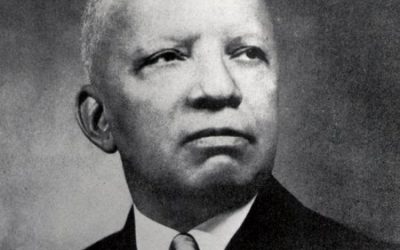
What we now call Black History Month was originated in the US in 1926 by Carter Godwin Woodson as Negro History Week. The month of February was selected in deference to Frederick Douglass and Abraham Lincoln, who were both born in that month.

Carter Goodwin Woodson said: “If a race has no history, it has no worthwhile tradition, then it becomes a negligible factor in the thought of the world, and it stands in danger of being exterminated.”

Always one to act on his ambitions, Woodson decided to take on the challenge of writing black Americans into the nation’s history. He founded the Association for the Study of Negro Life and History in 1915 to train Black historians and to collect, preserve, and publish documents on Black life and Black people. He also founded the Journal of Negro History (1916), Associated Publishers (1922), and the Negro Bulletin (1937). Woodson spent his life working to educate all people about the vast contributions made by Black men and women throughout history.


Carter Goodwin Woodson died on 3 April 1950 and Black History Month is his legacy.

Black History Month UK

In Britain, October is a season of events and activities that provide a valuable opportunity to explore the culture, history and achievements of Black and ethnic minority communities.

Black History Month UK was founded by Ghanaian analyst Akyaaba Addai-Sebo. The inspiration for Black History Month came from an incident that happened at the GLC where he worked as the coordinator of special projects. A female colleague of Addai-Sebo’s came to work one morning, looking very downcast. When he asked her what the matter was, she confided that the previous night when she was putting her son Marcus to bed he asked her, “Mum, why can’t I be white?”

The mother was taken aback. She said that she was so shocked that she didn’t know how to respond to her son. The boy that had been named after Marcus Garvey had asked why he couldn’t be white!


Addai-Sebo was familiar with black history month in America, and following the incident with Marcus, he thought that something like that had to be done here in the UK.

The first Black History Month event in the UK was held on the 1 October 1987.

Save

Save


Save

Share this:

  • Share on Facebook (Opens in new window) Facebook
  • Share on X (Opens in new window) X
  • Share on Reddit (Opens in new window) Reddit
  • Share on Pinterest (Opens in new window) Pinterest
  • Share on WhatsApp (Opens in new window) WhatsApp

Related

You May Also Like…

More details Jesse Jackson surrounded by marchers carrying signs advocating support for the Hawkins-Humphrey Bill for full employment,

Keep hope alive: The rise, power, and legacy of Jesse Jackson

The revolutionary icon: Ernesto "Che" Guevara

Ernesto “Che” Guevara: : The revolutionary icon

Portrait of Bartolomé de Las Casas (c.1484 - 1566)

Bartolomé de las Casas and the birth of human rights

William Randolph Hearst

William Randolph Hearst: The king of Yellow Journalism


Reader Interactions

Leave a ReplyCancel reply

Sidebar

This Day In History

Events in History
On this day in 1949 A fascist mob congregated outside Carrington House in Brookmill Road, Deptford, London, the home of African seamen who have complained of racist treatment including being banned from pubs. Whilst 800 whites and 50 police battled outside the frightened occupants armed themselves with knives unsurprisingly. They were subsequently arrested for doing so and the rioters were not.
Person
On this day in 1918 Nelson Mandela was born.
More details Jesse Jackson surrounded by marchers carrying signs advocating support for the Hawkins-Humphrey Bill for full employment,

Keep hope alive: The rise, power, and legacy of Jesse Jackson

The revolutionary icon: Ernesto "Che" Guevara

Ernesto “Che” Guevara: : The revolutionary icon

Portrait of Bartolomé de Las Casas (c.1484 - 1566)

Bartolomé de las Casas and the birth of human rights

Trending

  • The rise and fall of the Persian Empire
    The rise and fall of the Persian Empire
  • Bartolomé de las Casas and the birth of human rights
    Bartolomé de las Casas and the birth of human rights
  • Hugo Chávez: The Comandante who remade Venezuela
    Hugo Chávez: The Comandante who remade Venezuela
  • Five countries that colonised the world
    Five countries that colonised the world
  • How Haiti won its independence
    How Haiti won its independence
  • Was Hitler a socialist? Setting the record straight
    Was Hitler a socialist? Setting the record straight
  • Mexican culture: A living mosaic of civilisations, faith, and tradition
    Mexican culture: A living mosaic of civilisations, faith, and tradition
  • Claudette Colvin – the teenager that inspired Rosa Parks
    Claudette Colvin – the teenager that inspired Rosa Parks
  • What are British values?
    What are British values?
  • Bay of Pigs 1961: The CIA’s failed invasion that changed the Cold War
    Bay of Pigs 1961: The CIA’s failed invasion that changed the Cold War

Connect

  • YouTube
  • TikTok
  • Bluesky

ABOUT

CONTACT

PRIVACY POLICY

COOKIES

Copyright © 2026 · Our History · All Rights Reserved