• Skip to main content
  • Skip to after header navigation
  • Skip to site footer
Our history archive

Our History

Our History Archive, where history comes to life

  • Home
  • Colonisation
  • World History
  • Civil Rights
  • World cultures
  • Features
  • Wellbeing
  • Popular Culture

Harriet Tubman

Harriet Tubman Lindsley, Harvey B., 1842-1921, Public domain, via Wikimedia Commons
World history
1 August, 2013

Harriet Tubman escaped slavery to become a leading abolitionist. She led hundreds of enslaved people to freedom along the route of the Underground Railroad.

Harriet Tubman was born in Dorchester County, Maryland, in 1822 to enslaved parents Harriet “Rit” Green, who was owned by Mary Pattison Brodess and Ben Ross, who was owned by Anthony Thompson. She was named Araminta Harriet Ross.

Harriet had a very hard childhood. As a small girl, she was made to do gruelling chores and was physically assaulted by various masters. As a teenager, she suffered a traumatic head wound when an angry overseer threw a heavy metal weight intending to hit another enslaved person but hit her instead. The injury caused dizziness, pain, and spells of narcolepsy, which meant she would often go into sleeping spells and was difficult to wake.


Harriet suffered from this disorder throughout her life. After her injury, she began experiencing strange visions and vivid dreams, which she ascribed to premonitions from God. These experiences, combined with her religious upbringing, led her to build the Underground Railroad.
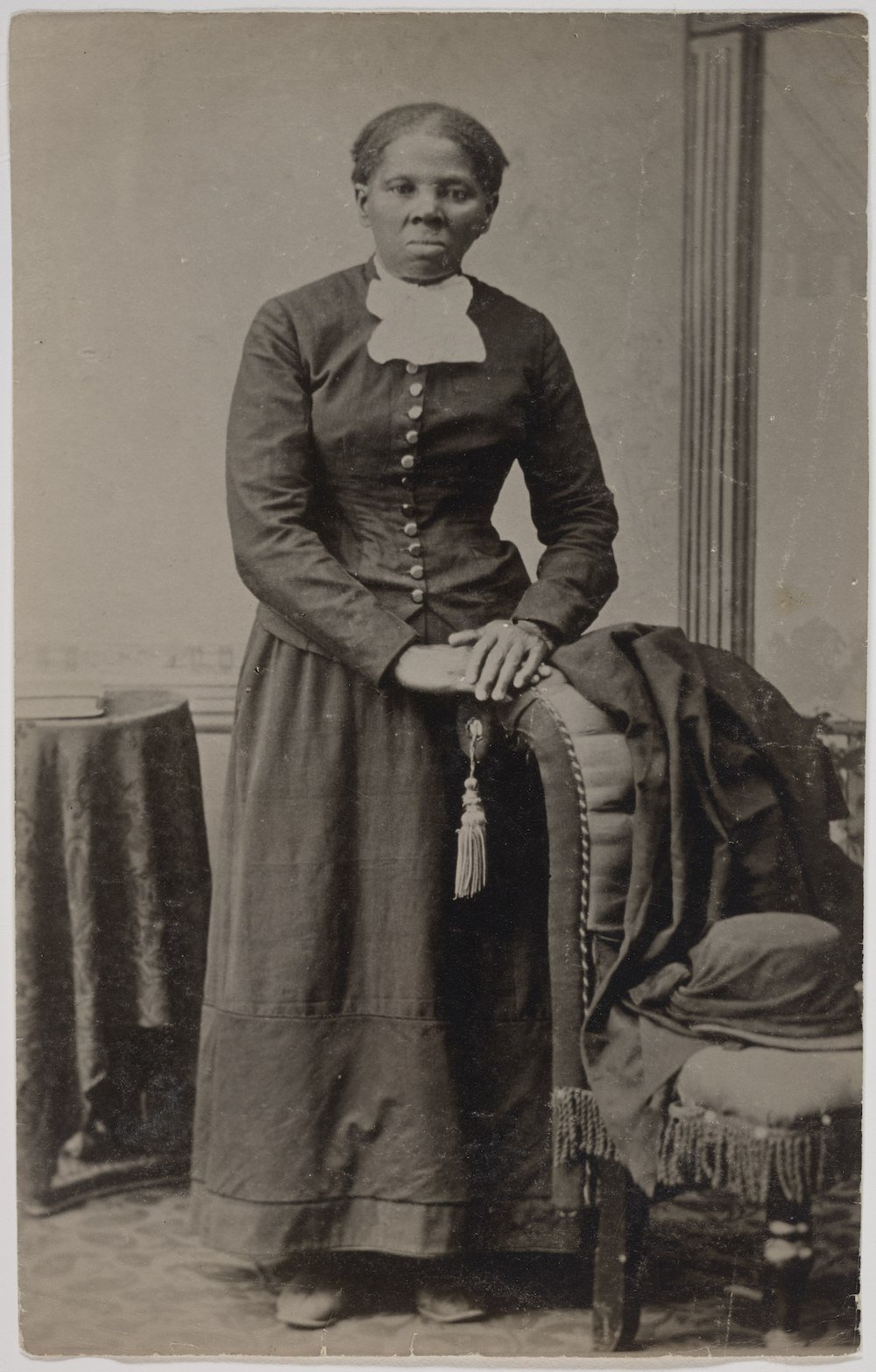
Harriet Tubman Lindsley, Harvey B., 1842-1921, Public domain, via Wikimedia Commons

In 1849, hearing rumours that she was about to be sold, Tubman fled to Philadelphia and adopted her mother’s name, Harriet. She left behind her husband (who refused to leave), parents, and siblings. In December 1850, she made her way to Baltimore, Maryland, and from there, she led her sister and two children to freedom.

That journey was the first of some 19 increasingly dangerous forays into Maryland in which, over the next decade, she conducted upward of 300 fugitive enslaved people along the Underground Railroad to Canada. In 1857, Tubman managed to free her parents.

Travelling by night and in extreme secrecy, Tubman (or “Moses”, as she was called) “never lost a passenger”. It’s been reported that if anyone decided to turn back, thus endangering the mission, she threatened them with a gun and said, “You’ll be free or die.”

Harriet Tubman late in life. (Public domain, via Wikimedia Commons )

During the American Civil War, she worked as a cook, nurse, and spy for the Union Army. She became the first woman to lead an armed expedition in the war, leading several hundred slaves in the Combahee River Raid.


After the war, she retired to a property she had purchased in 1859 in Auburn, New York, where she cared for her ageing parents and played an active role in the women’s suffrage movement.

When she became ill in her later years, she had to be admitted to a home for elderly African Americans that she had helped to establish years earlier. After her death on 10 March 1913, she became an icon of courage and freedom.

Share this:

  • Share on Facebook (Opens in new window) Facebook
  • Share on X (Opens in new window) X
  • Share on Reddit (Opens in new window) Reddit
  • Share on Pinterest (Opens in new window) Pinterest
  • Share on WhatsApp (Opens in new window) WhatsApp

Related

You May Also Like…

More details Merida - Palacio de Gobierno - Murals by Fernando Castro Pacheco: The Spanish bishop Diego de Landa is burning figures of Mayan deities

The forgotten fire: A history of the Darfur Genocide

The Japanese occupation of Beiping (Beijing) in China

The rise and fall of the Japanese Empire

Rescuers and residents searching the rubble of the destroyed Shajareh Tayyebeh elementary school in Minab

The fracturing of the international order in an age of impunity

US ambassador to the UN, Eleanor Roosevelt, holding the Universal Declaration of Human Rights in 1949

The role and limitations of international law in world affairs


Reader Interactions

Leave a ReplyCancel reply

Sidebar

This Day In History

No Events

World history recent posts in

More details Merida - Palacio de Gobierno - Murals by Fernando Castro Pacheco: The Spanish bishop Diego de Landa is burning figures of Mayan deities

The forgotten fire: A history of the Darfur Genocide

The Japanese occupation of Beiping (Beijing) in China

The rise and fall of the Japanese Empire

Rescuers and residents searching the rubble of the destroyed Shajareh Tayyebeh elementary school in Minab

The fracturing of the international order in an age of impunity

US ambassador to the UN, Eleanor Roosevelt, holding the Universal Declaration of Human Rights in 1949

The role and limitations of international law in world affairs

Trending

  • The rise and fall of the Persian Empire
    The rise and fall of the Persian Empire
  • Mexican culture: A living mosaic of civilisations, faith, and tradition
    Mexican culture: A living mosaic of civilisations, faith, and tradition
  • The British Empire: An overview of empire and colonisation
    The British Empire: An overview of empire and colonisation
  • The 1972 Munich Olympics massacre
    The 1972 Munich Olympics massacre
  • The history of South Africa: From colonisation to independence
    The history of South Africa: From colonisation to independence
  • Operation Ajax and the shadow of empire: The 1953 Iranian coup
    Operation Ajax and the shadow of empire: The 1953 Iranian coup
  • The forgotten fire: A history of the Darfur Genocide
    The forgotten fire: A history of the Darfur Genocide
  • Holy Wars: The blood-soaked legacy of conflicts fought in the name of Christianity
    Holy Wars: The blood-soaked legacy of conflicts fought in the name of Christianity
  • The Arab slave trade
    The Arab slave trade
  • History of Canada - From colonisation to independence
    History of Canada - From colonisation to independence

Connect

  • YouTube
  • TikTok
  • Bluesky

ABOUT

CONTACT

PRIVACY POLICY

COOKIES

Copyright © 2026 · Our History · All Rights Reserved