
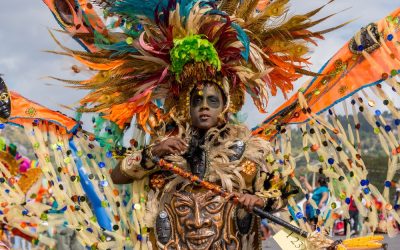
The Trinidad and Tobago Carnival is an annual event that showcases the rich cultural heritage and vibrant spirit of the Caribbean nation of Trinidad and Tobago. This two-day extravaganza, held on the Monday and Tuesday before Ash Wednesday, is a celebration of music, dance, costumes, and traditions that have been passed down through generations.
Origins of the Carnival
The roots of the Trinidad and Tobago Carnival can be traced back to the late 18th century when French plantation owners organised masquerades and balls before the fasting period of Lent. However, the enslaved West and Central Africans, who were not allowed to participate in these festivities, created their own parallel celebration called “Canboulay.” Canboulay, meaning “burnt cane” in French, played a significant role in the development of the music of Trinidad and Tobago. During this time, the vibrant sounds of calypso music began to emerge.
With its origins in West African Kaiso and Canboulay music, Calypso music became an integral part of the Trinidad and Tobago Carnival. The enslaved Africans used calypso as a means to mock their slave masters and communicate with each other. Early calypsos were sung in French Creole by a griot, a person who played the role of a storyteller and historian. Over time, the griot became known as a chantuelle and eventually a calypsonian.
In recent years, calypso has taken a backseat to Soca music, which has become the most celebrated genre during the Trinidad and Tobago Carnival. Soca, a fusion of calypso and various other Caribbean and Latin American musical styles, is characterised by its infectious rhythms and energetic beats. It has become the soundtrack of the carnival, captivating both locals and visitors alike with its infectious melodies and danceable tunes.
The significance of costumes and masquerade
One of the most captivating aspects of the Trinidad and Tobago Carnival is the elaborate costumes worn by participants, also known as masqueraders. These costumes, sometimes called “mas,” are a visual feast of colours, feathers, sequins, and beads. They range from traditional designs inspired by African and European influences to more contemporary and avant-garde creations.
Creating these costumes begins months in advance, with designers and artisans meticulously crafting each piece by hand. Band launch fetes, cultural events that take place in the lead up to the street parade, showcase the stunning costumes and allow masqueraders to choose their desired look. The costumes not only reflect the creativity and craftsmanship of the designers but also serve as a form of self-expression for the masqueraders, allowing them to embody different characters and themes.
The allure of J’Ouvert: A dawn of revelry
J’Ouvert, translated from French as “break of day,” marks the official start of the two-day Carnival celebration. Taking place in the early hours of Carnival Monday, J’Ouvert is a vibrant and energetic street party that pays homage to the Canboulay celebrations of the past. Participants douse themselves in oil, mud, and powder while dancing through the streets to the infectious rhythms of calypso and Soca music.
Unlike the more formal and extravagant costumes worn later in the day, J’Ouvert is known for its homemade or satirical costumes. The revellers embrace the freedom to get messy and let loose, creating a unique and uninhibited atmosphere. It is a time when social barriers are broken down, and everyone is united in the joyous celebration of the Carnival.
Characters: Bringing the carnival to life
Throughout the history of the Trinidad and Tobago Carnival, various characters have emerged, adding an extra layer of excitement and theatrics to the festivities. These characters, each with their unique costumes and personas, have become an integral part of the Carnival.
One such character is the Burrokeet, a donkey-man constructed to give the illusion of a dancer riding a small mule or donkey. This masquerade was brought to Trinidad by Venezuelan settlers, adding a touch of cultural diversity to the Carnival. Another character is Dame Lorraine, an ample and voluptuous woman whose costume parodies the dress of 18th-century French aristocratic women.
Other notable characters include Jab Jab, inspired by the French Patois word for devil, and the Midnight Robber, known for his braggadocious nature and attire influenced by American cowboy clothes. The Moko Jumbie, a stilt dancer of African origin, and the Pierrot, a well-dressed character proud of his knowledge, further contribute to the vibrant tapestry of characters that bring the Carnival to life.
Global influence: Carnival celebrations around the world
The Trinidad and Tobago Carnival has not only captivated the hearts of locals but has also inspired Carnival celebrations in cities around the world. The spirit of the Trinidad and Tobago Carnival is celebrated internationally, from Toronto’s Caribana to Miami’s Miami Carnival, Houston Carifest, London’s Notting Hill Carnival, and New York City’s Labor Day Carnival.
These global Carnival celebrations embrace the vibrant music, colourful costumes, and infectious energy that define the Trinidad and Tobago Carnival. They provide a platform for people of Caribbean descent and enthusiasts from all walks of life to come together and experience the joy and camaraderie of the Carnival.
The Trinidad and Tobago Carnival celebrates culture, music, and tradition that brings the Caribbean nation to life. From its origins in French plantation masquerades to the evolution of music from calypso to Soca, the Carnival has evolved into a vibrant and captivating event. The elaborate costumes, the infectious rhythms, and the unique characters all contribute to the magic and allure of this annual extravaganza. As the Carnival continues to inspire celebrations around the world, its spirit of joy, unity, and cultural pride remains at the heart of this extraordinary event.


Leave a Reply