
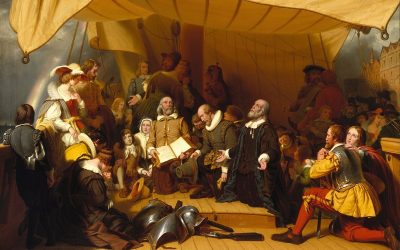
The story of the Pilgrims—their perilous journey, struggle for survival, and eventual expansion in America—is a foundational chapter in the early history of the United States. Embarking from England in 1620 aboard the Mayflower, these religious separatists sought a new land where they could practice their faith freely, a quest that led them to the shores of what is now Massachusetts. Their tale, marked by hardship, perseverance, and an evolving relationship with the native inhabitants, offers a window into the early colonial era and the complexities of the American origin story.
The Pilgrims’ exodus: From persecution to Plymouth
The Pilgrims, originally part of a Puritan sect dissatisfied with the Church of England’s refusal to reform further, faced religious persecution in their homeland. In search of religious freedom, they first fled to the more tolerant Holland but eventually decided to journey to America, lured by the promise of land and the opportunity to create a society aligned with their religious ideals.
In September 1620, around 100 Pilgrims, including men, women, and children, set sail aboard the Mayflower. Their journey across the Atlantic was arduous, marked by cramped conditions, rough seas, and sickness. After a gruelling 66-day voyage, they arrived at the tip of Cape Cod, far north of their intended destination near the mouth of the Hudson River.
First winter: A test of survival
The Pilgrims’ first winter in America was brutal. Unprepared for the harsh New England climate, they suffered from exposure, malnutrition, and disease. By the spring of 1621, nearly half of the original passengers and crew had perished. Despite these losses, the survivors, committed to their new life, began building their settlement, which they named Plymouth.
The Native encounter and alliance
A pivotal moment in the Pilgrims’ story was their encounter with the Wampanoag tribe. In March 1621, a Native American named Samoset walked into Plymouth Colony, greeting the settlers in English, which he had learned from fishermen along the Maine coast. He later introduced them to Squanto, a member of the Patuxet tribe who had survived slavery in England and returned to his homeland. Squanto proved indispensable to the Pilgrims, teaching them vital survival skills such as how to cultivate corn, extract sap from maple trees, catch fish, and avoid poisonous plants.
The most significant outcome of these interactions was the formation of an alliance with the Wampanoag tribe, led by Chief Massasoit. This alliance, cemented through a peace treaty, was crucial for the Pilgrims’ survival and marked one of the few examples of harmony between European colonists and Native Americans.
The first Thanksgiving: A symbolic feast
The harvest of 1621 was bountiful, thanks in large part to the assistance of the Wampanoags. To celebrate, the Pilgrims held a three-day feast, which was attended by Massasoit and 90 of his men. This event, widely regarded as America’s “first Thanksgiving,” was not initially intended as a yearly celebration but has since become a central myth of American identity, symbolising cooperation and mutual respect between different cultures.
Expansion and conflict
As more English settlers arrived and new colonies were established in New England, tensions grew. The initial cooperation with Native Americans began to fray as the demand for land increased. This expansion led to conflicts with various Native tribes, a stark contrast to the relatively peaceful beginnings at Plymouth.
Legacy: Pilgrims in American memory
The legacy of the Pilgrims is complex. On the one hand, they are celebrated for their role in establishing one of the first successful English settlements in America and for their contributions to American political thought, particularly the Mayflower Compact, which laid the groundwork for self-governance in the New World. On the other hand, their arrival marked the beginning of a wave of European settlement that would profoundly disrupt and displace the Native American populations.
In American culture, the Pilgrims’ story has been idealised, often overshadowing the harsh realities of their experience and the negative impacts of colonisation on indigenous peoples. The narrative of the Pilgrims and the first Thanksgiving has become a foundational myth, shaping perceptions of American history and identity.
Today, the Pilgrims’ journey continues to be a subject of reflection and reinterpretation, offering insights into the themes of religious freedom, perseverance, and the complex interactions between different cultures. Their experience remains a crucial part of the tapestry of American history, embodying both the promise and the contradictions of the nation’s early years.


Leave a Reply