• Skip to main content
  • Skip to after header navigation
  • Skip to site footer
Our history archive

Our History

Documenting world history and civil rights

General

  • About
  • Cookies and your privacy
  • Privacy policy
  • Contact

Categories

  • Home
  • Colonisation
  • World History
  • Civil Rights
  • World cultures
  • Features
  • Wellbeing
  • Popular Culture
  • Home
  • Colonisation
  • World History
  • Civil Rights
  • World cultures
  • Features
  • Wellbeing
  • Popular Culture

The life and career of Langston Hughes

Langston Hughes
Features
5 February, 1999

Langston Hughes, born James Mercer Langston Hughes on 1 February 1902, has left an indelible mark on the landscape of American literature. Revered as one of the key figures in the Harlem Renaissance, Hughes’ work offers a vivid portrayal of African American life through the use of rich language, sharp wit, and a keen understanding of the human condition.

Born in Joplin, Missouri, Langston Hughes was predominantly raised by his grandmother Mary after his parents’ tumultuous relationship led to their separation. Living in segregated America at the time, young Hughes was no stranger to hardship and prejudice. Growing up with diverse cultural heritage – his grandmother being African-American and Native American descent and both his parents having African and European roots – provided him with deep insight into the complexities of race and society.

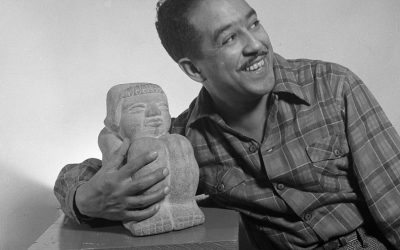
Langston Hughes
Carl Van Vechten; cropped by Beyond My Ken (talk) 07:07, 5 August 2010 (UTC), Public domain, via Wikimedia Commons

Despite facing numerous obstacles throughout his life, Hughes showed undeniable love for the written word. Introduced to literature by his grandmother and inspired by such greats as Paul Laurence Dunbar and Carl Sandburg, Hughes penned his first poem, “The Negro Speaks of Rivers,” in 1921 at age 19. Published soon after in the journal Crisis, this piece was a stepping stone towards what would become an illustrious writing career.


Inspired by the cultural movement taking hold in Harlem during the 1920s, Langston Hughes moved to New York City in pursuit of higher education at Columbia University. However, it was the electric energy of Harlem itself that truly captured Hughes’ creative spirit. Surrounded by fellow artists and intellectuals such as Zora Neale Hurston and James Weldon Johnson, he delved fully into the literary scene while still studying at Lincoln University.

In 1925, Hughes made waves with his poem “The Weary Blues,” which earned him first place in the prestigious Opportunity magazine contest. This win not only garnered him a scholarship but also invitations to influential social gatherings, propelling his reputation even further.

Two years later, in 1926, Langston Hughes published his first book of poetry, “The Weary Blues.” This bold and evocative collection paid unapologetic tribute to the authentic experiences of black America – celebrating its culture, music, and traditions. Continuing to break down barriers and challenge societal norms over the years, Hughes emerged as a beacon for the African American community and a cornerstone of twentieth-century American literature.

Langston Hughes’ exemplary contribution to literature is a narrative of hope, courage, and resilience. His unfaltering pursuit of artistic truth sheds light on an important aspect of America’s history. As we consider Langston Hughes’ early life and career, it becomes evident that his exceptional body of work will continue to inspire generations of readers and writers alike.

A Dream Deferred

Dream Deferred is a short poem by Langston Hughes. Once you read it, the message is clear. Follow your dreams.


What happens to a dream deferred?

Does it dry up
like a raisin in the sun?
Or fester like a sore–
And then run?
Does it stink like rotten meat?
Or crust and sugar over–
like a syrupy sweet?

Maybe it just sags
like a heavy load.

Or does it explode.

Share this:

  • Share on Facebook (Opens in new window) Facebook
  • Share on X (Opens in new window) X
  • Share on Reddit (Opens in new window) Reddit
  • Share on Pinterest (Opens in new window) Pinterest
  • Share on WhatsApp (Opens in new window) WhatsApp

Related

You May Also Like…

Martin Robison Delany

Martin Robison Delany

Black History Month: Standing in Power and Pride 2025

Standing firm in power and pride: Eight Black people who shaped history

Official portrait of Captain James Cook

Captain James Cook: Master navigator and Pacific explorer

Phyllis Coard: Architect of women's liberation in revolutionary Grenada

Phyllis Coard: Architect of women’s liberation in revolutionary Grenada


Reader Interactions

Leave a ReplyCancel reply

Sidebar

This Day In History

Events in History
On this day in 1990 Nelson Mandela, who was the leader of the movement to end South African apartheid was released from prison after 27 years.
Martin Robison Delany

Martin Robison Delany

Black History Month: Standing in Power and Pride 2025

Standing firm in power and pride: Eight Black people who shaped history

Official portrait of Captain James Cook

Captain James Cook: Master navigator and Pacific explorer

Trending

  • Understanding Sharia Law: Principles, practice, and global context
    Understanding Sharia Law: Principles, practice, and global context
  • McCarthyism and the Cold War: America's Second Red Scare
    McCarthyism and the Cold War: America's Second Red Scare
  • Genghis Khan: The making of the Mongol Empire
    Genghis Khan: The making of the Mongol Empire
  • What are British values?
    What are British values?
  • Pancake Day: A tradition of faith and feasting
    Pancake Day: A tradition of faith and feasting
  • This John Hanson was not the first Black President of the United States
    This John Hanson was not the first Black President of the United States
  • Women's suffrage movement in Britain
    Women's suffrage movement in Britain
  • Five countries that colonised the world
    Five countries that colonised the world
  • The rise and fall of the Ottoman Empire: Six centuries of imperial power
    The rise and fall of the Ottoman Empire: Six centuries of imperial power
  • The history of South Africa: From colonisation to independence
    The history of South Africa: From colonisation to independence

Connect

  • YouTube
  • TikTok
  • Bluesky
  • About
  • Cookies and your privacy
  • Privacy policy
  • Contact

Copyright © 2026 · Our History · All Rights Reserved