• Skip to main content
  • Skip to after header navigation
  • Skip to site footer
Our history archive

Our History

Our History Archive, where history comes to life

  • Home
  • Colonisation
  • World History
  • Civil Rights
  • World cultures
  • Features
  • Wellbeing
  • Popular Culture

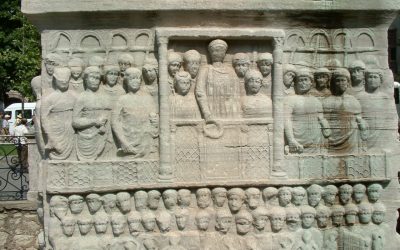
The history of Constantinople

photo by Radomil talk, CC BY-SA 3.0, via Wikimedia Commons
World history
20 January, 2017

The history of Constantinople is rich and multifaceted, spanning over a millennium and encompassing a wide range of cultural, religious, and political developments. Here’s an overview of the key aspects of Constantinople’s history, including its people, religion, the sack of 1204, and the eventual change of its name to Istanbul.

Founding and early history

Constantinople, originally known as Byzantium, was founded by Greek colonists from Megara in 667 BC. Its strategic location on the Bosporus Strait made it an important trading and military outpost. The city was re-founded as Nova Roma by Roman Emperor Constantine the Great in 330 AD, but it soon became known as Constantinople, the “City of Constantine.” It served as the capital of the Eastern Roman (Byzantine) Empire for over a thousand years, distinguishing itself as a centre of art, culture, and learning.

People and religion

The population of Constantinople was diverse, comprising Greeks, Armenians, Latins (Western Europeans), Jews, and many others over the centuries. This multicultural milieu contributed to the city’s vibrant cultural life.


Christianity played a central role in the life of Constantinople from the time Constantine the Great declared it the new capital of the Roman Empire and embraced Christianity. The city was the seat of the Ecumenical Patriarchate of Constantinople, one of the oldest Christian institutions and a central figure in Eastern Orthodoxy.

The sack of Constantinople in 1204

The Fourth Crusade, originally intended to conquer Muslim-controlled Jerusalem through an invasion of Egypt, was diverted to Constantinople. In 1204, Crusader forces sacked the city, marking a devastating blow to the Byzantine Empire. The Crusaders looted, destroyed parts of the city, and established the Latin Empire, which lasted until 1261 when the Byzantines reclaimed their capital. This event weakened the Byzantine Empire significantly, leading to its eventual fall to the Ottoman Turks.

Change of name to Istanbul

The name change from Constantinople to Istanbul reflects the city’s complex history and cultural shifts. Although the city was officially renamed Istanbul after the Republic of Turkey was established in 1923, the name “Istanbul” had already been in use locally for centuries before the Ottoman conquest in 1453. 

The name “Istanbul” may derive from a Greek phrase “eis tin Poli”, meaning “to the city,” indicating how central Constantinople was to the region. The official renaming was part of Mustafa Kemal Atatürk’s reforms, which aimed to secularise and modernise Turkey, including replacing the Ottoman Empire’s many languages and alphabets with a unified Turkish language written in the Latin alphabet.

The history of Constantinople/Istanbul is a testament to the city’s resilience and ability to reinvent itself while preserving its rich heritage. Today, Istanbul remains a vibrant metropolis that straddles two continents and serves as a bridge between East and West.


Share this:

  • Share on Facebook (Opens in new window) Facebook
  • Share on X (Opens in new window) X
  • Share on Reddit (Opens in new window) Reddit
  • Share on Pinterest (Opens in new window) Pinterest
  • Share on WhatsApp (Opens in new window) WhatsApp

Related

You May Also Like…

More details Merida - Palacio de Gobierno - Murals by Fernando Castro Pacheco: The Spanish bishop Diego de Landa is burning figures of Mayan deities

The forgotten fire: A history of the Darfur Genocide

The Japanese occupation of Beiping (Beijing) in China

The rise and fall of the Japanese Empire

Rescuers and residents searching the rubble of the destroyed Shajareh Tayyebeh elementary school in Minab

The fracturing of the international order in an age of impunity

US ambassador to the UN, Eleanor Roosevelt, holding the Universal Declaration of Human Rights in 1949

The role and limitations of international law in world affairs


Reader Interactions

Leave a ReplyCancel reply

Sidebar

This Day In History

Events in History
On this day in 1856 The Treaty of Paris (1856) was signed, marking the end of the Crimean War. This historic agreement was reached between Russia and a coalition of nations, including France, Great Britain, Sardinia-Piedmont, and Turkey, effectively closing a tumultuous chapter in European history.

World history recent posts in

More details Merida - Palacio de Gobierno - Murals by Fernando Castro Pacheco: The Spanish bishop Diego de Landa is burning figures of Mayan deities

The forgotten fire: A history of the Darfur Genocide

The Japanese occupation of Beiping (Beijing) in China

The rise and fall of the Japanese Empire

Rescuers and residents searching the rubble of the destroyed Shajareh Tayyebeh elementary school in Minab

The fracturing of the international order in an age of impunity

US ambassador to the UN, Eleanor Roosevelt, holding the Universal Declaration of Human Rights in 1949

The role and limitations of international law in world affairs

Trending

  • Multicultural London English: Evolution from cockney to a global linguistic mosaic
    Multicultural London English: Evolution from cockney to a global linguistic mosaic
  • History of Canada - From colonisation to independence
    History of Canada - From colonisation to independence
  • Holy Wars: The blood-soaked legacy of conflicts fought in the name of Christianity
    Holy Wars: The blood-soaked legacy of conflicts fought in the name of Christianity
  • The rise and fall of the Persian Empire
    The rise and fall of the Persian Empire
  • The Banana Wars: America's forgotten military interventions in Central America
    The Banana Wars: America's forgotten military interventions in Central America
  • The First Red Scare: America's post-WWI fear of Communism and radical change
    The First Red Scare: America's post-WWI fear of Communism and radical change
  • Women's suffrage movement in Britain
    Women's suffrage movement in Britain
  • The major branches of Islam: History, beliefs, and differences
    The major branches of Islam: History, beliefs, and differences
  • 23 April is St George's Day - Who was he?
    23 April is St George's Day - Who was he?
  • The British Empire: An overview of empire and colonisation
    The British Empire: An overview of empire and colonisation

Connect

  • YouTube
  • TikTok
  • Bluesky

ABOUT

CONTACT

PRIVACY POLICY

COOKIES

Copyright © 2026 · Our History · All Rights Reserved