
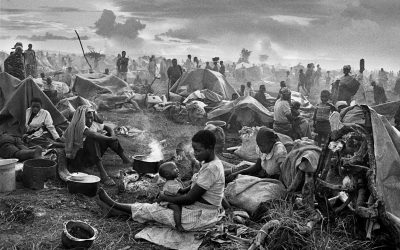
The 1994 Rwandan genocide is one of modern history’s most horrific and tragic events. In just 100 days, an estimated 800,000 people, primarily from the minority Tutsi community, were brutally slaughtered by ethnic Hutu extremists. This genocide, marked by its unprecedented scale and cruelty, left an indelible mark on the collective memory of Rwanda and the world.
The origins of the genocide
To understand the roots of the genocide, we must delve into Rwanda’s troubled history. The country has long been divided along ethnic lines, with the Hutus constituting the majority (approximately 85%) and the Tutsis forming a minority. In 1959, the Hutus overthrew the Tutsi monarchy, exiling tens of thousands of Tutsis to neighbouring countries like Uganda.
In response to their exile, a group of Tutsi exiles formed a rebel group known as the Rwandan Patriotic Front (RPF). The RPF invaded Rwanda in 1990, sparking a violent conflict that continued until a peace deal was reached in 1993. However, tensions remained high, and the stage was set for the horrific events that would unfold in 1994.
The assassination of President Habyarimana
On the night of 6 April 1994, a plane carrying Rwandan President Juvenal Habyarimana, a Hutu, was shot down, resulting in the deaths of everyone on board. Hutu extremists quickly blamed the RPF for the assassination and used it as a pretext to launch their genocidal campaign.
The genocide was carried out with meticulous organisation and brutality. Hutu extremists distributed lists of government opponents to militias, who systematically hunted down and killed them and their families. Even neighbours turned against each other, and husbands murdered their Tutsi wives to avoid being killed themselves. The use of machetes, a common household tool, became a weapon of choice in the hands of the killers.
The massacre’s viciousness can be attributed, in part, to the dehumanisation of the Tutsi population. Rwanda’s tightly controlled society, organised in a hierarchical pyramid structure, facilitated the extremists’ ability to carry out their plans. The extremist party, MRND, had a youth wing called the Interahamwe, which was transformed into a militia responsible for the mass slaughter. Radio station RTLM and hate-filled newspapers disseminated propaganda that labelled Tutsis as “cockroaches” and incited the population to exterminate them.
The international response
Despite the presence of UN and Belgian forces in Rwanda, the UN mission lacked the mandate and resources to intervene effectively. The memory of US troops’ deaths in Somalia just a year prior made the US reluctant to get involved in another African conflict. The withdrawal of Belgian soldiers after the killing of ten of their own further diminished the UN’s ability to prevent the unfolding genocide. The French, who were aligned with the Hutu government, sent forces to evacuate their citizens but were accused of not doing enough to halt the mass killings.
The aftermath and consequences
Backed by the Ugandan army, the RPF gradually gained control of more territory, culminating in their entry into the capital city, Kigali, on 4 July 1994. In the aftermath, approximately two million Hutus, including civilians and those involved in the genocide, fled to the Democratic Republic of Congo and neighbouring countries, fearing reprisals. The RPF’s pursuit of the Interahamwe led to further violence and displacement in the region, resulting in the deaths of thousands.
Unrest and conflict in DR Congo
The power shift in Rwanda had profound consequences for the neighbouring Democratic Republic of Congo (then Zaire). The RPF embraced militias fighting against the Hutu militias, and the Congolese army aligned with them. This, in turn, sparked a complex conflict involving six countries and numerous armed groups vying for control of the mineral-rich region. The resulting conflict lasted until 2003, with an estimated five million deaths.
The pursuit of justice
In response to the genocide, the UN Security Council established the International Criminal Tribunal for Rwanda (ICTR) in the Tanzanian town of Arusha. The ICTR indicted 93 primarily Hutus individuals and conducted lengthy and costly trials to bring them to justice. The tribunal played a crucial role in holding senior officials accountable for their role in the genocide.
Within Rwanda, community courts known as Gacaca were created to expedite the prosecution of hundreds of thousands of murder suspects awaiting trial. These courts, which operated from 2002 to 2012, aimed to achieve truth, justice, and reconciliation among Rwandans. However, the overcrowded prisons and the slow pace of justice resulted in the deaths of thousands of suspects before they could be brought to trial.
Rwanda today and the legacy of the genocide
Rwanda has undergone a remarkable transformation under the leadership of President Paul Kagame. His policies have fostered rapid economic growth and positioned Rwanda as a technological hub. However, critics argue that dissent is not tolerated, and there have been allegations of unexplained deaths of political opponents inside and outside the country. The memory of the genocide remains deeply sensitive, and discussing ethnicity is illegal in Rwanda. While the government cites the need to prevent hate speech and further bloodshed, some argue that it hinders genuine reconciliation.
The Rwandan genocide is a stark reminder of the depths of human cruelty and the devastating consequences of ethnic hatred. We must remember and learn from this dark chapter in history, striving for a world where such atrocities never occur again.


Leave a Reply