
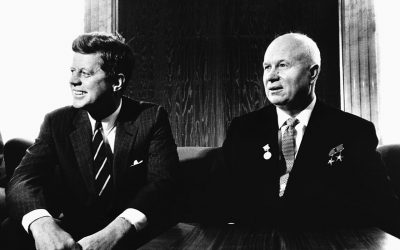
In the records of Cold War history, few episodes are as gripping or as fraught with the spectre of global annihilation as the Cuban Missile Crisis of October 1962. Over thirteen tense days, the world teetered on the brink of nuclear war as the United States and the Soviet Union faced off over the installation of Soviet nuclear missiles in Cuba. This confrontation remains a defining moment of the 20th century, illustrating the razor’s edge upon which international peace sometimes balances.
Background
The roots of the Cuban Missile Crisis stretch back to the aftermath of World War II, when the United States and the Soviet Union emerged as superpowers in a new global order defined by their ideological rivalry. This period, known as the Cold War, was marked by proxy wars, espionage, and the ever-present threat of nuclear escalation.
Cuba entered this volatile scene in 1959 when Fidel Castro led a revolution that ousted the US-backed dictator Fulgencio Batista. Castro, alongside his revolutionary ally Che Guevara, transformed Cuba’s political landscape and increasingly adopted socialist policies that alarmed Washington.
After the United States imposed economic sanctions and backed the failed Bay of Pigs invasion in April 1961, Castro sought protection from the Soviet Union, fearing another American intervention. Guevara, who served as a key advisor and Cuba’s Minister of Industries, was instrumental in forging closer ties with the Soviet bloc and advocated for a more militant stance against American imperialism. By 1962, Castro’s Cuba had become firmly aligned with Moscow, and the geopolitical chessboard saw the US attempting to contain the spread of communism while the Soviet Union sought to support revolutionary movements and extend its influence, leading to a dangerous standoff just 90 miles off the coast of Florida.
Timeline of events
Discovery of the missiles
The crisis began in earnest on 16 October 1962, when President John F. Kennedy was informed that US reconnaissance planes had captured photographic evidence of Soviet missile bases under construction in Cuba. These missiles had the capability to strike much of the Eastern United States, including Washington, DC, with nuclear weapons, drastically altering the strategic balance of power. Castro had agreed to the Soviet missile deployment, viewing it as both a deterrent against future American aggression and a demonstration of solidarity with the communist world. Che Guevara, known for his uncompromising anti-imperialist views, supported the decision, believing that Cuba should be willing to risk confrontation to defend its sovereignty and revolutionary gains.
The thirteen days
The following days saw a complex web of negotiations, military manoeuvres, and backchannel communications. Kennedy convened a group of advisors, known as the Executive Committee of the National Security Council (ExComm), to deliberate on the US response. The options ranged from a full-scale invasion of Cuba to diplomatic overtures to the Soviet Union.
One of the most critical moments came on 22 October, when Kennedy addressed the nation, revealing the existence of the missiles to the American public and announcing a naval blockade of Cuba, termed a “quarantine”, to avoid legal implications of war. The world watched as Soviet ships, possibly carrying more military supplies to Cuba, approached the blockade line. In Havana, Castro mobilised Cuban forces and prepared for what he feared might be an imminent American invasion.
During this period, Castro’s resolve remained unwavering; he was prepared to defend Cuba at any cost and communicated to Soviet Premier Nikita Khrushchev his willingness to accept even nuclear retaliation if it meant preserving the revolution.
The crisis peaked on 27 October, a day filled with perilous incidents, including the downing of a U-2 spy plane over Cuba by Cuban anti-aircraft forces and the initiation of unauthorised U-2 flights over the Soviet Union, which could have been mistaken for a nuclear first strike. In a dramatic telegram sent that same day, Castro urged Khrushchev to consider launching a nuclear first strike against the United States if Cuba were invaded, demonstrating his readiness to sacrifice his nation in a nuclear exchange.
This letter shocked Soviet leadership and may have reinforced Khrushchev’s determination to find a peaceful resolution. However, behind the scenes, frantic diplomatic efforts were underway. An agreement was reached wherein the Soviet Union would dismantle its missiles in Cuba in exchange for a public US declaration not to invade Cuba and a secret promise to remove US Jupiter missiles from Turkey.
Castro felt betrayed when Khrushchev accepted the settlement without fully consulting him, viewing it as a capitulation that left Cuba vulnerable despite the pledge not to invade. Guevara shared Castro’s frustration, believing that the revolutionary cause had been undermined by Soviet pragmatism. Nevertheless, the crisis was resolved without military conflict, though tensions between Havana and Moscow remained strained in its aftermath.
Geopolitical implications
The Cuban Missile Crisis had immediate and long-lasting effects on international relations. In the immediate aftermath, it led to a thaw in US-Soviet relations, exemplified by establishing the Moscow-Washington hotline to prevent future crises and the signing of the Partial Nuclear Test Ban Treaty in 1963.
For Cuba, the crisis solidified Castro’s position as a survivor who had successfully navigated superpower politics, though it also highlighted the limits of his influence over his Soviet allies. Guevara’s growing disillusionment with Soviet policy would eventually lead him to pursue revolutionary activities elsewhere, culminating in his departure from Cuba and subsequent guerrilla campaigns in Africa and Latin America.
In the long term, the crisis brought the world to a stark realisation of the nuclear threat, fostering a more cautious approach to Cold War confrontations and laying the groundwork for subsequent arms control agreements.
Conclusion
The Cuban Missile Crisis stands as a testament to the dangers of nuclear brinkmanship and the value of diplomatic engagement. It vividly illustrates how close the world came to nuclear war and how leadership, diplomacy, and, at times, sheer luck can avert catastrophe. The roles of Castro and Guevara reveal the perspective of a small nation caught between superpowers, willing to risk everything for its sovereignty yet ultimately subject to decisions made in Moscow and Washington. The lessons of October 1962 continue to resonate, underscoring the need for vigilance, communication, and a commitment to peace in an uncertain world.


Leave a Reply