

Few nations on Earth occupy as dramatic a geography as Chile. Stretched along the southwestern edge of South America like a ribbon of extremes. From the driest desert on the planet in the north to the howling sub-Antarctic winds of Patagonia in the south, the land itself seems to have shaped its people into something resilient, stubborn, and fiercely particular. To understand Chile is to understand a story of survival: of indigenous peoples who held out against the most powerful empire in the Americas, of Spanish colonisers who carved a kingdom from the edge of the known world, and of a generation of revolutionaries who finally said enough.
The first peoples
Long before European sails appeared on the Pacific horizon, Chile was home to a mosaic of peoples whose cultures were as varied as the landscape they inhabited. In the far north, the Atacameño and Aymara peoples had adapted to one of the most hostile environments on Earth, the Atacama Desert, developing sophisticated irrigation systems and llama herding practices that allowed them to thrive where almost nothing else could. Along the central valley, the Mapuche — whose name means simply “people of the land” — cultivated crops, raised livestock, and organised themselves into a decentralised but formidably cohesive society. In the south, the Huilliche, Pehuenche, and Tehuelche peoples navigated dense forests and cold plains. At the same time, the Kawésqar and Yaghan mastered the freezing channels of Patagonia in bark canoes, surviving conditions that would kill most people within days.
The Mapuche deserve particular attention, not only because they were the most numerous indigenous group in what is now Chile, but because they achieved something almost unheard of in the colonial Americas: they never truly surrendered. Their society was organised not around kings or centralised authority but around longkos — local chiefs — and machis, spiritual leaders who were often women and who served as healers, seers, and intermediaries between the human and spirit worlds.
The Mapuche believed in a universe animated by forces both benevolent and destructive, and their ceremonies, songs, and oral traditions encoded a deep understanding of the natural world around them. They were farmers, weavers of extraordinary textiles, and skilled warriors who understood that their decentralised structure, so seemingly chaotic to European eyes, was in fact a tremendous military advantage. No single chief could be captured and made to surrender the whole nation. There was no single capital to conquer. The Mapuche simply had no point of collapse.
Even the Inca Empire, which at its height stretched from Ecuador to northern Argentina, managed to incorporate only the northern reaches of modern Chile into its domain. The Mapuche pushed back and maintained what historians now call the Biobío frontier, a rough boundary south of which Inca expansion simply stopped. This was not a minor feat. The Inca were masters of imperial absorption. The Mapuche refused to be absorbed.
The Spanish arrive
The conquest of Chile began not from Spain itself but from Peru, already the jewel of Spain’s New World empire. In 1536, Diego de Almagro led the first major Spanish expedition south from Cuzco, crossing the Andes with a force of several hundred Spaniards and thousands of indigenous allies. What he found disappointed him. Chile had no obvious cities of gold, no Aztec or Inca treasures waiting to be seized. His men suffered terribly from cold, hunger, and attacks by indigenous groups along the way. Almagro returned to Peru empty-handed, and for a few years, Chile seemed more trouble than it was worth.
Then came Pedro de Valdivia. In 1540, Valdivia set out with a smaller but more determined force, convinced that Chile could be a kingdom worth having even without rivers of gold. In February 1541, he founded the city of Santiago in the central valley, naming it Santiago del Nuevo Extremo — Santiago of the New Frontier. The name was apt. From the very beginning, Chile felt like the edge of everything.
Valdivia proved a capable and ruthless coloniser. He moved south systematically, establishing forts and towns, subjugating indigenous groups and forcing them into labour through the encomienda system, a legal arrangement that amounted, in practice, to enslavement, requiring indigenous people to provide labour and tribute to Spanish landholders in exchange for nominal Christian instruction. The central valley Mapuche and other northern groups were absorbed into this system, their populations devastated not only by forced labour but by the diseases, smallpox, typhus, measles, that swept through communities with no immune resistance.
But Valdivia pushed his luck. He drove south beyond the Biobío, into the Mapuche heartland, and in December 1553, his forces were ambushed near the fort of Tucapel. The man who led the attack was a Mapuche military leader named Lautaro, who had once served as Valdivia’s own stable boy and had used that proximity to study Spanish tactics, weapons, and the vulnerabilities of their horses. Lautaro had turned this knowledge into a new method of warfare: sustained guerrilla attacks that exhausted Spanish horses rather than confronting them directly, striking fast and withdrawing before European firepower could be brought to bear.
At Tucapel, Valdivia was captured. Accounts of his death vary; some say he was executed ritually, others that he was killed in combat, but the result was the same: the most powerful Spanish military mind in Chile was gone.
What followed was a conflict so prolonged and so brutal that it has its own name in Chilean history: the Arauco War. For nearly three centuries, from the mid-1500s to the late 1700s and even beyond, Spanish colonial authorities and then the Chilean Republic fought the Mapuche in a conflict that defied every attempt at resolution. Lautaro himself was killed in 1557, but the resistance continued. The Spanish tried everything: military campaigns, missionary conversion, trading alliances, and slave raids.
The Mapuche adapted to each tactic, incorporating Spanish horses and weapons into their own warfare, developing their own cavalry, and using the forest and the river systems of southern Chile as natural fortifications. The Biobío River became a recognised frontier, an official border, effectively separating the Spanish colony to the north from an independent Mapuche nation to the south.
Colonial Chile
Within Spanish-controlled territory, colonial Chile developed into something rather different from the grand viceroyalties of Mexico or Peru. There was no great silver mountain like Potosí, no vast indigenous urban infrastructure to take over. Chilean colonialism was built on agriculture: the fertile central valley produced wheat, livestock, and wine, and a landed class of Spanish settlers, the criollos, born in the Americas of Spanish descent, built great estates called haciendas worked by indigenous and mestizo labourers bound to the land through debt.
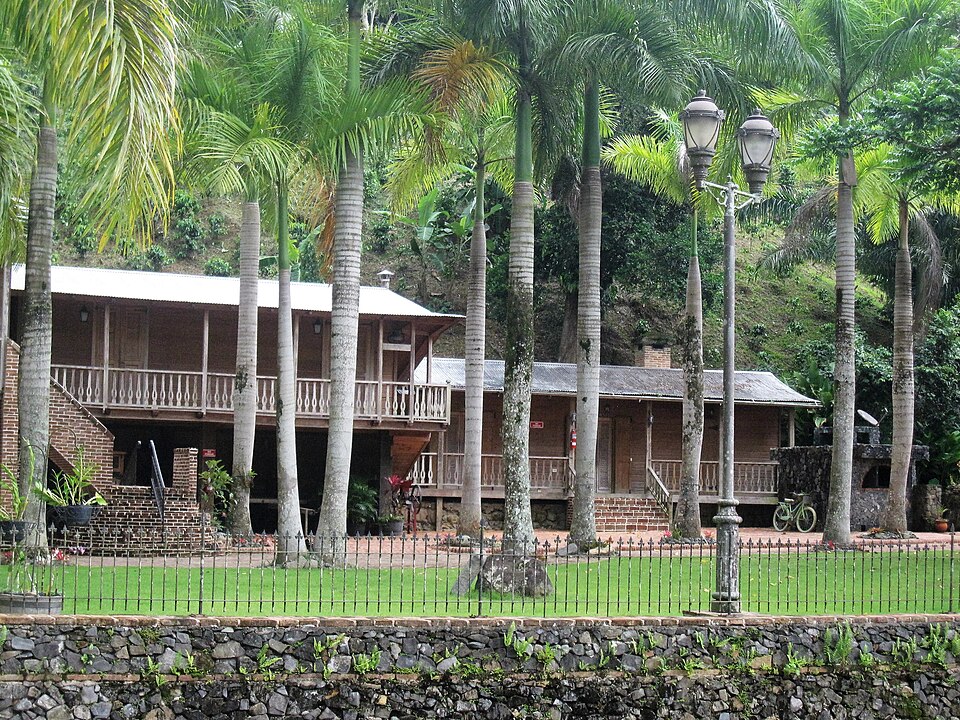
Administratively, Chile was a captaincy-general under the authority of the Viceroyalty of Peru, and its colonial capital, Santiago, grew slowly into a city of churches, convents, and aristocratic townhouses. Wealth was real but modest by the standards of the empire’s richer possessions. This relative poverty actually bred something unexpected: a strong local identity. The criollo elite of Chile developed a sense of themselves as Chileans first, as subjects of a distant Spanish crown second. They ran their own affairs. They fought their own wars. They felt, by the late eighteenth century, that they had earned something, and that the crown’s increasingly heavy-handed trade regulations and political interference were not the reward they deserved.
The road to independence
The spark that set Spanish America alight came not from within but from Europe. In 1808, Napoleon Bonaparte invaded Spain, deposed the Bourbon king, Charles IV, and placed his own brother, Joseph, on the Spanish throne. Suddenly, the question of legitimate authority was thrown open across the empire. If the king to whom subjects owed their allegiance had been removed, to whom did they owe loyalty now? The answer, in Chile and throughout Spanish America, was increasingly: to themselves.
On 18 September 1810, a date still celebrated as Chile’s national day, a group of leading citizens in Santiago established a junta, a governing council, in the name of the deposed Spanish king but in practice as a first step toward self-rule. The movement was led primarily by criollo elites who wanted political and economic autonomy, not necessarily full independence. But events moved fast. The junta opened Chile’s ports to free trade, began publishing political pamphlets, and debated what kind of country Chile should become.
The years that followed are known in Chilean history as the Patria Vieja — the Old Fatherland —, and they were turbulent. The independence faction was far from unified. Conservatives wanted moderate reform; radicals wanted a complete break with Spain. Two of the most important figures of the period, José Miguel Carrera and Bernardo O’Higgins, were rivals as much as allies; both capable, both ambitious, both convinced they were the right man to lead Chile into freedom.
Spain, meanwhile, had not given up. In 1814, a royalist army crossing from Peru reconquered Chile in a campaign that ended at the Battle of Rancagua in October, a devastating defeat for the patriots in which O’Higgins and the surviving independence forces were forced to flee across the Andes into Argentina. The period that followed, the Reconquista, saw Spanish authority reimposed with harsh reprisals against independence sympathisers. It seemed, briefly, that the experiment was over.
It was not. In Argentina, O’Higgins joined forces with one of the great military minds of the independence era: José de San Martín, an Argentine-born general who had served in Spain’s own armies and who now devoted himself to liberating the continent. San Martín’s plan was audacious — to cross the Andes in winter with an army, surprise the royalist forces in Chile, and use Chile as a base to attack the royalist stronghold of Peru. In January 1817, San Martín and O’Higgins led roughly five thousand soldiers over the Andes through some of the highest mountain passes in the world, an achievement that ranks among the great military logistical feats of the nineteenth century. Men and mules died from altitude sickness and cold. Artillery was disassembled, hauled up mountainsides, and reassembled. The crossing took three weeks.
On 12 February 1817, the Army of the Andes defeated the royalist forces at the Battle of Chacabuco, and the road to Santiago was open. O’Higgins entered the capital as liberator. On 12 February 1818, exactly one year after Chacabuco, Chile formally declared independence from Spain. O’Higgins, now Supreme Director, signed the declaration. The final military confirmation came at the Battle of Maipú in April 1818, when royalist forces making one last push were decisively defeated. The war was effectively over.
What independence meant
Chilean independence was a revolution led by elites, and it showed. The Mapuche, whose centuries of resistance had perhaps more claim to the title of independence fighters than anyone, were not liberated; they remained on their southern frontier, and within decades the new Chilean Republic would wage its own campaigns against them with as much brutality as any Spanish governor. The mestizo and indigenous workers of the haciendas did not see their conditions change dramatically overnight.
Freedom in 1818, meant primarily freedom for the criollo landowning class to govern themselves without interference from Madrid.
But the declaration of independence planted seeds that would grow in complicated directions. O’Higgins himself, autocratic in office, was deposed in 1823. What followed were decades of political turbulence as Chileans argued over what their republic should actually look like: conservative or liberal, centralised or federal, clerical or secular. These arguments produced constitutions, coups, and, by the middle of the nineteenth century, a political culture distinctive enough to make Chile one of the more stable republics on a turbulent continent.
The country that emerged carried all its contradictions forward: the European and indigenous mixed into something neither and both, the geography still stunning and extreme, the people still marked by that quality forged over three centuries of frontier life, proud, resilient, and stubbornly, unmistakably Chilean.


Leave a Reply