
In the tumultuous history of colonial North America, the Beaver Wars, fought intermittently from the early 17th century to the late 17th century, stand out as a significant series of conflicts. These wars, primarily driven by the lucrative fur trade and involving various Native American tribes and European powers, reshaped the geopolitical landscape of eastern North America. The Beaver Wars were not just about controlling territory but also about asserting power, influence, and survival in a rapidly changing world.
The fur trade: Catalyst of conflict
The Beaver Wars were primarily fueled by the European demand for beaver pelts, used in the fashion industry, particularly for making hats. This demand led to the rise of a robust fur trade in North America, with French, English, and Dutch traders vying for control of the trade. The Native American tribes, key players in this trade, found themselves drawn into European rivalries, leading to a complex web of alliances and hostilities.
The Iroquois Confederacy: A central force
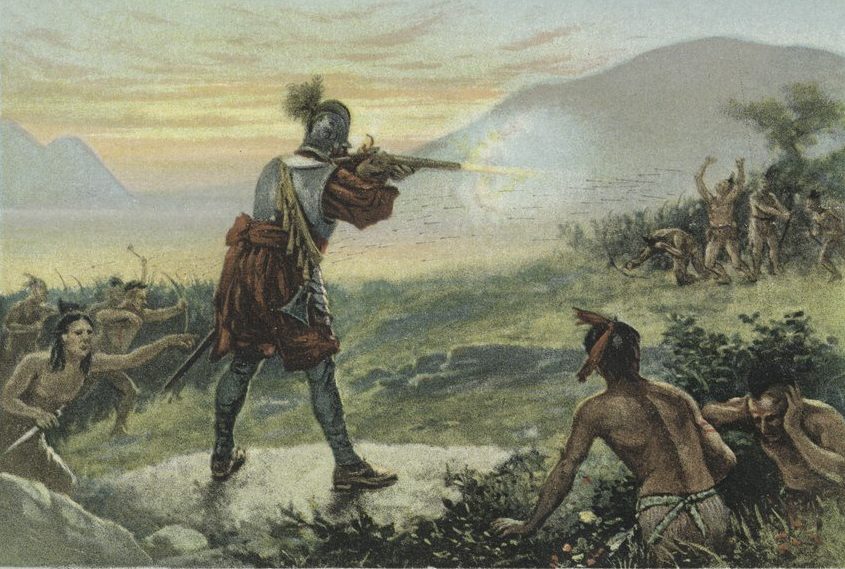
At the heart of the Beaver Wars was the powerful Iroquois Confederacy, a coalition of tribes including the Mohawk, Oneida, Onondaga, Cayuga, and Seneca. The Iroquois, seeking to expand their territory and control the fur trade, waged aggressive wars against neighbouring tribes. Their military prowess and their strategic use of European firearms obtained through trade made them a formidable force.
The French and Huron alliance
The French, who had established a presence in Canada, became key players in the Beaver Wars. They formed an alliance with the Huron, a tribe that was a significant supplier of furs and a long-standing enemy of the Iroquois. This alliance put the French in direct conflict with the Iroquois Confederacy.
Major conflicts and campaigns
The Beaver Wars were marked by a series of brutal campaigns, raids, and battles. One of the most significant was the destruction of the Huron by the Iroquois in the mid-1640s. This victory significantly weakened French influence in the region and disrupted the fur trade.
Following their victory over the Huron, the Iroquois turned their attention to other tribes, including the Eries, Susquehannocks, and Neutrals, seeking to dominate the entire region. These campaigns were characterised by intense violence and were often fueled by revenge and the desire for control over hunting grounds.
Dutch and English involvement
The Dutch, and later the English, who took over Dutch colonies in North America, also played a significant role in the Beaver Wars. They were the primary suppliers of firearms to the Iroquois, which enhanced the latter’s military capabilities. The Dutch and English involvement was driven by their desire to control the fur trade and counter French influence in the region.
The Treaty of Ryswick and the end of the wars
The Beaver Wars began to wind down towards the end of the 17th century. The Treaty of Ryswick in 1697, which ended a series of European conflicts, also helped ease tensions in North America. The Iroquois, having expanded their territory and solidified their control over the fur trade, began to focus more on diplomacy and trade relations.
Legacy and impact
The Beaver Wars profoundly impacted the Native American tribes of eastern North America. They led to significant shifts in tribal territories, the displacement of populations, and changes in the socio-political dynamics of the region. The wars also demonstrated the ability of Native American tribes to adapt to the introduction of European weaponry and trade goods.
The Beaver Wars helped define the spheres of influence in North America for the European powers, with the English and French delineating their respective territories. These conflicts set the stage for future struggles between the French and English in North America, culminating in the French and Indian War (1754-1763).
In a broader historical context, the Beaver Wars underscore the complexities of Native American-European interactions during the colonial era. They highlight the role of economic factors, such as the fur trade, in driving conflict and shaping the course of history. The Beaver Wars remain a crucial, if often overlooked, aspect of North American history, offering insights into the interplay of economic interests, military power, and diplomacy in a colonial setting.


Leave a Reply