
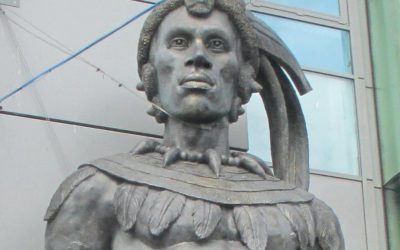
Shaka Zulu, born in 1787, remains one of the most formidable and innovative leaders in African history. As the founder of the Zulu Kingdom in the early 19th century, his military genius, social reforms, and leadership skills transformed a small clan into a powerful empire.
Early life and background
Shaka kaSenzangakhona was born out of wedlock to Nandi, a woman of the Langeni clan, and Senzangakhona, a minor chief of the Zulu. His birth was fraught with controversy, and his early years were marked by social stigma and hardship. Nandi and Shaka faced ostracism from their communities, which instilled in Shaka a fierce determination and resilience.
The young Shaka’s experiences with marginalisation and survival in a hostile environment shaped his character and worldview. He spent much of his early life in his mother’s care, moving between different tribes and learning various survival skills. This nomadic existence exposed him to different cultures and combat techniques, laying the foundation for his future military innovations.
Rise to power
Joining the Mthethwa
Around 1803, Shaka joined the Mthethwa, a powerful confederation of tribes led by Chief Dingiswayo. Under Dingiswayo’s mentorship, Shaka honed his military skills and began to emerge as a formidable warrior. His time with the Mthethwa was crucial, as it provided him with a platform to learn advanced military tactics and leadership principles.
Asserting leadership
The turning point in Shaka’s life came in 1816 when his father, Senzangakhona, died. With Dingiswayo’s support, Shaka claimed the Zulu chieftainship. However, his path was not easy; he had to eliminate rivals and consolidate his power. Shaka’s ruthless efficiency and strategic brilliance quickly subdued opposition, and he began to expand his influence.
Military innovations and strategies
The Iklwa and the Bull Horn formation
One of Shaka’s most significant contributions to warfare was the introduction of the iklwa, a short stabbing spear. Unlike the traditional throwing spears, the iklwa forced warriors into close combat, making battles more decisive and deadly. Shaka also revolutionised military tactics with the “Bull Horn” formation, which encircled and overwhelmed enemies through coordinated assaults by different regiments.
Regimental system
Shaka implemented a regimental system, organising his army into age-based groups called “amabutho.” This system fostered discipline, loyalty, and a strong sense of identity among the warriors. Each regiment had its own distinct uniform and shield design, enhancing unity and esprit de corps.
Psychological warfare
Shaka was a master of psychological warfare. He used intimidation tactics to demoralise his enemies before battles. His warriors’ fearsome reputation often preceded them, causing opponents to flee or surrender without a fight. Shaka’s strategic use of terror and reputation management amplified his military success.
Expansion and consolidation of the Zulu Kingdom
Shaka’s military campaigns were relentless and expansive. He defeated numerous tribes, either incorporating them into his kingdom or subjugating them as vassals. His conquests included the powerful Ndwandwe and the influential Mthethwa, which solidified his dominance in southeastern Africa. Shaka’s diplomacy was equally astute; he formed strategic alliances, and leveraged marriage ties to secure loyalty and peace.
Beyond military prowess, Shaka implemented significant social and economic reforms. He centralised the administration, standardising laws and customs across his kingdom. Shaka also promoted agricultural productivity, encouraging the cultivation of staple crops like maise and beans. These reforms ensured a stable food supply, supporting a growing population and a large standing army.
Leadership and governance
Shaka’s leadership was characterised by the centralisation of power. He demanded absolute loyalty from his subordinates and maintained strict control over his kingdom. Shaka’s governance model was hierarchical and autocratic, with a clear chain of command. This centralisation allowed for efficient decision-making and rapid mobilisation of resources.
Shaka cultivated a cult of personality, positioning himself as the undisputed leader and spiritual figurehead of the Zulu. His charisma and commanding presence inspired devotion and fear among his subjects. Shaka’s image as a semi-divine warrior-king reinforced his authority and legitimised his rule.
Challenges and decline
Despite his formidable leadership, Shaka’s reign faced internal challenges. His autocratic rule and relentless expansionism generated discontent among some factions. The intense demands on the population, including conscription and resource allocation, led to occasional unrest and resistance.
In 1828, Shaka’s reign came to a tragic end. He was assassinated by his half-brothers, Dingane and Mhlangana, who conspired with other dissatisfied nobles. Shaka’s death marked a turning point for the Zulu Kingdom. Although his successors struggled to maintain the empire’s cohesion and stability, Shaka’s foundational legacy endured.
Legacy and impact
Shaka Zulu’s military innovations had a lasting impact on warfare in southern Africa. His tactics and strategies influenced subsequent generations of warriors and leaders. The regimental system and close-combat techniques became standard practice in many African armies.
Shaka’s reign brought about a cultural renaissance in the Zulu Kingdom. He promoted Zulu customs, language, and traditions, fostering a strong sense of identity and pride among his people. Shaka’s era saw the consolidation of Zulu culture, which continues to thrive today.
Shaka Zulu’s legacy extends beyond the African continent. His story has been immortalised in literature, film, and academic studies. Shaka’s life and achievements offer valuable insights into leadership, innovation, and resilience. His influence on global perceptions of African history and culture remains profound.
Shaka Zulu’s extraordinary life and achievements cement his place as one of history’s greatest military leaders and nation-builders. The Zulu Kingdom he built not only reshaped the political landscape of southern Africa but also left an indelible mark on world history.


Leave a Reply