
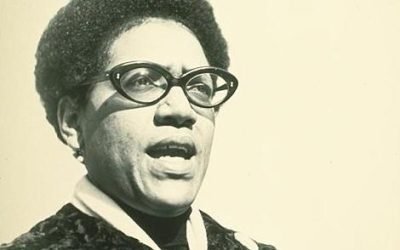
Audre Lorde, born Audrey Geraldine Lorde on 18 February 1934, was a towering figure in the fight against injustices, wielding her pen with the precision of a surgeon and the force of a warrior. Her work as a poet, essayist, and activist has left an indelible mark on literature, feminist theory, and the civil rights movement. Lorde’s exploration of identity, race, sexuality, and feminism has cemented her legacy as a foundational figure in intersectional activism. This term would only gain prominence decades after her most influential works were published.
Early life and education
Born in New York City to Caribbean immigrants, Lorde’s early life was steeped in the complexities of identity from a young age. She was the youngest of three daughters, and her relationship with her parents, especially her mother, deeply influenced her understanding of power dynamics and the importance of voice.
Lorde experienced a complicated relationship with her parents. Her interactions with them were limited, as they were preoccupied with their real estate business amidst the challenging economic conditions following the Great Depression. The moments she shared with her parents were often marked by emotional distance or a lack of warmth. Particularly strained was her connection with her mother, who harboured a deep mistrust of people with darker skin tones than her own, including Lorde. This relationship, governed by stringent family rules and a form of “tough love,” profoundly influenced Lorde’s later work, notably reflected in her poem “Story Books on a Kitchen Table” from the collection “Coal.”
Lorde’s early experiences with poetry as a form of expression led her to cultivate a lifelong commitment to addressing injustices through the written and spoken word.
Literary career and themes
Lorde’s literary career began in earnest with the publication of her first volume of poetry, “The First Cities,” in 1968. Her work is characterised by its directness, intensity, and unapologetic exploration of her identity as a Black lesbian woman. Lorde’s poetry and essays often intersect personal and political realms, arguing that the personal is political—a now-familiar refrain in feminist thought.
Her seminal works include “Sister Outsider,” a collection of essays and speeches that delve into the intersections of race, gender, and sexuality, and “Zami: A New Spelling of My Name,” which she described as a “biomythography,” blending biography, mythology, and history to explore the intricacies of her identity.
Activism and advocacy
Lorde’s activism was as multifaceted as her writing. She co-founded the Kitchen Table: Women of Color Press, which was instrumental in publishing works by minority women, and she was a vocal advocate for LGBTQ+ rights, women’s rights, and against racial injustices. Lorde’s critique of the feminist movement’s exclusion of minority voices helped lay the groundwork for what would later be recognised as intersectional feminism, emphasising the need to consider multiple, overlapping oppressions.
Legacy and impact
Audre Lorde passed away on 17 November 1992, but her legacy endures. Her concept of “the master’s tools will never dismantle the master’s house” remains a powerful critique of traditional approaches to fighting oppression, advocating instead for new, inclusive methods of resistance. Lorde’s work inspires activists and scholars, embodying her belief in the transformative power of speaking out.
In an era where the intersections of identity continue to shape struggles for justice, Audre Lorde’s writings remain as relevant and revolutionary as ever. Her life and work challenge us to confront our differences, embrace our identities, and work tirelessly for a more equitable world. Audre Lorde was not just a writer; she was a beacon of hope and a call to action, urging us to recognise our power and the necessity of our voices in the fight for liberation.


Leave a Reply