• Skip to main content
  • Skip to after header navigation
  • Skip to site footer
Our history archive

Our History

Our History Archive, where history comes to life

  • Home
  • Colonisation
  • World History
  • Civil Rights
  • World cultures
  • Features
  • Wellbeing
  • Popular Culture

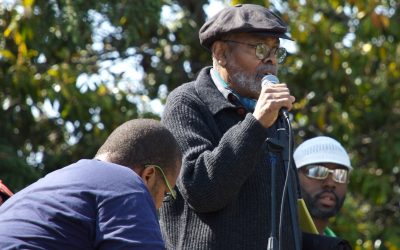
Amiri Baraka: A revolutionary poet and activist

Amri Baraka
http://www.amiribaraka.com/
Features
8 December, 2023

Amiri Baraka was an American poet, playwright, and activist who used his writing as a means to promote political change and address social issues. Born Everett LeRoi Jones on 7 October 1934, in Newark, New Jersey, he changed his name to Amiri Baraka in 1965 after embracing a new cultural identity as an African American Muslim. Throughout his life, his works spanned several genres and reflected various ideologies.

Early life and career

Baraka’s early life saw him spending significant time in the arts, having studied at Rutgers University and Howard University before joining the Air Force. After leaving the military due to unfortunate circumstances, he continued his education at Columbia University while supporting himself with various jobs.

However, it was in the late 1950s that Baraka rose to prominence in the New York City arts scene. As part of the Beat movement – a group of artists, poets, and writers who rebelled against mainstream culture – he found inspiration from other notable figures such as Allen Ginsberg and Jack Kerouac.


Ideologies

Throughout his career, Baraka engaged with multiple ideologies that evolved as he matured. Initially influenced by Marxism and Black Nationalism – a belief in the cultural and economic independence of African Americans – he later embraced socialism. This ideological evolution can be traced to works such as “Blues People” (1963), illustrating Baraka’s growing interest in African American history and cultural identity.

Achievements

Baraka’s literary achievements are profound. He authored numerous books of poetry, such as “Preface to a Twenty Volume Suicide Note” (1961) and “The Dead Lecturer” (1964), which established him as an essential voice in contemporary poetry.

In 1964, he gained widespread acclaim for his controversial play “Dutchman”, which depicted an explosive confrontation between a white woman and a young black man. The play was groundbreaking for its time, addressing issues of race and racism in America. He received the Obie Award for this work – a prestigious accolade for off-Broadway theatre.

Aside from his literary accomplishments, Baraka was influential as an activist, playing a pivotal role in Black Nationalist movements during the late 1960s. He co-founded the Black Arts Movement, which aimed to revitalise artistic expression within African American communities and further political change. This movement inspired the creation of various arts institutions, including the Black Arts Repertory Theatre/School (BARTS) and the Spirit House in Newark.


Later life and legacy

In his later life, Baraka continued advocating for social change, both through his writing and activism. He served as Poet Laureate of New Jersey from 2002 to 2003 but faced backlash for a controversial poem written after the 11 September attacks.

Amiri Baraka passed away on 9 January 2014, leaving behind a legacy that reaches beyond his literary works. As a revolutionary poet and activist, he contributed immensely to shaping African American culture, exposing racial inequalities, and promoting political change throughout his life. His words continue to resonate today as relevant reminders of society’s struggle for justice and equality.

Share this:

  • Share on Facebook (Opens in new window) Facebook
  • Share on X (Opens in new window) X
  • Share on Reddit (Opens in new window) Reddit
  • Share on Pinterest (Opens in new window) Pinterest
  • Share on WhatsApp (Opens in new window) WhatsApp

Related

You May Also Like…

More details Jesse Jackson surrounded by marchers carrying signs advocating support for the Hawkins-Humphrey Bill for full employment,

Keep hope alive: The rise, power, and legacy of Jesse Jackson

The revolutionary icon: Ernesto "Che" Guevara

Ernesto “Che” Guevara: : The revolutionary icon

Portrait of Bartolomé de Las Casas (c.1484 - 1566)

Bartolomé de las Casas and the birth of human rights

William Randolph Hearst

William Randolph Hearst: The king of Yellow Journalism


Reader Interactions

Leave a ReplyCancel reply

Sidebar

This Day In History

Events in History
On this day in 1681 William Penn was given a land grant for Pennsylvania by King Charles II.
More details Jesse Jackson surrounded by marchers carrying signs advocating support for the Hawkins-Humphrey Bill for full employment,

Keep hope alive: The rise, power, and legacy of Jesse Jackson

The revolutionary icon: Ernesto "Che" Guevara

Ernesto “Che” Guevara: : The revolutionary icon

Portrait of Bartolomé de Las Casas (c.1484 - 1566)

Bartolomé de las Casas and the birth of human rights

Trending

  • The British Empire: An overview of empire and colonisation
    The British Empire: An overview of empire and colonisation
  • The rise and fall of the Persian Empire
    The rise and fall of the Persian Empire
  • Understanding Sharia Law: Principles, practice, and global context
    Understanding Sharia Law: Principles, practice, and global context
  • The major branches of Islam: History, beliefs, and differences
    The major branches of Islam: History, beliefs, and differences
  • Operation Ajax and the shadow of empire: The 1953 Iranian coup
    Operation Ajax and the shadow of empire: The 1953 Iranian coup
  • The rise and fall of the Ottoman Empire: Six centuries of imperial power
    The rise and fall of the Ottoman Empire: Six centuries of imperial power
  • Holy Wars: The blood-soaked legacy of conflicts fought in the name of Christianity
    Holy Wars: The blood-soaked legacy of conflicts fought in the name of Christianity
  • Women's suffrage movement in Britain
    Women's suffrage movement in Britain
  • New Zealand: The dark history of Māori colonisation
    New Zealand: The dark history of Māori colonisation
  • The First Red Scare: America's post-WWI fear of Communism and radical change
    The First Red Scare: America's post-WWI fear of Communism and radical change

Connect

  • YouTube
  • TikTok
  • Bluesky

ABOUT

CONTACT

PRIVACY POLICY

COOKIES

Copyright © 2026 · Our History · All Rights Reserved