
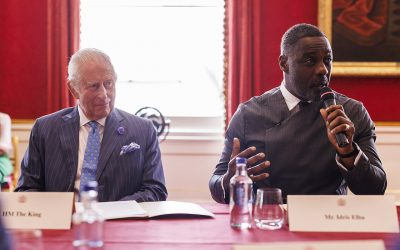
Days after King Charles knighted him at Windsor, Idris Elba sat down with British GQ and slammed a door. A Black James Bond isn’t “realistic,” he said. “James Bond was written how he was written for a reason.” Then the line that did the damage: “Let’s not try and make it woke.”
For a lot of Black readers, that single word stung, and to see why, you have to know where it came from.
“Woke” isn’t a Twitter invention. It’s old Black American survival language: stay woke, keep your eyes open to a world rigged against you. By the 2010s it meant racial conscience. Then the right stole it — and never agreed on what they’d taken. That’s the tell. “Woke” has been pinned on diversity training, a Black mermaid, pronouns, climate policy, statues, vaccines. Asked in court to define it, one governor’s team landed on something close to the belief that there are systemic injustices — which is exactly what the word always meant, now spat as an insult. A word that means everything can be aimed at anyone.
The left didn’t help. In liberal hands, “woke” swelled into a virtue worn as identity, sometimes as performance, until it lost its edge and became easy to mock. Over-claimed by its friends, weaponised by its enemies, it now belongs to no one. So when Elba reaches for it as a punchline, he isn’t using his grandparents’ word. He’s using the enemy’s edit of it.
What makes the timing unbearable is the woman in his knighthood photos. Days earlier, his wife, Sabrina Dhowre Elba, posted a video on TikTok where she was visibly shaken by a racist confrontation. A driver reversed into her parked car in London, turned hostile, and demanded, “Where are you from?” She answered “Canadian.” The woman asked again. This questioning has become more prolific, and Sabrina described it clearly.
@sabrinaelba 😑
♬ original sound – sabrina elba
People, she said, increasingly feel “comfortable treating black and brown people as conditional citizens.” That is staying woke in the original sense. Her husband, the same week, was telling a global magazine that doing so spoils the fun.
The anger comes from two directions. In America, Elba was the story, as Stringer Bell in The Wire. The award-winning show created a generation of characters that let Black audiences see themselves straight up and without apology. In Britain it cuts closer: the sound-system culture, the club nights, the years campaigning against knife crime through his Elba Hope Foundation, the very work his knighthood, “for services to young people,” was built on. This is a man who fought the downstream violence of who belongs and who doesn’t, then handed that mindset a compliment.
The tidy theory online, he got knighted and switched teams, is too simple. Elba has long resisted the “Black actor” label, and may see this as principled colour-blindness, not betrayal. Fine. But in 2003 Benjamin Zephaniah refused an OBE because the word “Empire” reminded him of slavery, proof that a Black public figure can weigh his words, because so many people listen through history’s ear.
That instinct went missing in GQ. Elba doesn’t owe a recantation. He owes an acknowledgement: that “woke,” in his mouth, hurt the people who need it most, including the one he married, and that he, of all people, should have defended the word rather than disowned it.


Leave a Reply