
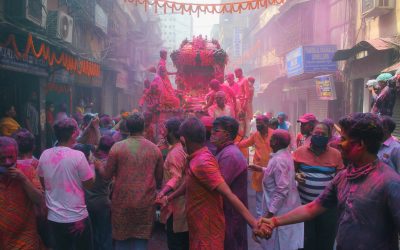
The Festival of Colours is a popular Hindu festival, also known as Holi or the Festival of Love. It is celebrated all over India and Nepal. It is usually observed in the spring and signifies the victory of good over evil, the arrival of spring, and the end of winter. Holi will fall on 8 March in 2023.
The history behind Holi is deeply embedded in Indian mythology, particularly in the legend of Prahlad and Hiranyakashyap.
The legend of Prahlad and Hiranyakashyap
According to the legend, Hiranyakashyap was a demon who wanted to be worshipped as a god by everyone. Prahlad, his son, disagreed with his father’s beliefs and refused to worship him. Furious, Hiranyakashyap plotted to kill his son, but every time he tried, Prahlad was saved by Lord Vishnu.
Finally, the demon asked his sister Holika to help him kill Prahlad. Holika had a magical cloak that protected her from fire, so she took Prahlad in her lap and sat on a pyre. As the fire rose, the cloak flew from Holika and covered Prahlad instead, and she burned to death. Lord Vishnu was not happy about Holika’s plans and magically swapped the cloak from her to Prahlad. This event is celebrated as Holika Dahan, the night before Holi.
The next day, people gather together and smear each other with different colours, sing, dance, and share sweets and drinks. It is a time for forgiveness, love, and renewal. Everyone is encouraged to forget and forgive the past and start anew. The festival has a unique way of bringing people together and spreading joy and happiness, even amidst the chaos and colours.
Why is Holi celebrated?
Holi holds immense cultural and religious significance for Hindus. Along with celebrating the victory of good over evil and the coming of spring, it symbolises unity and brotherhood. The festival is an opportunity to forget mutual differences and come together in a spirit of love and friendship. Moreover, it marks the beginning of a new season, harvest cycle, and phase of life, further emphasising its relevance to the core of Hindu philosophy.
Why is it called the festival of colours?
The Festival of Colours gets its name from the colourful powders and water that people throw at each other during the celebration. The use of colours symbolises the colourful nature of Hindu mythology and represents the bright and vibrant colours of spring. In addition to colours, people also use organic flowers and herbs to smear each other, signifying the abundance and prosperity of the spring season. The festival is a visual feast for the eyes as people move and dance in colourful costumes and surroundings, enhancing the festive atmosphere.


Leave a Reply