
The 1778 case of Knight v Wedderburn is a significant turning point in the history of slavery and the fight for freedom in Scotland. Joseph Knight, an enslaved man from Guinea, challenged his master, John Wedderburn, in a series of court battles that would ultimately lead to the abolition of personal slavery in Scotland.
Early life of Joseph Knight
Joseph Knight was born in Guinea, West Africa, and was captured and sold into slavery at a young age. He was transported to Jamaica, where he was bought by John Wedderburn, a Scottish plantation owner. Wedderburn took Knight under his wing, providing him with an education and training him as a valuable member of his household. In 1769, when Wedderburn decided to return to Scotland, he brought Knight with him.
Life in Scotland
Upon their arrival in Scotland, Wedderburn purchased the Ballindean estate in Perthshire, where the family settled. Joseph Knight continued to live and work in the Wedderburn household, eventually falling in love with a local servant girl named Annie Thomson. The couple married, and when Annie became pregnant, Knight sought permission from Wedderburn to leave his service and set up a home with his wife and child.
Refusal and arrest
Wedderburn refused Knight’s request, resulting in Knight’s subsequent arrest. This sparked a legal battle that would span four years. The case was more protracted than the English Somerset vs Stewart case, but it ultimately led to the abolition of personal slavery in Scotland in 1778.
The Knight v Wedderburn Case

The legal fight between Joseph Knight and John Wedderburn began in 1774 when Knight brought his case to the Justice of the Peace Court in Perth. Knight argued that since slavery was not recognised within Scotland, he should be considered free upon his arrival in the country, even if he had been legally bought in Jamaica. However, the justices disagreed, ruling in favour of Wedderburn.
Appeal to the Sheriff Court
Not willing to give up, Knight appealed the decision to the Perth Sheriff Court, where he won the case. The court ruled that “the state of slavery is not recognised by the laws of this kingdom, and is inconsistent with the principles thereof: That the regulations in Jamaica, concerning slaves, do not extend to this kingdom.”
The final appeal: Scotland’s Supreme Court
Wedderburn, unwilling to accept the decision, appealed to the Court of Session, Scotland’s Supreme Court in Edinburgh. He argued that Knight was not his slave but rather his ‘perpetual servant’ – a legal distinction that existed in Scottish law. Knight, of course, disagreed, and the final appeal began in 1778.
The court’s decision
In the final appeal, a panel of twelve judges presided over the case. Eight judges sided with Knight, while four were against him. They argued that the law keeping Knight in slavery was unjust and could not be supported in Scotland. This decision marked a significant victory for Joseph Knight and effectively led to the abolition of personal slavery in Scotland.
However, it is important to note that the slave trade itself was not abolished until 1807, and slaves in the colonies were not freed until 1838.
Life after freedom
Following the court’s decision, Joseph Knight and his wife Annie disappeared from the records, leaving their fate unknown. It is assumed that they lived out their lives in Scotland, but the exact date of Knight’s death is unknown.
The controversial lawyer Henry Dundas

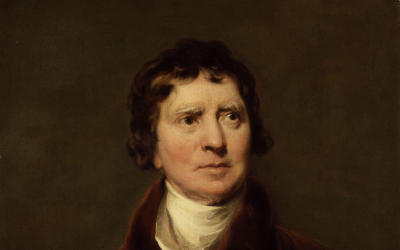
Interestingly, the lawyer who defended Knight’s right to freedom during the court battles was Henry Dundas, the 1st Viscount Melville. Some historians argue that Dundas was responsible for delaying the abolition movement, while others maintain that he supported gradual abolition. Nevertheless, it was this controversial figure who fought for Knight’s freedom.
Legacy of the Knight v Wedderburn Case
The Knight v Wedderburn case is remembered as a landmark decision in the fight against slavery in Scotland. In December 2022, Sir Geoff Palmer and the Lord President of the Court of Session, Lord Carloway, unveiled a plaque commemorating the case and its ruling that slavery was incompatible with Scots law.
The story lives on: Joseph Knight in popular culture
The compelling story of Joseph Knight and his fight for freedom has inspired various creative works. In 2003, author James Robertson published a novel titled “Joseph Knight” based on the freedman and his trial. Additionally, BBC Radio 4 broadcast a radio play, “The Trial of Joseph Knight,” in 2018, starring Nana Amoo-Gottfried as Knight and Ron Donachie as Wedderburn.
Conclusion
The 1778 Knight v Wedderburn case serves as a reminder of the atrocities of slavery and the resilience of those who fought against it. Joseph Knight’s determination to challenge his master and the legal system ultimately changed the course of history in Scotland and contributed to the global fight against slavery.


Leave a Reply