• Skip to main content
  • Skip to after header navigation
  • Skip to site footer
Our history archive

Our History

Our History Archive, where history comes to life

  • Home
  • Colonisation
  • World History
  • Civil Rights
  • World cultures
  • Features
  • Wellbeing
  • Popular Culture

George William Gordon – Jamaica’s National Hero

George William Gordon
World history
7 August, 2000

One of Jamaica’s National Heroes, George William Gordon was born to a slave mother and a planter father who was an attorney to several sugar estates in Jamaica. Seeing that his son George had special characteristics, Joseph Gordon decided to take an interest in his education from an early age. George went to live with his godfather, James Daly, in Black River and there completed his education. Gordon was mostly self-educated.
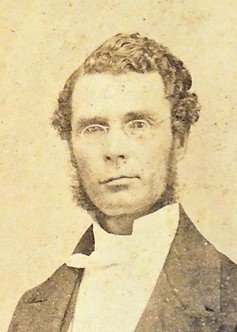
George William Gordon

George was a businessman and landowner in the parish of St. Thomas. In the face of attempts to crush the spirit of the freed people of Jamaica and again reduce them to slavery, Gordon entered politics. He faced severe odds, as the people whose interests he sought to serve did not qualify to vote.


In 1843, at the age of 23, Gordon was elected to the House of Assembly for St. Thomas but his public life began about 1844. He entered politics as an advocate for the poverty-stricken Negro peasants.  In 1865, when the economic condition of Jamaica was at a new low, Gordon spoke openly on behalf of the poor Negroes and with bitter criticism of Lieutenant Governor Edward Eyre.

He subdivided his own lands, selling farm lots to the people as cheaply as possible, and organised a marketing system, through which they could sell their produce at fair prices.

Gordon urged the people to protest against and resist the oppressive and unjust conditions under which they were forced to live.

During this period of oppression on the part of the Black people, Paul Bogle was very active in revolting against the system of government.  On 11 October Bogle with about 400 men, marched in Morant Bay where the Town Council was in session. There they raided a police station for arms and set the Court House on fire. The Custos, Baron von Ketelhodt, along with fifteen vestrymen was killed. It was from this incident that a warrant was sent out for Gordon’s arrest.

Despite having no direct involvement, Gordon was arrested and charged for complicity in what is now called the Morant Bay Rebellion in 1865. He was illegally tried by Court Martial and, despite the lack of evidence, convicted and sentenced to death. He was executed on 23 October 1865.


Share this:

  • Share on Facebook (Opens in new window) Facebook
  • Share on X (Opens in new window) X
  • Share on Reddit (Opens in new window) Reddit
  • Share on Pinterest (Opens in new window) Pinterest
  • Share on WhatsApp (Opens in new window) WhatsApp

Related

You May Also Like…

More details Merida - Palacio de Gobierno - Murals by Fernando Castro Pacheco: The Spanish bishop Diego de Landa is burning figures of Mayan deities

The forgotten fire: A history of the Darfur Genocide

The Japanese occupation of Beiping (Beijing) in China

The rise and fall of the Japanese Empire

Rescuers and residents searching the rubble of the destroyed Shajareh Tayyebeh elementary school in Minab

The fracturing of the international order in an age of impunity

US ambassador to the UN, Eleanor Roosevelt, holding the Universal Declaration of Human Rights in 1949

The role and limitations of international law in world affairs


Reader Interactions

Leave a ReplyCancel reply

Sidebar

This Day In History

No Events

World history recent posts in

More details Merida - Palacio de Gobierno - Murals by Fernando Castro Pacheco: The Spanish bishop Diego de Landa is burning figures of Mayan deities

The forgotten fire: A history of the Darfur Genocide

The Japanese occupation of Beiping (Beijing) in China

The rise and fall of the Japanese Empire

Rescuers and residents searching the rubble of the destroyed Shajareh Tayyebeh elementary school in Minab

The fracturing of the international order in an age of impunity

US ambassador to the UN, Eleanor Roosevelt, holding the Universal Declaration of Human Rights in 1949

The role and limitations of international law in world affairs

Trending

  • The rise and fall of the Persian Empire
    The rise and fall of the Persian Empire
  • Mexican culture: A living mosaic of civilisations, faith, and tradition
    Mexican culture: A living mosaic of civilisations, faith, and tradition
  • The British Empire: An overview of empire and colonisation
    The British Empire: An overview of empire and colonisation
  • The 1972 Munich Olympics massacre
    The 1972 Munich Olympics massacre
  • Holy Wars: The blood-soaked legacy of conflicts fought in the name of Christianity
    Holy Wars: The blood-soaked legacy of conflicts fought in the name of Christianity
  • The history of South Africa: From colonisation to independence
    The history of South Africa: From colonisation to independence
  • The Arab slave trade
    The Arab slave trade
  • The forgotten fire: A history of the Darfur Genocide
    The forgotten fire: A history of the Darfur Genocide
  • History of Canada - From colonisation to independence
    History of Canada - From colonisation to independence
  • The rise and fall of the Ottoman Empire: Six centuries of imperial power
    The rise and fall of the Ottoman Empire: Six centuries of imperial power

Connect

  • YouTube
  • TikTok
  • Bluesky

ABOUT

CONTACT

PRIVACY POLICY

COOKIES

Copyright © 2026 · Our History · All Rights Reserved