• Skip to main content
  • Skip to after header navigation
  • Skip to site footer
Our history archive

Our History

Our History Archive, where history comes to life

  • Home
  • Colonisation
  • World History
  • Civil Rights
  • World cultures
  • Features
  • Wellbeing
  • Popular Culture

Ancient Semitic people: The Canaanites

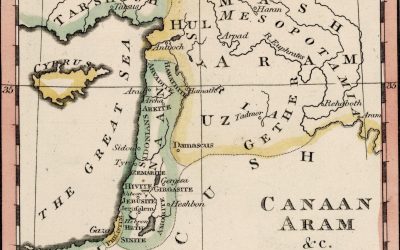
John Melish, Public domain, via Wikimedia Commons
World history
11 January, 2019

The Canaanites were an ancient Semitic-speaking people who lived in the region known as Canaan, which encompasses modern-day Israel, Palestine, Lebanon, and parts of Syria and Jordan. This region was known for its strategic location at the crossroads of Africa, Asia, and Europe, making it a melting pot of cultures, trade, and conflict throughout ancient history. The Canaanites played a significant role in the history of the ancient Near East from the late Bronze Age (around 3300 BCE) through to the early Iron Age (around 1200 BCE).

Culture and society

The Canaanites were not a single, unified nation but a group of city-states (such as Ugarit, Tyre, Sidon, and Byblos), each with its own king, deities, and administrative systems. These city-states often formed alliances or fought against each other, as well as against external invaders. The Canaanites are credited with significant contributions to art, architecture, and religion, with their pantheon of gods (like Baal, Asherah, and El) influencing neighbouring cultures, including the Israelites.

Language and writing

The Canaanites spoke Canaanite languages, a group within the Northwest Semitic languages, which includes Hebrew and Phoenician. They used a script that is a direct ancestor of the Phoenician alphabet, which is the ancestor of most modern alphabets, including Greek and Latin. This writing system represented a significant advancement in the history of writing due to its efficiency and simplicity compared to cuneiform and hieroglyphic scripts.


Economy and trade

Canaan was a fertile region that supported agriculture, but its location also made it a hub for trade. The Canaanites were renowned seafarers, particularly the Phoenicians, who emerged from Canaanite civilization. They established trade networks throughout the Mediterranean, trading goods such as wine, olive oil, cedarwood, and purple dye (made from the murex snail and highly valued in antiquity).

Religious influence

Canaanite religion had a profound impact on the religious landscape of the ancient Near East. Their myths, rituals, and deities influenced the religious practices of their neighbours. The Hebrew Bible, for example, contains numerous references to Canaanite gods and practices, reflecting the close interaction between the Israelites and Canaanites.

Decline and legacy

The Canaanite city-states gradually came under the influence or control of emerging powers, such as the Ancient Egyptians, the Hittites, and later the Assyrians, Babylonians, and Persians. Many Canaanites were assimilated into these cultures, but their legacy lived on through their contributions to language, religion, and trade networks. The Phoenicians, considered descendants of the Canaanites, continued to spread their influence across the Mediterranean, founding colonies such as Carthage, which would become a major power in its own right.

The term “Canaanite” is sometimes used in historical and archaeological contexts to refer to the cultures and peoples of the Canaan region. In contrast, in biblical contexts, it often refers to the non-Israelite inhabitants of the Land of Canaan. Despite the eventual decline of Canaanite city-states, their cultural and technological innovations had a lasting impact on the development of Western civilization.

Share this:

  • Share on Facebook (Opens in new window) Facebook
  • Share on X (Opens in new window) X
  • Share on Reddit (Opens in new window) Reddit
  • Share on Pinterest (Opens in new window) Pinterest
  • Share on WhatsApp (Opens in new window) WhatsApp


Related

You May Also Like…

More details Merida - Palacio de Gobierno - Murals by Fernando Castro Pacheco: The Spanish bishop Diego de Landa is burning figures of Mayan deities

The forgotten fire: A history of the Darfur Genocide

The Japanese occupation of Beiping (Beijing) in China

The rise and fall of the Japanese Empire

Rescuers and residents searching the rubble of the destroyed Shajareh Tayyebeh elementary school in Minab

The fracturing of the international order in an age of impunity

US ambassador to the UN, Eleanor Roosevelt, holding the Universal Declaration of Human Rights in 1949

The role and limitations of international law in world affairs


Reader Interactions

Leave a ReplyCancel reply

Sidebar

This Day In History

No Events

World history recent posts in

More details Merida - Palacio de Gobierno - Murals by Fernando Castro Pacheco: The Spanish bishop Diego de Landa is burning figures of Mayan deities

The forgotten fire: A history of the Darfur Genocide

The Japanese occupation of Beiping (Beijing) in China

The rise and fall of the Japanese Empire

Rescuers and residents searching the rubble of the destroyed Shajareh Tayyebeh elementary school in Minab

The fracturing of the international order in an age of impunity

US ambassador to the UN, Eleanor Roosevelt, holding the Universal Declaration of Human Rights in 1949

The role and limitations of international law in world affairs

Trending

  • The history of the full English breakfast: A cultural institution
    The history of the full English breakfast: A cultural institution
  • The rise and fall of the Persian Empire
    The rise and fall of the Persian Empire
  • What are British values?
    What are British values?
  • The First Red Scare: America's post-WWI fear of Communism and radical change
    The First Red Scare: America's post-WWI fear of Communism and radical change
  • Brown v. Board of Education of Topeka: A Landmark Supreme Court Case in the Fight for Equality
    Brown v. Board of Education of Topeka: A Landmark Supreme Court Case in the Fight for Equality
  • The decolonisation of Africa
    The decolonisation of Africa
  • The major branches of Islam: History, beliefs, and differences
    The major branches of Islam: History, beliefs, and differences
  • Five countries that colonised the world
    Five countries that colonised the world
  • The Reconquista: Faith, power, and identity in medieval Iberia
    The Reconquista: Faith, power, and identity in medieval Iberia
  • The American Civil Rights Movement of the 1960s: Leaders and progress made
    The American Civil Rights Movement of the 1960s: Leaders and progress made

Connect

  • YouTube
  • TikTok
  • Bluesky

ABOUT

CONTACT

PRIVACY POLICY

COOKIES

Copyright © 2026 · Our History · All Rights Reserved