
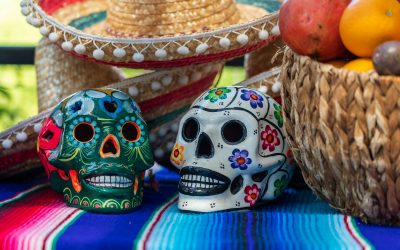
More than sombreros and mariachi
Mexican culture is one of the richest and most layered cultural identities in the world. Not a single tradition, but a fusion of ancient Indigenous civilisations, Spanish colonial influence, African heritage, regional diversity, and modern global creativity. To understand Mexico is to understand continuity: traditions thousands of years old still shape daily life, religious celebrations, food, language, and community structures.
Unlike cultures defined primarily by a single ethnic origin, Mexico’s identity was built through encounter and transformation. The result is a civilisation where Aztec cosmology can coexist with Catholic saints, where Indigenous languages survive alongside Spanish, and where pre-Columbian agricultural techniques still influence modern cuisine. Mexican culture is therefore not simply historical — it is a living synthesis constantly renewing itself.
Ancient foundations: The Indigenous civilisations
Long before Europeans arrived, the region now known as Mexico was home to some of the most sophisticated societies in the Americas. Civilisations such as the Olmec, Maya, Zapotec, Mixtec, and later the Mexica (commonly called the Aztecs) developed urban centres, monumental architecture, complex calendars, astronomy, writing systems, and elaborate religious structures.
The Maya cities of the Yucatán Peninsula and southern regions displayed advanced mathematics and astronomical observation, while the Mexica capital of Tenochtitlán — built on an island in Lake Texcoco — astonished Spanish conquerors with its canals, marketplaces, and population size rivalling European capitals. Indigenous governance systems included tribute networks, ritual authority, and structured social hierarchies supported by agricultural innovation such as chinampa floating farms.
Crucially, these ancient societies were not erased. Their descendants still live throughout Mexico today, and Indigenous cultural frameworks continue to influence language, crafts, social customs, and religious beliefs.
Conquest and cultural fusion
The Spanish conquest of the Mexica Empire in 1521 marked a profound turning point. Colonial rule introduced Catholicism, European legal systems, new agricultural animals, and global trade connections linking Mexico to Europe, Africa, and Asia through the Manila galleon routes.
Yet colonisation did not simply replace Indigenous culture. Instead, a process of cultural and ethnic mixing reshaped society. Indigenous communities adapted Catholic rituals into existing belief systems, producing syncretic traditions that still define Mexican spirituality today.
One of the clearest examples is the veneration of the Virgin of Guadalupe, whose reported apparition in 1531 to an Indigenous convert became a powerful symbol blending Catholic devotion with Indigenous identity and resistance. Over centuries, Mexican culture emerged not as purely Spanish or Indigenous, but as a deeply intertwined civilisation.
Faith, ritual, and the spiritual landscape
Religion remains central to Mexican cultural life, but it often operates in uniquely local forms shaped by centuries of blending traditions. Catholicism is the dominant faith, yet many practices incorporate Indigenous cosmology, ancestor reverence, and seasonal agricultural symbolism.
The most internationally recognised example is Día de los Muertos (Day of the Dead). Far from being a morbid festival, it is a joyful celebration of ancestral memory. Families build altars decorated with marigolds, candles, photographs, and favourite foods of deceased relatives. The belief is not that the dead are gone forever, but that they return temporarily to share in family life.
This approach reflects a broader Mexican cultural philosophy: death is not denied but integrated into the rhythm of existence. Public humour about death, skeletal imagery, and elaborate cemetery gatherings all demonstrate a worldview that treats mortality as part of community continuity rather than a purely tragic end.
Family, community, and social values
At the heart of Mexican society lies the concept of familia. Family networks often extend well beyond the nuclear household to include grandparents, cousins, godparents, and close family friends. These relationships form essential support systems for childcare, economic assistance, and emotional stability.
Respect for elders, strong parental roles, and communal celebrations reinforce these bonds. Events such as baptisms, quinceañeras (coming-of-age celebrations for girls turning 15), weddings, and patron saint festivals serve not only religious but also social purposes, reaffirming the individual’s place within a wider network.
Community identity also operates at neighbourhood and regional levels. Local festivals, markets, and shared public spaces create strong social cohesion. Even in major cities like Mexico City, traditional communal structures often persist within urban districts.
Food as cultural identity
Mexican cuisine is widely recognised as one of the world’s great culinary traditions and was declared UNESCO Intangible Cultural Heritage for its historical and cultural significance. At its core are ingredients domesticated in Mesoamerica thousands of years ago: maise, beans, squash, chilli peppers, tomatoes, cacao, and avocados.
Corn in particular holds deep symbolic importance. Tortillas, tamales, and other maise-based foods are not merely staples but cultural anchors connecting modern households to ancient agricultural systems.
Regional diversity plays a major role. Northern cuisine often emphasises grilled meats and wheat tortillas, while southern regions such as Oaxaca feature complex mole sauces, chocolate-based dishes, and strong Indigenous culinary continuity. Coastal areas incorporate seafood traditions shaped by both Indigenous and colonial trade influences.
Mexican cooking is therefore less a single cuisine than a culinary map of history.
Music, dance, and national expression
Music forms another essential pillar of Mexican cultural identity. Mariachi, perhaps the most famous Mexican musical tradition, developed in western regions such as Jalisco and combines violins, trumpets, guitars, and vocal storytelling. Mariachi songs often celebrate love, homeland, history, and emotional resilience.
Beyond mariachi, Mexico’s musical landscape includes ranchera ballads, Indigenous ceremonial drumming, Afro-Mexican coastal rhythms, and modern genres blending traditional sounds with contemporary pop and regional styles.
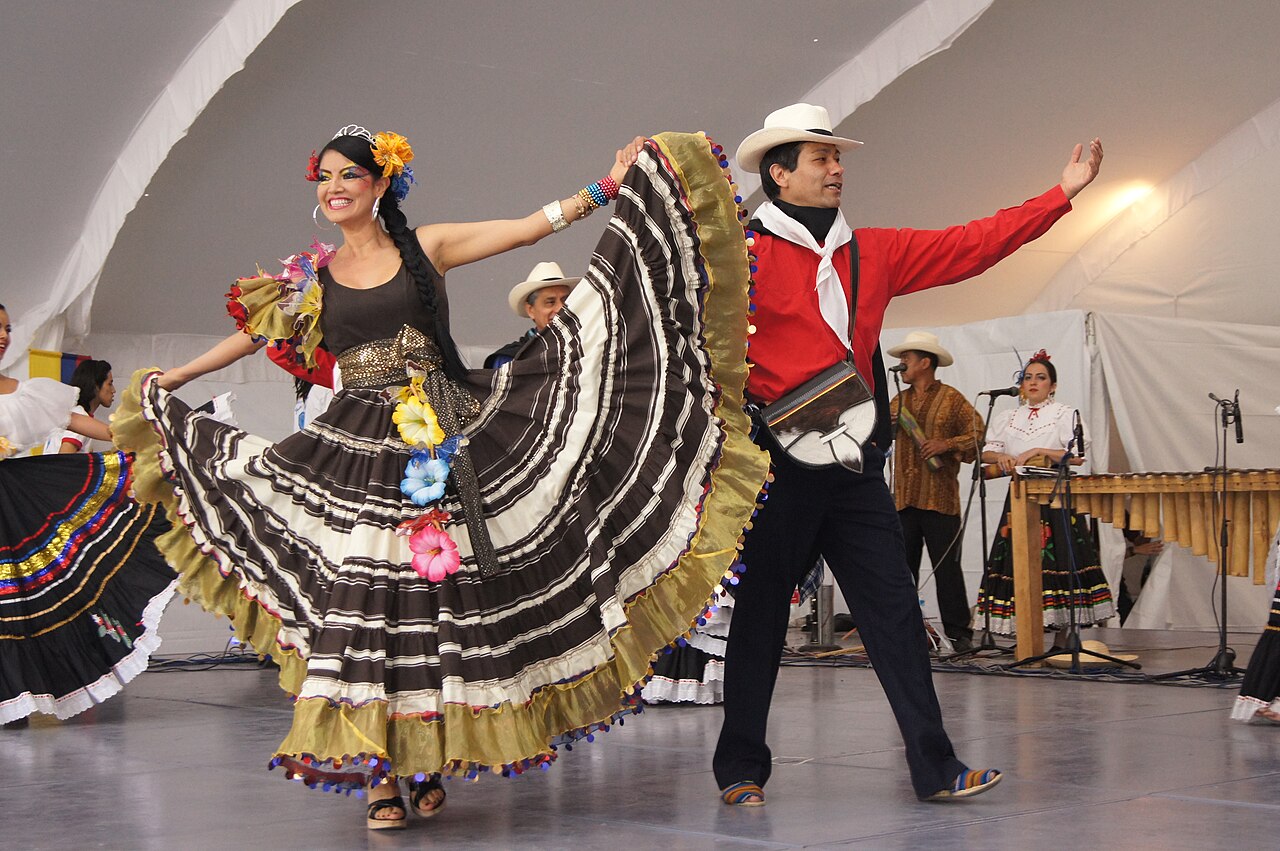
via Wikimedia Commons
Dance traditions such as folklórico showcase elaborate regional costumes and choreographies reflecting local history. These performances often serve as living archives of cultural memory, visually narrating the diversity of Mexico’s states and peoples.
Art, craft, and visual heritage
Mexican visual culture spans from ancient temple carvings to contemporary mural movements. Indigenous crafts such as pottery, weaving, beadwork, and wood carving continue to thrive in local artisan communities, often preserving techniques passed down over centuries.
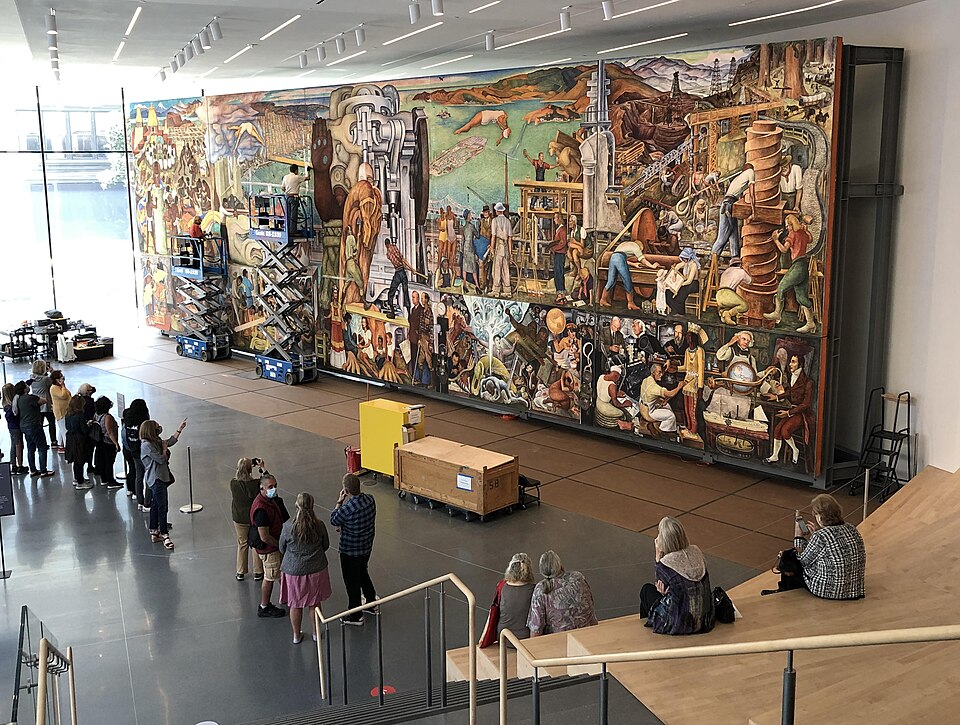
Stevensaylor, via Wikimedia Commons
In the twentieth century, muralists such as Diego Rivera, José Clemente Orozco, and David Alfaro Siqueiros transformed public art into political storytelling. Their massive murals depicted Indigenous history, revolutionary struggle, and social justice themes, turning walls into historical textbooks accessible to ordinary citizens.
This tradition reinforced a uniquely Mexican idea: art is not only aesthetic but social and educational, designed to express collective identity rather than private decoration alone.
Revolution and modern national identity
The Mexican Revolution (1910–1920) played a decisive role in shaping modern Mexican identity. Following decades of dictatorship and inequality, revolutionary leaders promoted land reform, Indigenous recognition, and national cultural pride.
Post-revolutionary governments actively celebrated Indigenous heritage as a core component of national identity, even while economic inequalities persisted. Public education, national festivals, and artistic programs all reinforced the idea of Mexico as a unified yet culturally diverse nation rooted in both ancient civilisation and modern statehood.
This era cemented many symbols still associated with Mexican identity today, including folk imagery, revolutionary heroes, and emphasis on social justice themes.
Mexican culture in the global era
Today, Mexican culture continues to evolve within a globalised world. Migration between Mexico and the United States has created vast transnational communities, spreading Mexican traditions far beyond national borders while also bringing international influences back into Mexico itself.
Mexican cinema, literature, cuisine, fashion, and music now command worldwide recognition. Cities such as Guadalajara, Monterrey, and Mexico City function as major cultural hubs where Indigenous traditions, colonial architecture, and contemporary urban creativity coexist.
Despite modern pressures, core cultural values, family solidarity, reverence for ancestry, regional pride, and festive public life remain deeply embedded in Mexican society.
A culture built on continuity
Mexican culture cannot be reduced to a single narrative of conquest, revolution, or modernisation. Instead, it is defined by continuity across centuries: ancient civilisations shaping colonial faith, colonial society shaping modern identity, and local traditions surviving alongside global change.
This layered inheritance explains why Mexican culture feels simultaneously ancient and vibrantly contemporary. It is a civilisation that absorbed conquest without losing memory, blended traditions without erasing origins, and continues to redefine itself while remaining rooted in one of the deepest historical foundations in the Americas.
To understand Mexico, therefore, is not simply to study a country; it is to encounter a living cultural continuum stretching from pre-Columbian temples to modern global cities, still shaped by the same enduring human connections to land, family, and shared history.


Leave a Reply