
A life shaped by poverty
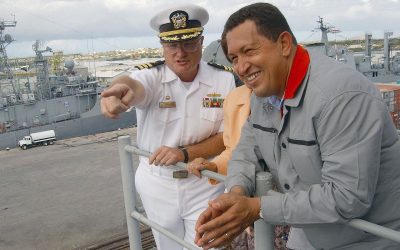
Hugo Rafael Chávez Frías was born on 28 July 1954 in Sabaneta, a small town in the western Venezuelan state of Barinas. His parents were both schoolteachers who struggled to support six children, and he and his brother Adán were largely raised by their paternal grandmother, Rosa Inés, in a lower-middle-class, government-subsidised home. It was a childhood defined by material hardship and deep familial warmth, one that Chávez would invoke repeatedly throughout his political career to ground his credentials as a man of the people.
He showed early aptitude as a student and a baseball player, talented enough, by some accounts, to dream of a professional career in the sport. Instead, in 1971, he enrolled at the Venezuelan Military Academy in Caracas, drawn partly by the opportunity for a free education and partly by the romance of military life. He graduated in 1975 with a degree in military arts and sciences. Over the following years, he rose steadily through the army’s officer corps while also developing a clandestine ideological life.
Chávez was radicalised by the contradictions he saw around him. Venezuela was one of Latin America’s most oil-rich nations. Yet poverty was endemic, and political power was monopolised by two parties, Acción Democrática and COPEI, which alternated in government under a pact known as Puntofijo, signed in 1958. Chávez grew fascinated by the ideas of Simón Bolívar, the 19th-century liberator of much of South America, and by the leftist military nationalism of figures such as Peru’s Juan Velasco Alvarado. In 1982, on the bicentennial of Bolívar’s birth, he and a group of fellow officers founded a secret organisation called the Movimiento Bolivariano Revolucionario-200 (the Bolivarian Revolutionary Movement) dedicated to transforming Venezuela from within.
The coup
The opportunity for transformation arrived sooner than expected, driven by economic catastrophe. In 1989, President Carlos Andrés Pérez implemented a sweeping IMF-backed austerity package. The result was the Caracazo — days of spontaneous rioting across Venezuela, during which security forces killed hundreds, possibly thousands, of people. It was a watershed moment. The social contract that had underpinned Venezuelan democracy since 1958 appeared to have broken down entirely.
On 4 February 1992, Chávez led a military coup against the Pérez government. It failed. Rebel units in Caracas, Maracaibo, Maracay and Valencia were quickly subdued. Chávez, recognising that his forces had been defeated, negotiated a surrender on the condition that he be allowed to address the nation on television. In a brief, improvised message, lasting less than two minutes, he told his fellow coup participants that their objectives had not been achieved “for now” (por ahora). The phrase was electric. Millions of Venezuelans, many of them poor and furious at the political establishment, heard in it not a concession of defeat but a promise of return.
He served two years in Yare prison, using the time to read voraciously —Bolívar, Marx, Mao, Gramsci, García Márquez—and to build his movement. When President Rafael Caldera granted him and his co-conspirators a pardon in 1994, Chávez emerged as a national political figure. He threw himself into the electoral process he had once disdained, travelling the country and perfecting a style of oratory that was simultaneously intimate and epic, homespun and visionary.
The Bolivarian Revolution begins
In December 1998, Chávez was elected president of Venezuela with 56 per cent of the vote. This crushing majority reflected both his personal charisma and the depth of popular exhaustion with the old regime. He was 44 years old. Almost immediately, he moved to dismantle the existing order. A new constituent assembly was convened; a new constitution was drafted and approved by referendum in 1999. Venezuela was formally renamed the Bolivarian Republic of Venezuela. The new constitution extended the presidential term, strengthened the state’s role in the economy, enshrined extensive social rights, and gave the military a formal role in national development.
What followed was one of the most consequential and contested political experiments in Latin American history. Chávez used Venezuela’s enormous oil revenues, which surged dramatically during the global commodity boom of the early 2000s, to fund a sweeping series of social programs he called misiones — missions.
Mission Barrio Adentro placed Cuban doctors in poor urban and rural communities that had never previously had access to healthcare.
Mission Robinson launched a mass literacy campaign, drawing on Cuban educational methods, that UNESCO credited with eliminating illiteracy in Venezuela by 2005.
Mission Ribas and Mission Sucre opened pathways for adults to complete their secondary and university education. Mission Mercal created a network of subsidised food markets serving millions of low-income Venezuelans. The results, by almost any standard social metric, were dramatic.
According to United Nations data, the poverty rate in Venezuela fell from around 49 per cent in 1998 to roughly 27 per cent by 2010. Extreme poverty fell even more sharply. Child malnutrition declined, infant mortality dropped, and school enrolment rose at all levels. The Gini coefficient — the standard measure of income inequality — fell significantly, making Venezuela one of the more equal countries in Latin America for the first time in its modern history. Life expectancy increased.
These achievements were real and transformative for millions of people who had lived on the margins of a society whose oil wealth had, for generations, flowed almost entirely to the wealthy and the middle class.
Conflict, consolidation, and controversy
Yet the Chávez era was defined as much by confrontation as by construction. The Venezuelan opposition, rooted in the old business and media establishment, viewed him as a would-be authoritarian dismantling democratic norms. In April 2002, sections of the military, supported by business leaders and with at least tacit encouragement from the United States, launched a coup that briefly removed Chávez from power. He was restored within 48 hours, carried back to Miraflores Palace by a combination of military loyalists and massive popular mobilisation in the streets of Caracas. The experience deepened his distrust of domestic elites and his contempt for Washington.
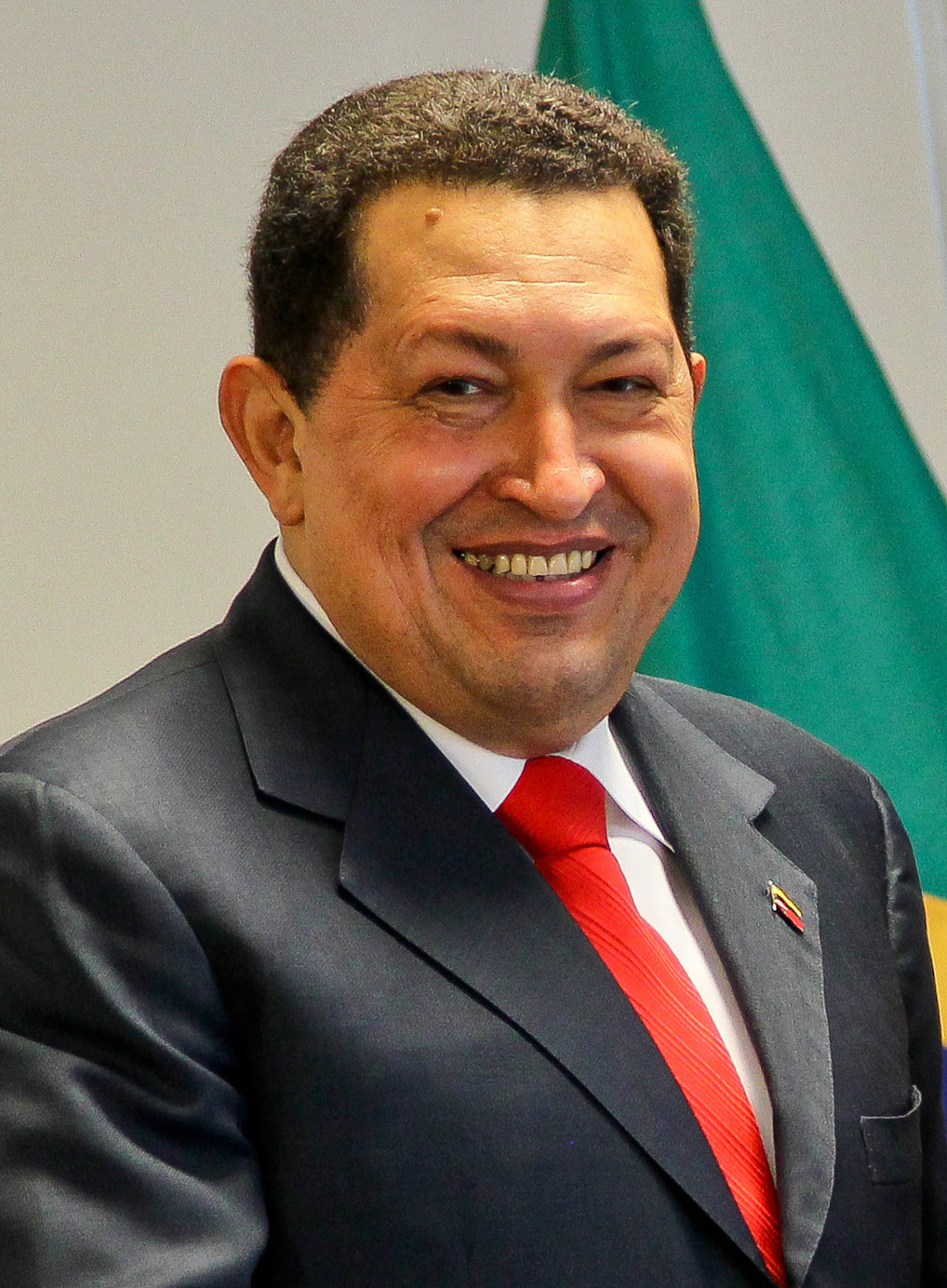
The following year, the opposition organised a general strike centred on the state oil company PDVSA, aimed at forcing Chávez out of office. It lasted two months and crippled the economy. When it failed, Chávez fired around 18,000 PDVSA employees who had participated in the strike and replaced them with loyalists. The move gave him direct political control over the country’s most important institution, the source of roughly 90 per cent of Venezuela’s export revenues. Critics argued it was the moment that oil became a purely political instrument; supporters argued that it was a necessary defence of a democratically elected government against a corporate insurrection.
Chávez survived a recall referendum in 2004, winning comfortably, and thereafter became more, rather than less, confrontational. His relationships with Cuba’s Fidel Castro, Bolivia’s Evo Morales, Ecuador’s Rafael Correa, Nicaragua’s Daniel Ortega and other left-wing Latin American leaders coalesced into a loose ideological bloc he called the Bolivarian Alliance for the Peoples of Our America, or ALBA.
He nationalised telecommunications companies, electricity providers, large agricultural estates, and eventually significant portions of the banking and manufacturing sectors. Press freedom deteriorated. Judges who ruled against the government were dismissed or intimidated. Political opponents faced harassment. The IACHR and international press freedom organisations documented a systematic erosion of institutional independence.
At the same time, Chávez remained a genuinely electrifying presence on the world stage. His speeches at the United Nations, including the 2006 address in which he called President George W. Bush “the devil” and claimed he could still smell sulfur at the podium, made him a figure of global controversy and, among many in the developing world, of genuine admiration. He was warm, funny, encyclopedic in his references, and capable of speaking for hours without notes. His weekly television program, Aló Presidente, ran for up to eight hours at a stretch and became a form of participatory political theatre in which Chávez announced new policies, read poetry, sang folk songs, and berated his enemies.
The oil curse and the seeds of collapse
The central irony of Chavismo is that the very commodity that funded its social achievements also contained the mechanism of its undoing. Venezuela’s economy under Chávez became even more dependent on oil than it had been before. When oil prices were high, the misiones flourished. When prices dipped, as they did briefly in 2009, the cracks appeared. Inflation remained chronically high throughout his presidency.
The private sector, battered by nationalisations and currency controls, contracted. Agricultural production fell, making Venezuela increasingly reliant on food imports funded by oil dollars. Infrastructure deteriorated. Corruption flourished inside the Bolivarian state, enriching a new class of politically connected elites that Venezuelans mockingly called the boliburguesía — the Bolivarian bourgeoisie.
Chávez showed little sustained interest in economic diversification or fiscal prudence, and the institutional capacity to manage the contradictions of a petro-socialist state was never properly built. The seeds of the catastrophic economic collapse that would follow his death were sown in the years of apparent abundance.
Cancer and death
In June 2011, Chávez revealed that he had been diagnosed with cancer, which he initially described vaguely as a “baseball-sized” tumour removed from his pelvic region. He underwent multiple surgeries and rounds of chemotherapy in Cuba, emerging periodically to assure Venezuelans of his recovery. The illness gave his political communication a new register — more reflective, more spiritual, more openly emotional. He won the 2012 presidential election against opposition candidate Henrique Capriles by 11 percentage points, a genuine if narrower victory that suggested his personal support remained substantial even as his health visibly declined.
In December 2012, after what would be his final surgery in Havana, he designated his vice president, Nicolás Maduro, as his chosen successor. He died on 5 March 2013, at the age of 58. Maduro announced his death in a tearful televised address. The outpouring of grief in Venezuela — vast, spontaneous, and clearly sincere among huge portions of the population — testified to the depth of the emotional bond he had forged over 14 years in power.
A contested legacy
The debate over Hugo Chávez’s legacy is one of the most polarising in contemporary political history, and it has been further complicated by what has happened in Venezuela since his death. Under Nicolás Maduro, the economy has collapsed with a thoroughness almost unparalleled outside wartime. By the early 2020s, oil production had fallen to a fraction of its peak levels, hyperinflation had destroyed savings and wages, and millions of Venezuelans — an estimated six to seven million by some counts — had emigrated in one of the largest displacement crises in the Western Hemisphere’s history. Maduro has governed with far greater authoritarianism than Chávez, rigging elections and imprisoning opponents.
Supporters of Chávez argue, with some justification, that the catastrophe of the Maduro years should not be attributed to Chavismo itself but to its corruption and abandonment by an incompetent successor operating in the brutal conditions created by US sanctions and an oil price crash. The social gains of the 2000s were real, they insist, and they improved the lives of millions of people who had been historically invisible.
Critics respond that the institutions Chávez weakened — judicial independence, press freedom, an autonomous central bank, a professional state oil company — were precisely those that a country would need to manage adversity, and that their destruction made the subsequent collapse not just possible but inevitable. They point out that no government, however well-intentioned, can indefinitely distribute oil rents in place of building a productive economy.
Both positions contain truth. Chávez was a leader of rare charisma and genuine popular legitimacy who achieved real improvements in the material conditions of Venezuela’s poor majority, while simultaneously constructing a political system centred on his own irreplaceable person and weakening the checks and balances that might have survived him. He was a democrat who won genuine elections and an authoritarian who bent institutions to his will. He was a visionary who inspired millions across Latin America and a demagogue who impoverished the country he loved.
What is not in dispute is his impact. Hugo Chávez changed Venezuela irrevocably, reshaped the politics of an entire continent for a generation, and posed questions about the relationship between democracy, social justice, oil wealth, and institutional integrity that, more than a decade after his death, remain unanswered.
Further (free) reading:
Hugo Chávez: The Definitive Biography of Venezuela’s Controversial President by Cristina Marcano and Alberto Barrera Tyszka


_(2).jpg)
Leave a Reply