
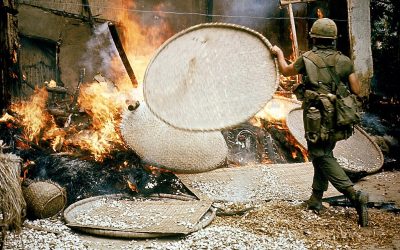
On a grim morning of 16 March 1968, in the small village of My Lai located in South Vietnam, an event unfolded that would forever mar the annals of military history. The My Lai Massacre, as it came to be known, involved the killing of hundreds of unarmed Vietnamese civilians by soldiers of the U.S. Army. This dark chapter of the Vietnam War serves not only as a reminder of the horrors that can arise in times of conflict but also underscores the importance of maintaining ethical conduct and accountability within military operations. Remembering My Lai is essential to ensure that such tragedies are never repeated, acting as a solemn lesson in humanity and the rules of engagement during warfare.
Background
The context of the Vietnam War set the stage for the massacre. As a focal point of Cold War tensions, Vietnam became a battleground for the ideological struggle between the communist North, supported by allies like the Soviet Union and China, and the capitalist South, backed by the United States and other Western nations. In an effort to stem the tide of communism, U.S. military strategy in South Vietnam emphasised search-and-destroy missions aimed at rooting out Viet Cong insurgents. It was within this framework that Charlie Company, 1st Battalion, 20th Infantry Regiment, 11th Brigade of the American Division, was tasked with a mission in My Lai, following intelligence reports of a Viet Cong stronghold within the village.
The Massacre
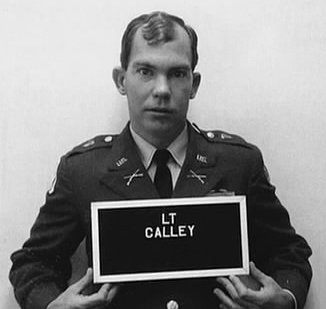
However, what awaited the soldiers in My Lai was not a fortified enemy but a village populated predominantly by women, children, and the elderly. The operation quickly degenerated into a massacre, as American soldiers, under the command of Lieutenant William Calley, commenced indiscriminate shooting, sexual assaults, and the burning of homes. Between 347 and 504 innocent lives were extinguished in a matter of hours, marking one of the most heinous acts of violence against civilians during the Vietnam War. The brutality exhibited at My Lai not only shattered lives and decimated a community but also raised profound questions about the conduct of war and the moral compass guiding those in uniform.
Aftermath and Reactions
The initial response to the My Lai Massacre was an attempt at cover-up by military officials, who presented the operation as a significant victory against Viet Cong forces, hiding the true nature of the atrocities committed. The truth, however, could not be contained indefinitely. Whistleblowers and investigative journalists brought the events of My Lai to public attention, prompting a military inquiry that led to the court-martial of Lt. Calley, among others.
Calley’s subsequent conviction for his role in the massacre and his initially severe sentence, later reduced to house arrest, sparked a nationwide debate. This discourse reflected the divided views on the war, the responsibilities of soldiers, and the complexities of moral judgment in combat situations.
Legacy
The repercussions of My Lai extended beyond the immediate horror and legal battles, influencing public opinion and military policy in profound ways. The massacre fueled the anti-war movement in the United States, adding to the growing disillusionment with the Vietnam War. On a broader scale, it prompted the U.S. military to reevaluate its training and operational doctrines, placing greater emphasis on the Laws of War and the protection of civilians in conflict zones.
In both Vietnam and the United States, memorials and educational programs commemorate the victims of My Lai, serving as poignant reminders of the past and the ongoing need to advocate for peace and human rights.
The My Lai Massacre stands as a sombre testament to the devastating impacts of war and the paramount importance of upholding ethical standards in military operations. It underscores the need for accountability, the value of human dignity, and the crucial role of historical memory in preventing future atrocities. As we reflect on My Lai, let us commit to learning from this tragedy, ensuring that such a breach of humanity is never repeated.


Leave a Reply