
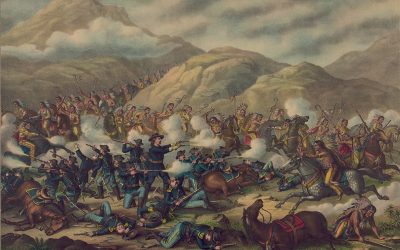
The history of Native American resistance against European colonisers is marked by numerous conflicts, uprisings, and acts of defiance. These battles and campaigns, often overshadowed in mainstream historical narratives, highlight the struggles, resilience, and enduring spirit of Native American peoples in the face of overwhelming odds. Here’s a list of some of the most significant Native American wars and resistances. Watch the video or continue reading.
Pueblo Revolt (1680)
What Happened: The Pueblo Revolt, also known as Popé’s Rebellion, was a coordinated uprising of the Pueblo people against Spanish colonisation in the Santa Fe de Nuevo México province.
Significance: Marked as one of the most successful Native American revolts, the Pueblo people managed to expel the Spanish for 12 years, reinstating their traditional culture.
King Philip’s War (1675–1678)
What Happened: King Philip’s War was led by Metacom (King Philip), and saw the Wampanoag tribe, along with their allies, fight against English settlers in New England.
Significance: One of the bloodiest conflicts per capita in North American history, it reshaped the relationship between Native Americans and European settlers.
Pequot War (1636–1638)
What Happened: The Pequot War was a brutal war between the Pequot tribe and an alliance of English colonists and their Native allies.
Significance: Resulted in the near annihilation of the Pequot people, signalling the ruthless tactics that would often characterise colonial expansion.
Beaver Wars (17th century)
What Happened: The Beaver Wars were a series of conflicts involving the Iroquois Confederacy, French colonists, and their respective Native allies, who fought primarily over the lucrative fur trade.
Significance: This led to significant shifts in power and territorial control in the Great Lakes region.
Pontiac’s War (1763–1766)
What Happened: Pontiac’s War was a pan-tribal movement led by Pontiac, an Ottawa leader, against British post-war policies following the French and Indian War.
Significance: One of the first major, multi-tribal resistance to European colonisation, influencing British policies towards Native Americans.
Creek War (1813–1814)
What Happened: The Creek War was a part of the larger conflict known as the War of 1812, where Creek (Muscogee) people resisted US expansion.
Significance: This led to significant Creek losses and the forced ceding of millions of acres of land to the US.
Black Hawk War (1832)
What Happened: Led by Black Hawk, a Sauk leader, the Black Hawk War was fought in Illinois and Wisconsin against US forces.
Significance: Highlighted the resistance to the US policy of Indian removal, which resulted in harsh repercussions for the Sauk and Fox tribes.
Seminole Wars (1816–1858)
What Happened: The Seminole Wars were three conflicts in Florida involving the Seminole tribe, who fought against US attempts to remove them to the West.
Significance: Represented the longest and most costly wars fought by the US against Native Americans.
Sioux Wars (1854–1890)
What Happened: The Sioux Wars were a series of conflicts involving various Sioux bands resisting US encroachment in the Great Plains.
Significance: Included notable battles like the Battle of Little Bighorn and culminated in the tragic Wounded Knee Massacre.
Apache Wars (1861–1886)
What Happened: The Apache Wars were conflicts in the Southwest US and Northern Mexico involving Apache tribes, most famously led by Geronimo.
Significance: Symbolised the resistance against US expansion in the Southwest and the struggle for control of the region.
Nez Perce War (1877)
What Happened: The Nez Perce War was a series of battles and skirmishes led by Chief Joseph of the Nez Perce tribe, attempting to flee to Canada to avoid forced relocation.
Significance: Noted for its humane conduct on both sides and Chief Joseph’s eloquent surrender speech that has echoed through history.
These conflicts, while often tragic and marked by immense suffering, reflect the tenacity and courage of Native American communities in defending their lands, cultures, and ways of life against foreign invasion and settlement. They are critical components of North American history, shaping the continent’s cultural and political landscape.


Leave a Reply