
The history of The Bahamas is a tale of exploration, colonisation, and cultural diversity. Situated in the Lucayan Archipelago of the West Indies, this island country has a rich past that spans centuries. From the indigenous Lucayans to the arrival of Christopher Columbus and the subsequent colonisation by European powers, the history of The Bahamas is a tapestry woven with vibrant threads of different cultures and influences.

Pre-Hispanic era
The story of The Bahamas begins with the arrival of the Taino people, who migrated from Hispaniola and Cuba to the uninhabited southern islands around the 800s-1000s AD. These Taino people, known as the Lucayans, established a thriving community in the Bahamas, with an estimated population of 30,000 by the time Christopher Columbus arrived in 1492.
The arrival of the Spanish
Christopher Columbus’s arrival in the Bahamas marked the first European contact with the New World. On 12 October 1492, Columbus landed on an island he named San Salvador, known to the Lucayans as Guanahani. While the exact location of Columbus’s landing is still debated among scholars, it is widely believed to be either San Salvador Island or Samana Cay.
The Spanish quickly took an interest in the Bahamas and exploited its resources and the indigenous population. The Lucayans were enslaved and transported to Hispaniola, leading to the near desertion of the Bahama Islands from 1513 to 1648. During this period, the islands were mostly uninhabited, as the native Bahamians either died from diseases brought by Europeans or were forcibly removed for enslavement.
English colonisation
In 1649, English colonists from Bermuda, known as the Eleutheran Adventurers, settled on the island of Eleuthera. This marked the beginning of English colonisation in the Bahamas. The Eleutheran Adventurers sought religious freedom and established a thriving community on the island.
The Bahamas became a British crown colony in 1718 as the British sought to clamp down on piracy in the region. The islands served as a strategic base for the British Navy to combat piracy and protect their shipping routes. After the American Revolutionary War, the Bahamas saw an influx of American Loyalists, who brought enslaved people with them and established plantations on land grants.
Abolition of Slavery and Freedom for the Enslaved
The slave trade was eventually abolished by the British in 1807, and slavery itself was abolished in the Bahamas in 1834. The Bahamas became a haven for freed African slaves, who were resettled on the islands by the Royal Navy. Some North American slaves and Seminoles also escaped to the Bahamas from Florida.
Throughout its history, the Bahamas has been a beacon of freedom and opportunity for people of African descent. The recognition of the freedom of enslaved people carried by ships of other nations was a testament to the inclusive and welcoming nature of the Bahamians. Today, Black Bahamians make up 90% of the country’s population.
Independence and the modern era

The Bahamas gained governmental independence in 1973, led by Sir Lynden O. Pindling. The country remains a member of the Commonwealth, with Charles III as its monarch.
The name “Bahamas” is derived from the Lucayan name “Bahama,” which means “large upper middle island.” Another theory suggests that it may originate from “Guanahani,” a local name of unclear meaning. The name “Bahamas” has been used since the early 16th century and was originally applied to Grand Bahama but later encompassed the entire archipelago.
Cultural heritage and tourism
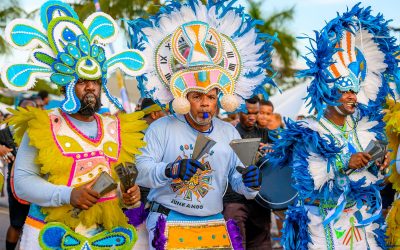
The Bahamas’ cultural heritage blends African, European, and indigenous traditions. This unique fusion is evident in the music, art, cuisine, and vibrant festivals celebrated throughout the islands. From the rhythmic beats of Junkanoo to the delicious flavours of conch fritters, the Bahamas offers a sensory experience that captivates visitors from around the world.
Tourism plays a significant role in the modern economy of the Bahamas. The pristine beaches, crystal-clear waters, and warm hospitality attract millions of visitors each year. The Bahamas is a paradise for snorkelling, diving, fishing, and sailing enthusiasts. Regarding gross domestic product per capita, The Bahamas is one of the wealthiest countries in the Americas, with a thriving economy based on tourism and offshore finance.
Conservation and environmental efforts
The Bahamas has diverse ecosystems, including coral reefs, mangroves, and seagrass beds. Recognising the importance of preserving its natural heritage, the Bahamas has implemented various conservation measures. The government has established national parks and protected areas to safeguard the country’s unique flora and fauna. Efforts are also being made to promote sustainable tourism practices and raise awareness about the importance of environmental conservation.
The history of the Bahamas is a captivating journey through time, shaped by the interactions of different cultures and the resilience of its people. From the indigenous Lucayans to the arrival of Christopher Columbus, the colonisation by European powers, and the struggle for independence, the Bahamas has emerged as a vibrant nation with a rich cultural heritage.


Leave a Reply