• Skip to main content
  • Skip to after header navigation
  • Skip to site footer
Our history archive

Our History

Our History Archive, where history comes to life

  • Home
  • Colonisation
  • World History
  • Civil Rights
  • World cultures
  • Features
  • Wellbeing
  • Popular Culture

Remembrance Day aka Armistice Day explained

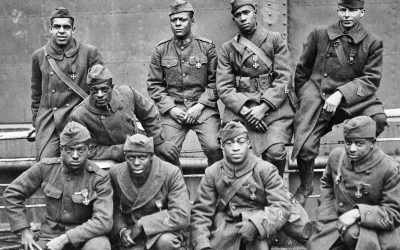
African American soldiers WW1
Soldiers from the 369th Infantry Regiment (15th N.Y.), also known as the "Harlem Hellfighters," who earned the Croix de Guerre for gallantry in action.
Features
9 November, 2022

Every year on 11 November, Armistice Day commemorates the armistice signing between the Allied armies and Germany at 11am – the eleventh hour of the eleventh day of the eleventh month. While hostilities continued in some areas, the armistice ended four years of fighting in World War Two. On 11 November, British tradition calls for a two-minute silence to remember those who have died in both world wars and the 12,000 British service members killed or injured since 1945.

Armistice signing

Ferdinand Foch

Ferdinand Foch signed the armistice in his railway carriage in the Forest of Compiègne, north of Paris, at 5am on 11 November 1918. It came into force six hours later, at 11am. Incidentally, the French were forced to sign an armistice on German terms in the same railway carriage in 1940 by Hitler. The French military commander Foch led the negotiations and signed the agreement, which prevented the German army from starting to fight again. The Treaty of Versailles was signed six months later and constituted a lasting peace treaty between the nations. Germany had two weeks to evacuate invaded countries and territories after the armistice. Exhausted by war and with a nation of hungry citizens to consider, Germany reluctantly accepted the terms.

Remembrance Day v Remembrance Sunday

11 November is also known as Remembrance Day. It’s not to be confused with Remembrance Sunday, which always falls on the second Sunday in November. Most schools, offices, and churches take part in a two-minute silence at 11am and hold services at war memorials on either or both days.


Why do we fall silent for two minutes?

1919 marked the first Remembrance Day in Britain and the Commonwealth. Australian journalist, Edward George Honey, published a letter in London Evening News on 8 May 1919. In it, he proposed a respectful silence for those who had lost their lives in the First World War. It was brought to the attention of King George V. He issued a proclamation on 7 November 1919 calling for a two-minute silence: “All locomotion should cease, so that, in perfect stillness, everyone’s thoughts may be concentrated on reverent remembrance of the glorious dead.”

Why do we wear poppies?

Upon losing a friend at Ypres in 1915, Canadian doctor Lieutenant Colonel John McCrae was inspired to write the now famous poem In Flanders Fields by seeing poppies growing in battle-scarred fields. The red poppy is a hardy flower that flourished despite fields being destroyed by war.

His poem resonated with Moina Michael, an American teacher who began making and selling silk poppies to friends to raise money for the ex-service community.

After the formation of the Royal British Legion in 1921, poppies soon became the symbol of the Legion.

Over £106,000 was raised by the year’s first-ever Poppy Appeal in the UK. Major George Howson MC established the poppy factory the following year, providing jobs to disabled veterans.


Where does the money go?

Those who benefit from the appeal are the Royal British Legion Benevolent Fund, armed forces’ dependents, veterans, and the bereaved.

11 November is also observed around the world. After World War II, many countries changed the day’s name from Armistice Day to Remembrance Day. At the same time, the US chose to call it Veterans Day and made the day a federal holiday.

Share this:

  • Share on Facebook (Opens in new window) Facebook
  • Share on X (Opens in new window) X
  • Share on Reddit (Opens in new window) Reddit
  • Share on Pinterest (Opens in new window) Pinterest
  • Share on WhatsApp (Opens in new window) WhatsApp

Related

You May Also Like…

More details Jesse Jackson surrounded by marchers carrying signs advocating support for the Hawkins-Humphrey Bill for full employment,

Keep hope alive: The rise, power, and legacy of Jesse Jackson

The revolutionary icon: Ernesto "Che" Guevara

Ernesto “Che” Guevara: : The revolutionary icon

Portrait of Bartolomé de Las Casas (c.1484 - 1566)

Bartolomé de las Casas and the birth of human rights

William Randolph Hearst

William Randolph Hearst: The king of Yellow Journalism


Reader Interactions

Leave a ReplyCancel reply

Sidebar

This Day In History

Events in History
On this day in 1922 Joseph Stalin became secretary-general of the Communist Party of the Soviet Union.
More details Jesse Jackson surrounded by marchers carrying signs advocating support for the Hawkins-Humphrey Bill for full employment,

Keep hope alive: The rise, power, and legacy of Jesse Jackson

The revolutionary icon: Ernesto "Che" Guevara

Ernesto “Che” Guevara: : The revolutionary icon

Portrait of Bartolomé de Las Casas (c.1484 - 1566)

Bartolomé de las Casas and the birth of human rights

Trending

  • The rise and fall of the Persian Empire
    The rise and fall of the Persian Empire
  • The First Red Scare: America's post-WWI fear of Communism and radical change
    The First Red Scare: America's post-WWI fear of Communism and radical change
  • What are British values?
    What are British values?
  • Mexican culture: A living mosaic of civilisations, faith, and tradition
    Mexican culture: A living mosaic of civilisations, faith, and tradition
  • The 1832 Paris Uprising
    The 1832 Paris Uprising
  • The Birth of the National Health Service: A revolutionary moment in British history
    The Birth of the National Health Service: A revolutionary moment in British history
  • Holy Wars: The blood-soaked legacy of conflicts fought in the name of Christianity
    Holy Wars: The blood-soaked legacy of conflicts fought in the name of Christianity
  • The rise and fall of the Ottoman Empire: Six centuries of imperial power
    The rise and fall of the Ottoman Empire: Six centuries of imperial power
  • The colonisation of Chile: The long road to freedom
    The colonisation of Chile: The long road to freedom
  • Francisco Franco: Spain's controversial dictator
    Francisco Franco: Spain's controversial dictator

Connect

  • YouTube
  • TikTok
  • Bluesky

ABOUT

CONTACT

PRIVACY POLICY

COOKIES

Copyright © 2026 · Our History · All Rights Reserved