
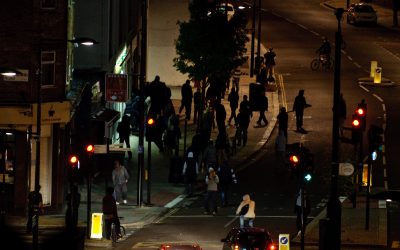
Statistics published by the Ministry of Justice show that of the many people arrested for involvement in the UK August riots only 13% were identified as gang members.
Even in London, where gang membership among those arrested was highest, the figure was less than one in five.
Surprisingly many looters involved in the riots came from 44 foreign countries, it has been revealed in the most comprehensive statistics published so far on the riots.
At least 13% of those locked up following the disorder in August were born abroad, coming from as far afield as Samoa, Afghanistan, Cuba and Congo.
But the exact total could be even higher as some of those remanded in custody refused to disclose their nationality when they were brought before the courts.
The statistics, released in response to a freedom of information request by the Daily Mail, apparently showed Jamaicans to be the largest group of foreign nationals jailed for rioting. They were followed by Somali and Polish offenders.
Today’s Dail Mail headlines proclaim: “UK rioters came from abroad: 1 in 7 jailed after summer of violence was a foreign national”
in contrast using the same data the BBC headlines claim: “England rioters ‘poorer, younger, less educated”
Since the riots, certain newspapers have tried to make this into a race issue using images of black rioters and focusing on densely populated black areas and ignoring others.
Even now with the data available, the Mail has taken the usual sensationalist approach and chooses to hit out at foreigners. The BBC on the other hand has analysed the data and come up with a more measured approach.
The BBC states that those who took part were poorer, younger and of lower educational achievement than average.
Some 90% of those brought before the courts were male, and only 5% were over the age of 40.
In terms of ethnicity, 40% of those arrested were white, 39% black, 11% of mixed background, 8% Asian and 2% were classified as “other”.
Ethnic background ranged geographically from 77% white in Manchester to 32% white in London, and from 47% black in London to 11% black in Hertfordshire.
The government figures show a quarter were juveniles – aged 10-17 – and a similar proportion were aged 18-20.
Some 35% of adults brought before courts were claiming out-of-work benefits, which compares to a national average of 12%.
Of the young people involved, 42% were in receipt of free school meals compared to an average of 16%.
A government spokesman said: “In terms of the role gangs played in the disorder, most forces perceived that where gang members were involved, they generally did not play a pivotal role.”
Two-thirds of the young people in court were classed as having some form of special educational need. This compares to 21% for the national average.
Three-quarters of all those who appeared in court had a previous conviction or caution. For adults, the figure was 80% and for juveniles, it was 62%.
The figures, which were taken from a snapshot of the prison population on 9 September, came after Ministry of Justice (MoJ) statistics showed the number of children held on remand rose by almost a quarter in August when high numbers of youths joined the looting which swept through English cities.
An MoJ spokesman said: “The figures show that on September 9, 13% of those who were imprisoned for offences related to the August riots were foreign nationals.
“However, it is important to bear in mind that this is only a snapshot of the prison population on that date. It includes remand prisoners and excludes bailed suspects who had not been tried or convicted by that date. It would be misleading to suggest that it provides a complete picture of those involved in the riots.”
BBC Analysis: The riots data so far


Leave a Reply