• Skip to main content
  • Skip to after header navigation
  • Skip to site footer
Our history archive

Our History

Our History Archive, where history comes to life

  • Home
  • Colonisation
  • World History
  • Civil Rights
  • World cultures
  • Features
  • Wellbeing
  • Popular Culture

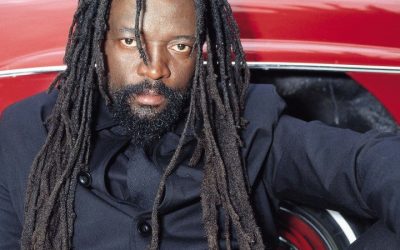
Lucky Dube: The legacy of a reggae legend

lucky dube
Features
29 October, 2007

The tragic murder of Lucky Dube on 18 October 2007 sent shockwaves around the world, particularly within the reggae community and his home country of South Africa. Dube was not just a musician but a global ambassador of the South African struggle for freedom and equality, using his music to fight against apartheid and social injustices. His untimely death at age 43 marked the end of an era for reggae music and the voice of resistance in South Africa. This article pays tribute to Lucky Dube, exploring his life, music, and the indelible mark he left on the world.

Early life and career

Lucky Philip Dube was born on 3 August 1964 in Ermelo, then part of the Eastern Transvaal, now Mpumalanga, South Africa. Raised in a poverty-stricken family, Dube’s love for music became his escape and, eventually, his passion. He started his music career with the love of traditional Zulu music but later switched to reggae, a genre he felt was effective in conveying the socio-political messages he wanted to share with the world.

Rise to fame

Dube’s transition to reggae was a pivotal moment in his career, leading to the release of his first reggae album, “Rastas Never Die”, in 1984. Despite initial resistance and a ban by the apartheid regime, Dube’s music began to gain popularity locally and internationally. His albums such as “Slave,” “Prisoner,” “Together As One,” and “Victims” not only showcased his musical talent but also his deep lyrical prowess in addressing issues such as apartheid, social injustice, and human rights.


Impact and legacy

Lucky Dube became South Africa’s first major reggae star, bringing the genre to the mainstream in a country where it had been relatively unknown. He sang in English to reach a broader audience, and his music resonated with people across different cultures and countries. Dube’s influence extended beyond music; he was a voice for the oppressed and a symbol of hope for many. His lyrics spoke of peace, unity, and the struggle for freedom, echoing the sentiments of many South Africans and people around the world facing similar challenges.

Tragic death

Lucky Dube’s life was cut short when he was murdered in a carjacking in Johannesburg. His death was met with widespread mourning and highlighted the ongoing issues of crime and violence in South Africa. The loss of such a prominent figure was a blow to the music industry and to the global community that had embraced his message of love and unity.

Lucky Dube’s legacy lives on through his music and the messages he shared. He remains a symbol of resistance against injustice and a beacon of hope for a better world. His contribution to reggae music and his role in using his platform to advocate for social change have cemented his status as one of the genre’s legends. Dube’s life and work inspire new generations of musicians and activists worldwide, ensuring that his voice, though silenced, will never be forgotten.

Share this:

  • Share on Facebook (Opens in new window) Facebook
  • Share on X (Opens in new window) X
  • Share on Reddit (Opens in new window) Reddit
  • Share on Pinterest (Opens in new window) Pinterest
  • Share on WhatsApp (Opens in new window) WhatsApp

Related

You May Also Like…

More details Jesse Jackson surrounded by marchers carrying signs advocating support for the Hawkins-Humphrey Bill for full employment,

Keep hope alive: The rise, power, and legacy of Jesse Jackson

The revolutionary icon: Ernesto "Che" Guevara

Ernesto “Che” Guevara: : The revolutionary icon

Portrait of Bartolomé de Las Casas (c.1484 - 1566)

Bartolomé de las Casas and the birth of human rights

William Randolph Hearst

William Randolph Hearst: The king of Yellow Journalism


Reader Interactions

Leave a ReplyCancel reply

Sidebar

This Day In History

Events in History
On this day in 1922 Joseph Stalin became secretary-general of the Communist Party of the Soviet Union.
More details Jesse Jackson surrounded by marchers carrying signs advocating support for the Hawkins-Humphrey Bill for full employment,

Keep hope alive: The rise, power, and legacy of Jesse Jackson

The revolutionary icon: Ernesto "Che" Guevara

Ernesto “Che” Guevara: : The revolutionary icon

Portrait of Bartolomé de Las Casas (c.1484 - 1566)

Bartolomé de las Casas and the birth of human rights

Trending

  • The rise and fall of the Persian Empire
    The rise and fall of the Persian Empire
  • The First Red Scare: America's post-WWI fear of Communism and radical change
    The First Red Scare: America's post-WWI fear of Communism and radical change
  • What are British values?
    What are British values?
  • Mexican culture: A living mosaic of civilisations, faith, and tradition
    Mexican culture: A living mosaic of civilisations, faith, and tradition
  • The 1832 Paris Uprising
    The 1832 Paris Uprising
  • The Birth of the National Health Service: A revolutionary moment in British history
    The Birth of the National Health Service: A revolutionary moment in British history
  • Holy Wars: The blood-soaked legacy of conflicts fought in the name of Christianity
    Holy Wars: The blood-soaked legacy of conflicts fought in the name of Christianity
  • The colonisation of Chile: The long road to freedom
    The colonisation of Chile: The long road to freedom
  • Francisco Franco: Spain's controversial dictator
    Francisco Franco: Spain's controversial dictator
  • The Russian Empire: From expansion to the demise of empire
    The Russian Empire: From expansion to the demise of empire

Connect

  • YouTube
  • TikTok
  • Bluesky

ABOUT

CONTACT

PRIVACY POLICY

COOKIES

Copyright © 2026 · Our History · All Rights Reserved