• Skip to main content
  • Skip to after header navigation
  • Skip to site footer
Our history archive

Our History

Documenting world history and civil rights

General

  • About
  • Cookies and your privacy
  • Privacy policy
  • Contact

Categories

  • Home
  • Colonisation
  • World History
  • Civil Rights
  • World cultures
  • Features
  • Wellbeing
  • Popular Culture
  • Home
  • Colonisation
  • World History
  • Civil Rights
  • World cultures
  • Features
  • Wellbeing
  • Popular Culture

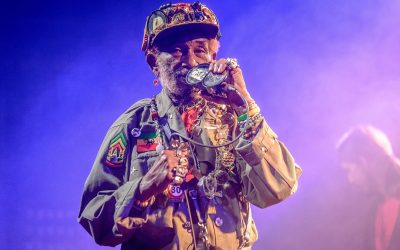
The Sonic Alchemist: Exploring the genius of Lee “Scratch” Perry

Lee Scratch Perry
pitpony.photography, CC BY-SA 3.0, via Wikimedia Commons
Features
29 August, 2021

In the pantheon of music legends, few figures are as enigmatic and influential as Lee “Scratch” Perry. Born in rural Jamaica on 20 March 1936, Perry would become a pivotal figure in the development of reggae and dub music, leaving an indelible mark on the soundscapes of modern music. His innovative production techniques and eccentric personality have made him a cult hero, revered by musicians and music lovers around the globe.

Perry’s journey into music began in the late 1950s and early 1960s, working with various sound systems and recording studios, including the famous Studio One, owned by Coxsone Dodd. However, his establishment of the Black Ark studio in the early 1970s cemented his legacy. Within the confines of this modest, home-built studio, Perry would experiment with sound in ways that had never been done before. His pioneering use of effects, such as reverb and echo, along with his manipulation of the mixing desk as an instrument in its own right, would give birth to the genre of dub music.

Dub, with its focus on rhythm and texture, its stripping away of the song to its barest elements, and its emphasis on the bass and drum would go on to influence not just reggae but a myriad of other genres, from punk to hip hop, electronic to rock. Perry’s work during this period, including classic albums such as “Super Ape” and “Heart of the Congos,” showcased his genius for creating soundscapes that were deeply rooted in the Jamaican experience and universally appealing.


He collaborated with Joe Gibbs, and together, they produced a string of hits that helped define the early reggae sound.

Beyond his technical innovations, Perry was known for his spiritual and mystical approach to music. He often spoke of his work in cosmic and supernatural terms, seeing himself as a conduit for higher powers. This spiritual dimension added depth to his music, infusing it with a sense of mystery and transcendence.

However, Perry’s career was not without its challenges. The late 1970s saw the Black Ark studio fall into disarray, mirroring Perry’s own personal struggles. Yet, even in his later years, Perry continued to create, collaborate, and perform, working with artists across various genres and generations, from the Beastie Boys to The Orb, proving his timeless relevance and influence.

Lee “Scratch” Perry’s legacy is one of boundless creativity and innovation. He was not just a producer and musician but a visionary who saw the potential for music to transcend boundaries and transform consciousness. His contributions to music are immeasurable, and his influence continues to be felt across the musical spectrum. Perry passed away on 29 August 2021, but his spirit and sonic innovations will forever echo in the annals of music history, a testament to the genius of the man known as the Sonic Alchemist.

Share this:

  • Share on Facebook (Opens in new window) Facebook
  • Share on X (Opens in new window) X
  • Share on Reddit (Opens in new window) Reddit
  • Share on Pinterest (Opens in new window) Pinterest
  • Share on WhatsApp (Opens in new window) WhatsApp


Related

You May Also Like…

Martin Robison Delany

Martin Robison Delany

Black History Month: Standing in Power and Pride 2025

Standing firm in power and pride: Eight Black people who shaped history

Official portrait of Captain James Cook

Captain James Cook: Master navigator and Pacific explorer

Phyllis Coard: Architect of women's liberation in revolutionary Grenada

Phyllis Coard: Architect of women’s liberation in revolutionary Grenada


Reader Interactions

Leave a ReplyCancel reply

Sidebar

This Day In History

No Events

Martin Robison Delany

Martin Robison Delany

Black History Month: Standing in Power and Pride 2025

Standing firm in power and pride: Eight Black people who shaped history

Official portrait of Captain James Cook

Captain James Cook: Master navigator and Pacific explorer

Trending

  • UK race riots - The murder of Charles Wotten
    UK race riots - The murder of Charles Wotten
  • Understanding Sharia Law: Principles, practice, and global context
    Understanding Sharia Law: Principles, practice, and global context
  • What are British values?
    What are British values?
  • McCarthyism and the Cold War: America's Second Red Scare
    McCarthyism and the Cold War: America's Second Red Scare
  • Women's suffrage movement in Britain
    Women's suffrage movement in Britain
  • This John Hanson was not the first Black President of the United States
    This John Hanson was not the first Black President of the United States
  • Queen Amina of Zaria: The legendary warrior queen of West Africa
    Queen Amina of Zaria: The legendary warrior queen of West Africa
  • The colonisation of India
    The colonisation of India
  • Genghis Khan: The making of the Mongol Empire
    Genghis Khan: The making of the Mongol Empire
  • Claimed benefits of the British Empire
    Claimed benefits of the British Empire

Connect

  • YouTube
  • TikTok
  • Bluesky
  • About
  • Cookies and your privacy
  • Privacy policy
  • Contact

Copyright © 2026 · Our History · All Rights Reserved