
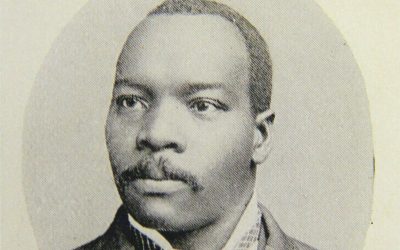
Many professionals in the electrical industry knew Granville T Woods as the “Black Edison”. Woods was considered by many to be the greatest electrician in the world. The most well-known of Woods’s inventions is a railway telegraph system. He made it in 1887 at his machine shop in Cincinnati, Ohio. This telegraph system allowed train engineers to communicate with other engineers on moving trains on the same railroad track. This invention helped save lives by preventing trains from crashing into each other.
Woods was born in Columbus, Ohio on April 23, 1856, and spent his early childhood there. When he was ten years old, Woods had to stop going to school so he could work to help earn money for his family. His first job was in a machine shop that repaired railroad equipment. This is where Woods’ interest in electricity and mechanical devices began. This interest lasted for the rest of his life.
At the young age of sixteen, Woods moved to Missouri. Woods got his first job in Missouri as a fireman, but later he received a job as an engineer at the Iron Mountain Railroads. It was at this job where Woods gained most of his knowledge about railroads and electricity. Woods spent all of his leisure time studying and experimenting with electricity. Woods read whatever books on electricity he could buy or borrow. He took a course in electrical and mechanical engineering but for the most part, he was self-taught.
Electrical company
By 1881, Woods settled in Cincinnati, Ohio. Woods lost a struggle with Alexander Graham Bell to market an advanced telephone transmitter for which Woods had received a patent. Without the required funds to market his device, Woods was forced to sell it to the Bell Telephone Company. He later acquired the funding to form his own electrical company with his brother Lyates. The company was called the Woods Electrical Company.
Electricity and Railroads were Woods’ passion. Woods was granted fifteen patents in the field of electric railways alone and held a still larger number of patents on systems and devices for the control and distribution of electricity. Woods had over sixty patents to his credit when he died in 1910. Many of his patents were assigned to major corporations after his death. A few of Woods’ inventions that were assigned were the electromagnetic brake apparatus, the electromechanical brake, and the galvanic battery.
Despite all of Woods’ success, he had a few obstacles along the way. The most obvious obstacle was that Woods was black. It was hard for Woods to learn about electricity and railroads because few people were willing to teach an African-American anything about science. Woods was not offered a lot of jobs because of his race; despite the fact, he was more than qualified for those jobs.
One of Woods’ most difficult obstacles was the many legal battles he had to endure. In 1887, Woods made what were perhaps his most important inventions, the “induction telegraph”. This invention dramatically improved the safety of the railroad system. That the invention was important was evidenced by the fact that Woods had to go through three patent suits to protect his rights. Two of these suits were brought about by Thomas Edison and the third by a man named Phelps. Woods won all three of these patents suits.
Third rail
In 1901, Woods invented the “third rail.” The third rail is an extra rail that runs alongside the two main rails on a railroad track. The third rail supplies electricity to run the train. Other inventions include “air brakes” and an egg hatching machine.
Woods died on 30 January 1910. Few inventors of any race have produced a larger number of appliances in the field of electricity, and few have done more for the electrical industry than Granville Woods. Many of the applications of electricity were made possible by the genius of Granville T. Woods.


Leave a Reply