
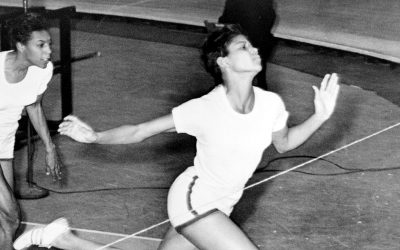
Wilma Glodean Rudolph, an American sprinter born on 23 June 1940 in Saint Bethlehem, Tennessee, remains one of the most inspiring figures in athletics history. Her story is not just one of athletic triumph but also of overcoming extraordinary odds, breaking racial and gender barriers, and leaving an indelible mark on the world.
Early Life: Overcoming adversity
Wilma Rudolph was born into a family of 22 siblings, the 20th child of Ed and Blanche Rudolph. Her early life was marked by severe health challenges. At the age of four, she contracted polio, which left her with a paralysed leg. Despite the bleak prognosis and limited medical resources available to African Americans in the segregated South, Rudolph’s mother refused to give up. Blanche took Wilma to a hospital in Nashville for regular treatments, a journey of 50 miles each way.
Determined to help her daughter walk again, Blanche also learned physical therapy techniques to administer at home. Wilma shed her leg brace by age nine through relentless effort and faith. By the time she was 12, she had fully recovered. She began playing sports with her siblings, showing a natural aptitude for athletics.
Discovering a talent for running
Wilma’s athletic journey began in high school when her speed on the basketball court caught the attention of Ed Temple, the track and field coach at Tennessee State University (TSU). Temple invited her to join his summer training program, recognising her potential as a sprinter. Wilma’s talent blossomed under his mentorship, and she soon became one of the top runners on TSU’s famed “Tigerbelles” track team.
By age 16, Rudolph had qualified for the 1956 Summer Olympics in Melbourne, Australia. Although she only won a bronze medal in the 4×100 meter relay, this experience ignited a fierce determination in her to succeed at the highest level.
The 1960 Rome Olympics
The pinnacle of Wilma Rudolph’s career came at the 1960 Summer Olympics in Rome. She competed in three events: the 100 meters, the 200 meters, and the 4×100 meter relay. Rudolph not only won gold in all three events but did so in spectacular fashion, breaking records and captivating the world with her speed and grace. Her achievements in Rome earned her the title “The Fastest Woman in the World.”

New York World-Telegram and the Sun Newspaper Photograph Collection., Public domain, via Wikimedia Commons
Her victories were significant beyond the realm of sports. In a time of intense racial segregation in the United States, Rudolph’s success was a powerful symbol of what could be achieved despite societal barriers. She became a global icon, not just for African Americans, but for all who faced adversity.
Breaking barriers and creating change
Wilma Rudolph’s impact extended far beyond the track. She was a pioneer in many ways, breaking barriers for both women and African Americans in sports. Her success brought attention to the possibilities for women in athletics, inspiring future generations of female athletes.
Moreover, Rudolph’s achievements were instrumental in desegregating sports in the United States. She used her platform to advocate for civil rights and equality. Notably, she insisted that her homecoming parade in Clarksville, Tennessee, be integrated, making it the first racially integrated event in the town’s history.
Life after athletics

Wilma Rudolph retired from competitive athletics in 1962 at the young age of 22. She completed her degree at Tennessee State University. She became a teacher and coach, dedicating her life to working with young athletes and promoting education. She also served as a goodwill ambassador for the United States, travelling extensively and inspiring people around the world with her story.
In recognition of her contributions, Rudolph received numerous awards and honours, including induction into the U.S. Olympic Hall of Fame and the National Women’s Hall of Fame. Her autobiography, “Wilma: The Story of Wilma Rudolph,” was published in 1977, further cementing her legacy.
Legacy and inspiration
Wilma Rudolph’s legacy is one of resilience, determination, and grace. Her story inspires athletes and non-athletes alike, reminding us that no obstacle is insurmountable with courage and perseverance. She paved the way for future generations of athletes, particularly women and minorities, to pursue their dreams without limitations.
on 12 November 1994, at the age of 54, Wilma Rudolph passed away from brain cancer. Her life, however, continues to be celebrated and remembered for its extraordinary impact. Schools, streets, and awards have been named in her honour, ensuring that her legacy endures.
Wilma Glodean Rudolph’s journey from a polio-stricken child to an Olympic champion is a testament to the power of determination and the human spirit. She achieved unparalleled success in athletics and played a crucial role in advancing civil rights and women’s sports.
Wilma Rudolph’s story is a powerful reminder that greatness is not defined by the absence of obstacles but by the ability to overcome them.


Leave a Reply