
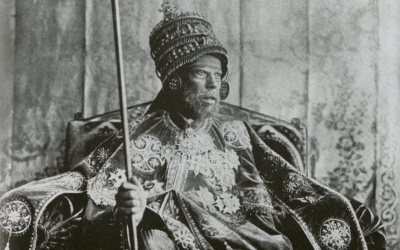
Emperor Menelik II of Ethiopia stands as a towering figure in the annals of African history, known for his diplomatic skill, military acumen, and pivotal role in safeguarding Ethiopia’s sovereignty at a time when colonial powers were partitioning Africa. His reign from 1889 until his death in 1913 marked a significant era of Ethiopian modernisation, resistance against European colonisation, and the expansion of the Ethiopian Empire. This article delves into Menelik II’s rise to power, his complex relationship with Italy, the historic Battle of Adwa, and his lasting legacy.
Early life and rise to power
Born Sahle Maryam in 1844 in Ankober, Menelik II was the son of King Haile Melekot of Shewa, a region within the Ethiopian Empire. His early life was marked by intrigue and power struggles, which he navigated with remarkable acumen. Following his father’s death in 1855, Menelik was taken prisoner by Emperor Tewodros II, who sought to consolidate power by neutralising potential rivals. However, Menelik’s time in captivity was a learning period during which he acquired knowledge of statecraft and military tactics.
Menelik’s rise to power began in earnest after escaping Tewodros II’s imprisonment in 1865. He reclaimed his birthright as the ruler of Shewa and embarked on a series of military campaigns that expanded his territory. Menelik gradually increased his influence and power through strategic marriages, military conquests, and alliances, eventually positioning himself as a key figure in Ethiopian politics.
The treaty of Wuchale and relations with Italy
Menelik’s relationship with Italy was initially cooperative. In 1889, shortly after ascending to the imperial throne, he signed the Treaty of Wuchale with Italy. The treaty contained clauses that were ambiguously translated between the Amharic and Italian texts. The Amharic version granted Italy control over a small portion of northern Ethiopia (what would later become Eritrea) in exchange for military assistance and financial aid. However, the Italian version declared Ethiopia a protectorate of Italy, a significant misinterpretation that would lead to conflict.
Realising the deceit, Menelik II renounced the treaty, asserting Ethiopia’s sovereignty and preparing for the inevitable clash with Italy. His diplomatic efforts to resolve the misunderstanding were ignored, pushing the two nations towards war.
The Battle of Adwa
The Battle of Adwa on 1 March 1896 was a watershed moment in African history. It was here that Menelik II’s military genius and leadership were most vividly displayed. Facing a well-armed Italian force intent on enforcing the terms of the Treaty of Wuchale, Menelik mobilised a massive army of approximately 100,000 men and women drawn from across Ethiopia’s diverse regions.
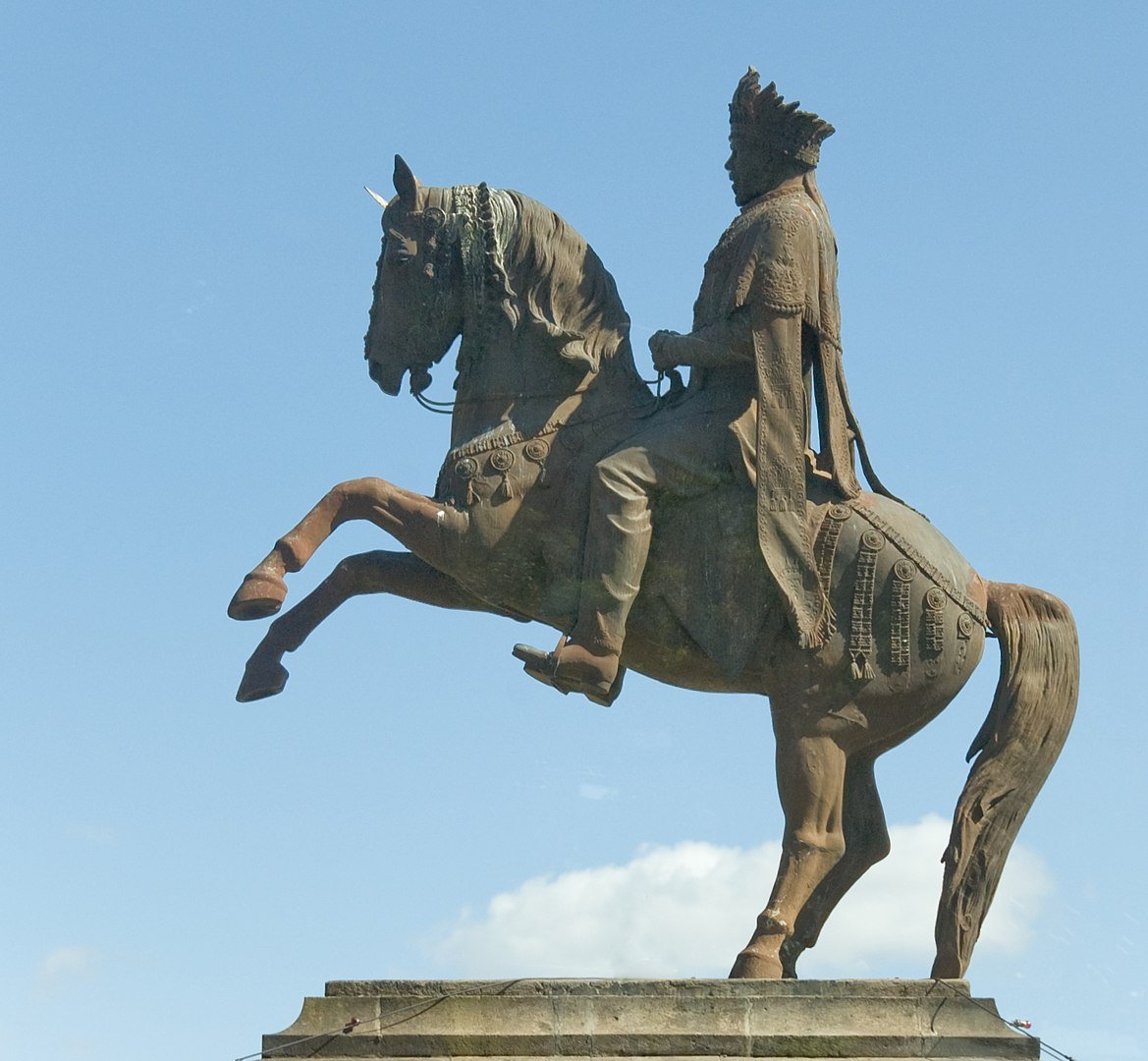
Photographer A. Davey, via Wikimedia Commons
The battle was a decisive victory for Ethiopia, marking the first time an African nation successfully resisted European colonisation with force. The victory at Adwa was not just a military triumph but a symbol of African resilience and sovereignty, inspiring anti-colonial movements across the continent and the world.
Modernisation efforts and legacy
Menelik II’s reign was also marked by significant modernisation efforts. He established the first bank in Ethiopia, introduced the modern postal system, laid the foundation for the Addis Ababa-Djibouti railway, and initiated the construction of schools, hospitals, and roads. His policies significantly advanced Ethiopia’s infrastructure and administrative organisation, laying the groundwork for the country’s future development.
Menelik’s legacy is multifaceted. He is celebrated as a unifier, a visionary reformer, and a national hero who defended Ethiopia’s independence against colonial powers. Yet, his expansionist policies and military campaigns also led to significant displacement and hardship for many within the regions he conquered.
Emperor Menelik II’s contributions to Ethiopian and African history are profound. His successful navigation of internal politics and external threats, his pivotal victory at the Battle of Adwa, and his efforts to modernise Ethiopia have cemented his place as one of the most influential leaders in the history of the continent.


.jpg)
Leave a Reply