• Skip to main content
  • Skip to after header navigation
  • Skip to site footer
Our history archive

Our History

Our History Archive, where history comes to life

  • Home
  • Colonisation
  • World History
  • Civil Rights
  • World cultures
  • Features
  • Wellbeing
  • Popular Culture

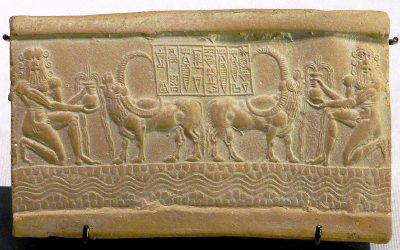
Ancient Semitic people: The Akkadians

Ancient Semitic people: The Akkadians
Mbzt 2011, CC BY 3.0, via Wikimedia Commons
World history
4 January, 2019

The Akkadians were an ancient Semitic-speaking people who established one of the world’s first empires in Mesopotamia. This area corresponds to present-day Iraq and parts of Syria and Turkey.
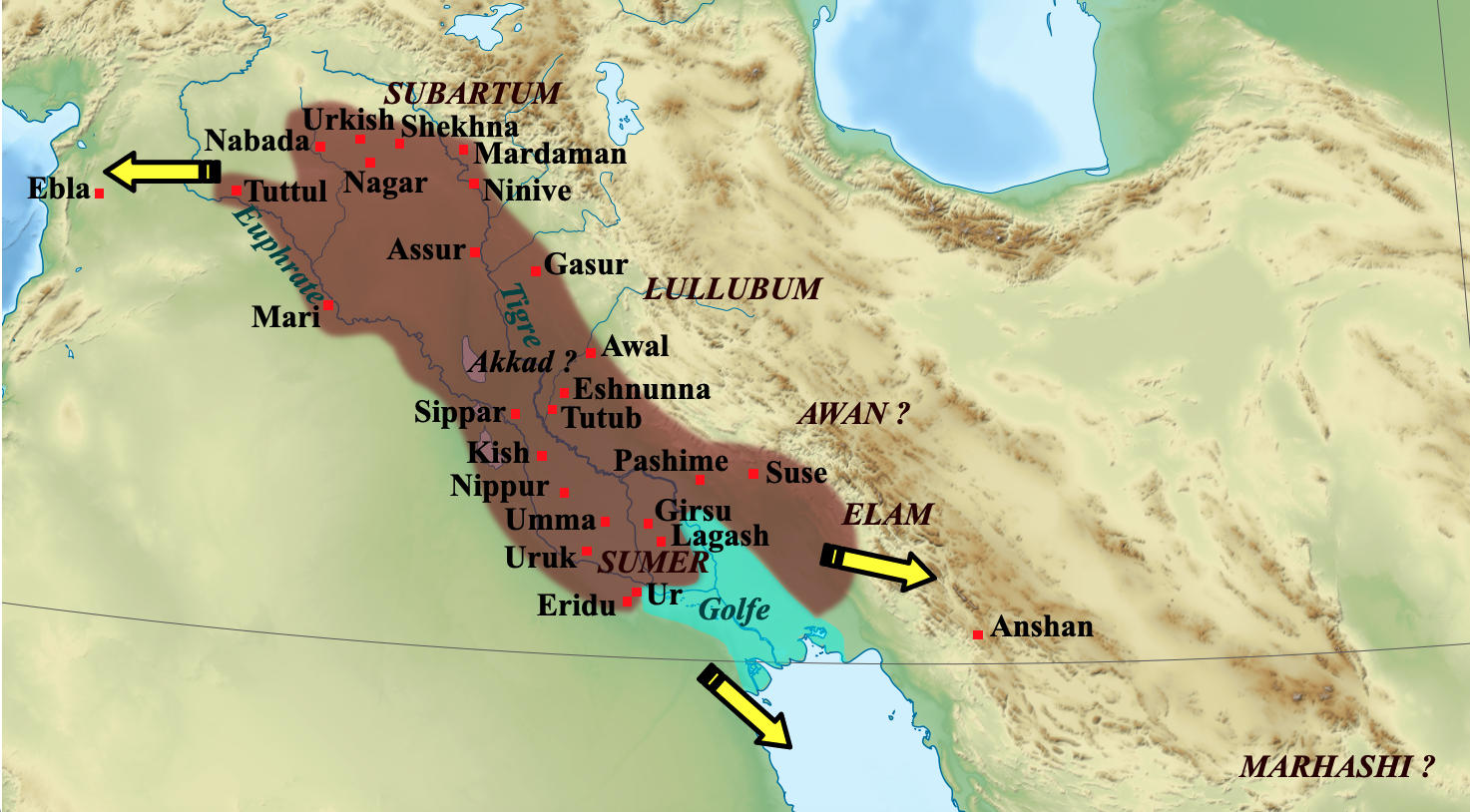
Map of the Akkadian Empire (brown) and the directions in which military campaigns were conducted (yellow arrows) Middle_East_topographic_map-blank.svg: Sémhur (talk)derivative work: Zunkir , CC BY-SA 3.0, via Wikimedia Commons

They emerged in the region around the 24th century BCE, succeeding the Sumerian city-states in the southern part of Mesopotamia. The Akkadian Empire was founded by Sargon of Akkad (also known as Sargon the Great), who reigned from approximately 2334 to 2279 BCE. Under his leadership, the Akkadians unified the Sumerian city-states and expanded their territory to include large parts of Mesopotamia.

Language and culture

The Akkadians spoke Akkadian, a Semitic language that was distinct from the Sumerian language, although the two peoples and cultures deeply influenced each other. Akkadian became the region’s lingua franca and was used for administration, literature, and diplomacy. The Akkadian Empire is known for its advancements in law, literature, and government and for its contributions to Mesopotamian art, architecture, and religious practices.


Achievements and contributions

One of the most significant contributions of the Akkadians was the Akkadian Empire itself, which demonstrated the possibility and potential of a centralised bureaucratic state. They developed a sophisticated administration system with governors and local rulers responsible for implementing the empire’s policies in various regions. The Akkadians were also instrumental in developing cuneiform writing, which evolved from Sumerian practices, and they produced a rich body of literature, including the famous Epic of Gilgamesh in its later versions.

Military and expansion

The Akkadian Empire was known for its military prowess, which allowed it to expand and control a vast territory. Sargon of Akkad and his successors used their military to conquer neighbouring city-states and regions, creating an empire that stretched from the Persian Gulf to the Mediterranean Sea. The Akkadian military was innovative in using chariots and composite bows, contributing to its success in battle.

Decline and legacy

The Akkadian Empire eventually declined due to a combination of internal strife, economic difficulties, and external pressures, including invasions by the Gutians, a people from the Zagros Mountains. By around 2154 BCE, the empire had collapsed, leading to a period of fragmentation and the rise of new city-states and empires, such as the Third Dynasty of Ur.

Despite its fall, the legacy of the Akkadian Empire endured in Mesopotamian history and culture. The Akkadian language and administrative practices continued to influence subsequent empires, including the Babylonian and Assyrian empires. The Akkadians are remembered as pioneers in the creation of one of the world’s first empires and as contributors to ancient Mesopotamia’s cultural and technological developments.

Share this:

  • Share on Facebook (Opens in new window) Facebook
  • Share on X (Opens in new window) X
  • Share on Reddit (Opens in new window) Reddit
  • Share on Pinterest (Opens in new window) Pinterest
  • Share on WhatsApp (Opens in new window) WhatsApp


Related

You May Also Like…

More details Merida - Palacio de Gobierno - Murals by Fernando Castro Pacheco: The Spanish bishop Diego de Landa is burning figures of Mayan deities

The forgotten fire: A history of the Darfur Genocide

The Japanese occupation of Beiping (Beijing) in China

The rise and fall of the Japanese Empire

Rescuers and residents searching the rubble of the destroyed Shajareh Tayyebeh elementary school in Minab

The fracturing of the international order in an age of impunity

US ambassador to the UN, Eleanor Roosevelt, holding the Universal Declaration of Human Rights in 1949

The role and limitations of international law in world affairs


Reader Interactions

Leave a ReplyCancel reply

Sidebar

This Day In History

No Events

World history recent posts in

More details Merida - Palacio de Gobierno - Murals by Fernando Castro Pacheco: The Spanish bishop Diego de Landa is burning figures of Mayan deities

The forgotten fire: A history of the Darfur Genocide

The Japanese occupation of Beiping (Beijing) in China

The rise and fall of the Japanese Empire

Rescuers and residents searching the rubble of the destroyed Shajareh Tayyebeh elementary school in Minab

The fracturing of the international order in an age of impunity

US ambassador to the UN, Eleanor Roosevelt, holding the Universal Declaration of Human Rights in 1949

The role and limitations of international law in world affairs

Trending

  • The rise and fall of the Persian Empire
    The rise and fall of the Persian Empire
  • History of Canada - From colonisation to independence
    History of Canada - From colonisation to independence
  • The forgotten fire: A history of the Darfur Genocide
    The forgotten fire: A history of the Darfur Genocide
  • Mexican culture: A living mosaic of civilisations, faith, and tradition
    Mexican culture: A living mosaic of civilisations, faith, and tradition
  • Operation Ajax and the shadow of empire: The 1953 Iranian coup
    Operation Ajax and the shadow of empire: The 1953 Iranian coup
  • The life and legacy of Louise Bennett: A Jamaican poet whose words still resonate
    The life and legacy of Louise Bennett: A Jamaican poet whose words still resonate
  • The rise and fall of the Ottoman Empire: Six centuries of imperial power
    The rise and fall of the Ottoman Empire: Six centuries of imperial power
  • The history of South Africa: From colonisation to independence
    The history of South Africa: From colonisation to independence
  • European colonisation of Southeast Asia
    European colonisation of Southeast Asia
  • The Birth of the National Health Service: A revolutionary moment in British history
    The Birth of the National Health Service: A revolutionary moment in British history

Connect

  • YouTube
  • TikTok
  • Bluesky

ABOUT

CONTACT

PRIVACY POLICY

COOKIES

Copyright © 2026 · Our History · All Rights Reserved