
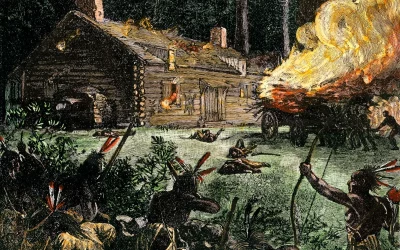
In the narrative tapestry of early American history, few conflicts have been as pivotal yet as underrecognised as King Philip’s War (1675–1678). This brutal conflict, fought between Native American inhabitants of New England and English colonists along with their Native allies, is often overshadowed by later events in American history. Yet, its impact was profound, reshaping the Northeastern United States and setting the stage for future colonial and Native American interactions.
The fuse: Tensions in New England
The roots of King Philip’s War lay in the complex and often tense relationship between the English colonists and the Native American tribes of New England. As English settlements expanded, the Native Americans found their land, culture, and autonomy increasingly under threat. The colonists, predominantly Puritans, often viewed the Native Americans with a mix of disdain and fear, believing their expansion was both a divine right and duty.
Central to this conflict was Metacom, known to the English as King Philip, the sachem (leader) of the Wampanoag tribe. His father, Massasoit, had famously formed an early alliance with the Pilgrims in Plymouth. However, by Metacom’s time, the power dynamics had shifted drastically. The Wampanoags, like many tribes, were under constant pressure as their lands were gradually usurped by growing colonial settlements.
The spark: A leader’s execution
The immediate catalyst for the war was the execution of three Wampanoags by the English in 1675, accused of the murder of John Sassamon, a Native American who had converted to Christianity and served as an intermediary between the colonists and the Native tribes. Sassamon’s death, under mysterious circumstances, and the subsequent execution of the Wampanoags, whom many believed were innocent, outraged Metacom.
The war erupts
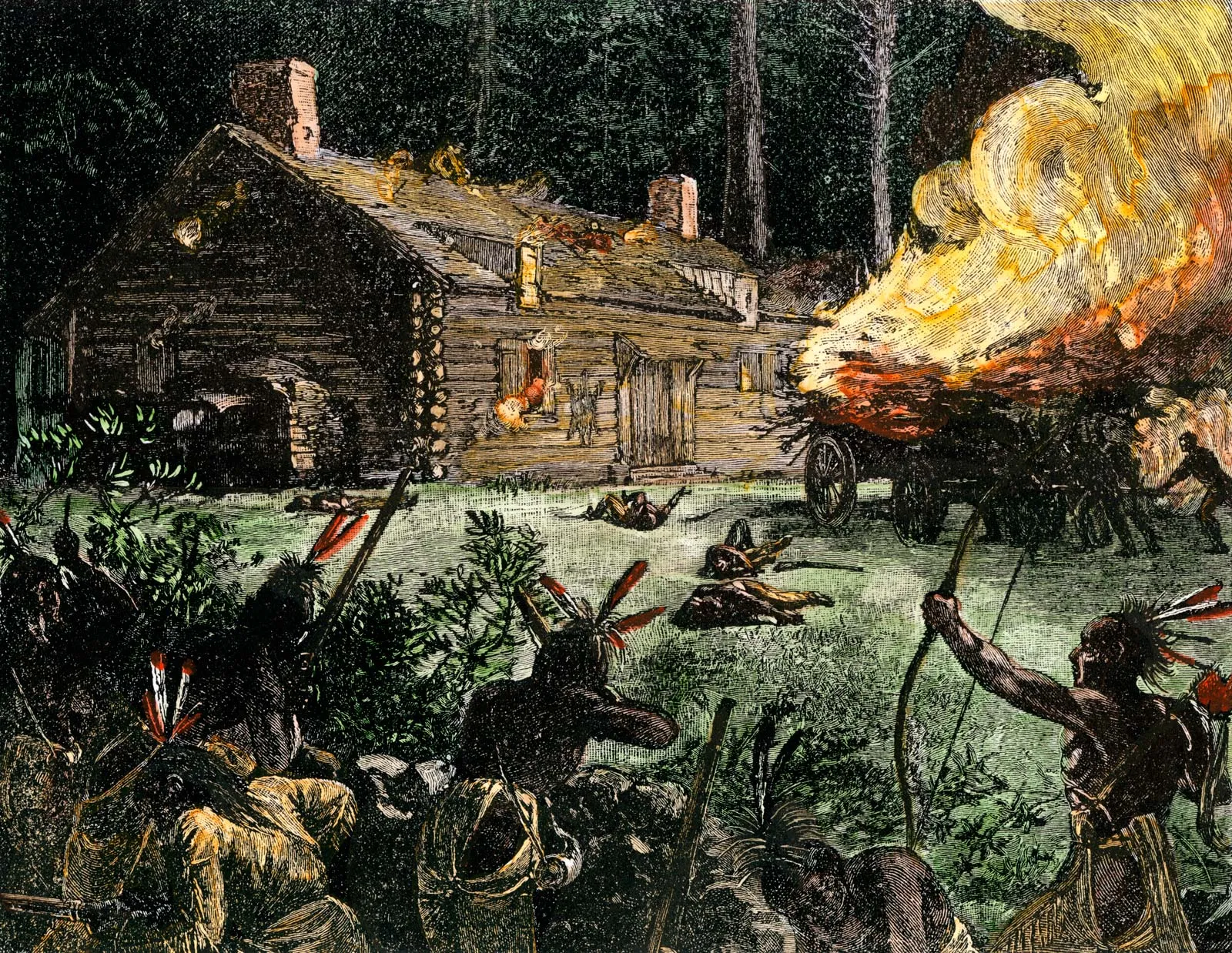
In June 1675, the conflict ignited when the Wampanoag and several other tribes launched attacks on colonial settlements in Swansea, Massachusetts. The violence quickly spread, and what began as a series of raids and skirmishes escalated into a full-blown war. Metacom forged alliances with other tribes, such as the Nipmucks, Pocumtucks, and Narragansetts, creating a formidable coalition.
The colonists, caught off guard by the intensity and coordination of the Native American forces, responded by forming militias. They, too, had Native allies, notably the Mohegans and Pequots. The war was characterised by its brutality and the use of guerrilla tactics, with attacks and reprisals on both sides leading to a cycle of violence and devastation.
Major battles and incidents
One of the war’s most significant events was the Great Swamp Fight in December 1675. Colonial forces attacked a fortified Narragansett village in present-day Rhode Island, resulting in substantial Native American casualties and exacerbating the conflict.
Throughout the war, both sides suffered heavy losses. Entire towns were destroyed, and the colonial economy was severely disrupted. For the Native Americans, the cost was even greater: many lost their lives, and their ability to resist further encroachment was significantly diminished.
The war’s end and Metacom’s death
The turning point came in 1676. The colonial forces, now better organised and more ruthless, began to regain control. Native American resources and manpower were dwindling, and the coalition Metacom had built began to fracture. In August 1676, Metacom was killed in battle in the Bristol woods, signalling the effective end of the conflict. His death was a symbolic and practical blow to the Native American resistance.
Aftermath and legacy
The aftermath of King Philip’s War was devastating for the Native American tribes of New England. Survivors faced enslavement, execution, or forced relocation. The power dynamics in New England were irrevocably altered, with English colonists now firmly in control.
For the English colonies, the war was a costly victory. It left deep economic and psychological scars and prompted a reevaluation of their policies toward Native Americans. The war demonstrated the potential for catastrophic conflict in colonial America. It underscored the fragility of English settlements in the face of unified Native American resistance.
King Philip’s War, though often overlooked, was one of the deadliest conflicts in American history relative to the population. It reshaped the cultural and political landscape of New England and set a precedent for future conflicts between European settlers and Native Americans.
Today, the war serves as a poignant reminder of the complexities and tragedies of colonial expansion. It highlights the struggles of indigenous peoples to maintain their lands, cultures, and identities in the face of overwhelming odds. As a crucial chapter in the story of America’s foundation, King Philip’s War is a reminder of the lives lost and the blood spilt for European expansion.


Leave a Reply