
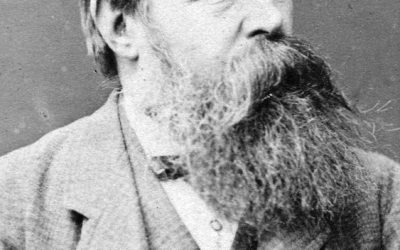
Friedrich Engels was a German philosopher, political scientist, economist, historian, and revolutionary socialist who played a crucial role in the development of modern socialism and communism alongside his more famous collaborator, Karl Marx. Although often overshadowed by Marx, Engels’ own contributions to Marxism are immense and vital to understanding the development of socialism as a theoretical framework and political movement. This article will explore the life and works of Friedrich Engels, his relationship with Karl Marx, and his significant contributions to Marxist theory.
Early life
Friedrich Engels was born on 28 November 1820 in Barmen (now Wuppertal), Germany, to a prosperous textile manufacturer. Despite his family’s wealth and conservative upbringing, Engels developed an early passion for radical ideas sparked by reading Hegel’s philosophy. He completed his schooling in 1837 but abandoned university education when faced with choosing between business and military careers. Instead, he pursued an apprenticeship at his father’s textile firm in Manchester, England.
Exposure to social injustice
Engels’ stay in Manchester exposed him to social inequality under industrial capitalism. Witnessing the appalling conditions of factory workers profoundly affected him. He began to write about these injustices and became acquainted with various socialist organisations in the city. His observations culminated in his first significant work on political economy and socialism: “The Condition of the Working Class in England” (1845). In it, Engels provided a scathing critique of capitalist exploitation while highlighting the potential of the proletariat as an engine for revolutionary change.
Collaboration with Karl Marx
In August 1844, during a visit to Paris, Engels met Karl Marx for the first time since they briefly encountered each other two years earlier. Their shared interest in Hegel’s dialectics, critiques of capitalism, and revolutionary aspirations led to a lifelong friendship and intellectual partnership. The pair co-wrote their first collaborative work – “The Holy Family” (1845) – which critiqued the contemporary materialist philosophy in the Young Hegelian movement.

Engels played an essential role in supporting Marx throughout his life, both financially and intellectually. He provided invaluable critical feedback on Marx’s ideas. He contributed significantly to the development of Marxist theory, including its economic element. Their most famous collaboration, “The Communist Manifesto” (1848), became the cornerstone document of communist ideology.
Other works

Beyond his collaborations with Marx, Engels authored several other major works that expanded on specific aspects of their joint theories:
1. “Anti-Dühring” (1877): In this work, Engels systematically dismantled Eugen Dühring’s revisionist socialist theories while developing a comprehensive view of historical materialism.
2. “Dialectics of Nature” (1883): Although unfinished and published posthumously, this work expanded on the dialectical method in natural sciences.
3. “The Origin of the Family, Private Property, and the State” (1884): Here, Engels traced the historical development of institutions such as family and private property as a result of economic factors.
Later life and legacy
Following Marx’s death in 1883, Engels continued to uphold their ideas by editing Marx’s unfinished manuscripts – notably publishing volumes II and III of “Capital.” However, his own health began to deteriorate in the 1890s. Friedrich Engels passed away on 5 August 1895.
Engel’s legacy is inextricably linked to Marxism as both a theoretician who refined key elements of their shared philosophy and a committed revolutionary activist who devoted his life to promoting these ideas.


.jpg)

Leave a Reply