
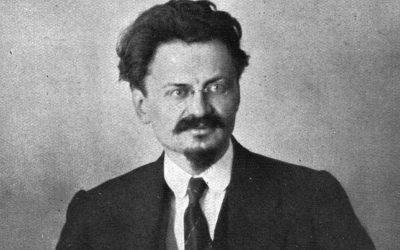
Leon Trotsky’s name is synonymous with the 20th-century socialist and communist movements, and his role in the tumultuous events of Russia’s modern history is unquestioned. As a committed revolutionary, inspiring orator, brilliant strategist, and prolific writer, Trotsky made a lasting mark on world politics. This article delves into the life of Leon Trotsky, his influence on Russian history, and his lasting legacy.
Early life and political awakening
Born Lev Davidovich Bronstein on 7 November 1879, in Ukraine’s Kherson Province, Trotsky came from a family of prosperous Jewish farmers. He received a secular education that exposed him to European intellectual ideas. At 17, he moved to Odessa to complete his education and quickly became involved in underground radical political activities.
His eventful life as a political activist began in earnest after being introduced to Marxism in late 1896. He subsequently joined the Russian Social Democratic Labor Party (RSDLP) upon its creation in 1898. Arrested multiple times for agitating against imperial rule and promoting Marxist ideas, he would adopt the name ‘Trotsky’ during one of several periods in exile.
Role in the Bolshevik Revolution
Trotsky played a vital role in supporting Vladimir Lenin and his Bolsheviks during the Russian Revolution of 1917. As chairman of the Petrograd Soviet (a council of workers’ and soldiers’ deputies), Trotsky was instrumental in organising the unprecedented seizure of power by Russia’s working class.

Following the revolution’s success, Trotsky became Commissar for Foreign Affairs for Lenin’s newly formed government. In this role, he took part in negotiations for the Treaty of Brest-Litovsk between Russia and Germany during World War I. Renowned for his steadfast resolve to establish peace at any cost while staying true to socialist principles, Trotsky played a crucial part in determining Russia’s future.
Founding of the Red Army
As the newly formed Soviet government faced internal and external threats, it had to create an organised military force – the Red Army. As its first commander, Trotsky displayed uncanny organisational skills and ruthlessness during the ensuing civil war. The Red Army ultimately claimed victory over counter-revolutionary forces and foreign interventionists while simultaneously expanding Soviet territory.
Fallout with Stalin
Following Lenin’s death in 1924, a power struggle within the Communist Party ensued. The once-close relationship between Trotsky and Joseph Stalin eroded, with Trotsky being increasingly sidelined by Stalin’s gradual consolidation of power. His relentless criticism of Stalin’s policies led to his eventual expulsion from the Communist Party in 1927 and subsequent exile from the Soviet Union in 1929.
Life in exile and assassination
Trotsky continued his fight against Stalin in exile by writing numerous articles and books detailing his disagreements with the Soviet government’s direction. He settled in Mexico and continued to write extensively while attempting to build a global opposition to Stalinism. On 20 August 1940, Trotsky was assassinated by an agent of the Soviet secret police on Stalin’s orders.
Legacy
As one of socialism’s most important figures, Leon Trotsky continues to influence current political thought with his unwavering dedication to revolutionary change, internationalism, and workers’ rights. Though he never achieved ultimate power within the Soviet Union, his life stands as a testament to his passionate struggle for a vision of society driven by egalitarian values.


Leave a Reply