• Skip to main content
  • Skip to after header navigation
  • Skip to site footer
Our history archive

Our History

Documenting world history and civil rights

General

  • About
  • Cookies and your privacy
  • Privacy policy
  • Contact

Categories

  • Home
  • Colonisation
  • World History
  • Civil Rights
  • World cultures
  • Features
  • Wellbeing
  • Popular Culture
  • Home
  • Colonisation
  • World History
  • Civil Rights
  • World cultures
  • Features
  • Wellbeing
  • Popular Culture

What is Commonwealth Day?

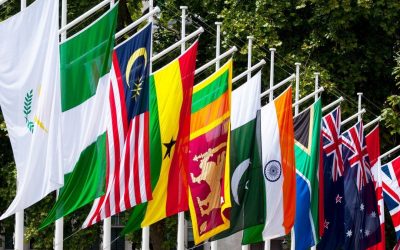
Commonwealth flags
Features
13 March, 2023

Commonwealth Day is an annual celebration that takes place on the second Monday of March. It is an event to celebrate the values, diversity and achievements of the Commonwealth, which comprises over 50 countries with a combined population of 2.4 billion. 

Commonwealth Day provides an opportunity to recognise the power of community, inclusivity and friendship. It is also a chance to reflect on the rich culture, natural beauty and thriving democracies of the Commonwealth. Through holding events and discussing and sharing news and stories, Commonwealth Day aims to strengthen the bond between the Commonwealth nations and people for a better future.

What is the Commonwealth?

The Commonwealth is a unique organisation. Over 50 independent and equal countries work together towards shared goals of democracy, development, and peace. Established in 1949, its members span six continents. They are incredibly diverse, ranging from small island nations to some of the largest countries in the world. The Commonwealth is committed to promoting values such as human rights, gender equality, and the rule of law, as well as tackling issues such as climate change and poverty. Through this organisation, countries can work together to address global challenges and make a positive impact on the world stage.


One of the key characteristics of the Commonwealth is its inclusivity. While most members are former British colonies, any independent country can join as long as it adheres to the values and principles of the organisation. In recent years, several countries have joined the Commonwealth without any historical ties to the British Empire, such as Rwanda and Mozambique. 

History of the Commonwealth

The Commonwealth has its roots in the British Empire, with the first-ever commonwealth conference taking place in London in 1926. The idea was to create a network of equal and free states, which were previously under British rule, promoting mutual cooperation, democracy, and trade. In 1931, the British Commonwealth of Nations was officially established, marking a significant moment in the history of the Commonwealth. 

The idea of creating an organisation that could bring together former colonies and other countries with a history and common goals was first proposed in 1947. The London Declaration of that year formally established the Commonwealth. Since then, it has grown and evolved to become more diverse and inclusive as many countries gained independence from the British Empire. While the Commonwealth has evolved, its commitment to promoting democracy, human rights, and shared values has remained constant.

Share this:

  • Share on Facebook (Opens in new window) Facebook
  • Share on X (Opens in new window) X
  • Share on Reddit (Opens in new window) Reddit
  • Share on Pinterest (Opens in new window) Pinterest
  • Share on WhatsApp (Opens in new window) WhatsApp

Related

You May Also Like…

Martin Robison Delany

Martin Robison Delany

Black History Month: Standing in Power and Pride 2025

Standing firm in power and pride: Eight Black people who shaped history

Official portrait of Captain James Cook

Captain James Cook: Master navigator and Pacific explorer

Phyllis Coard: Architect of women's liberation in revolutionary Grenada

Phyllis Coard: Architect of women’s liberation in revolutionary Grenada


Reader Interactions

Leave a ReplyCancel reply

Sidebar

This Day In History

No Events

Martin Robison Delany

Martin Robison Delany

Black History Month: Standing in Power and Pride 2025

Standing firm in power and pride: Eight Black people who shaped history

Official portrait of Captain James Cook

Captain James Cook: Master navigator and Pacific explorer

Trending

  • UK race riots - The murder of Charles Wotten
    UK race riots - The murder of Charles Wotten
  • Understanding Sharia Law: Principles, practice, and global context
    Understanding Sharia Law: Principles, practice, and global context
  • What are British values?
    What are British values?
  • McCarthyism and the Cold War: America's Second Red Scare
    McCarthyism and the Cold War: America's Second Red Scare
  • Women's suffrage movement in Britain
    Women's suffrage movement in Britain
  • This John Hanson was not the first Black President of the United States
    This John Hanson was not the first Black President of the United States
  • Queen Amina of Zaria: The legendary warrior queen of West Africa
    Queen Amina of Zaria: The legendary warrior queen of West Africa
  • The colonisation of India
    The colonisation of India
  • Five countries that colonised the world
    Five countries that colonised the world
  • The Crimean War: A pivotal conflict in world history
    The Crimean War: A pivotal conflict in world history

Connect

  • YouTube
  • TikTok
  • Bluesky
  • About
  • Cookies and your privacy
  • Privacy policy
  • Contact

Copyright © 2026 · Our History · All Rights Reserved