
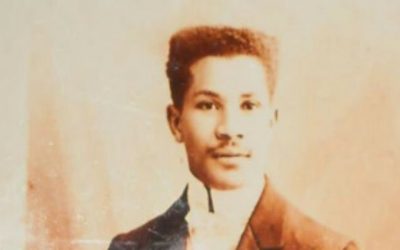
Not many will know of Joseph Philippe Lemercier Laroche, who is notable for being the only black man to have died on the Titanic.
Joseph Philippe Lemercier Laroche was born in Cap Haitien, Haiti, on 26 May 1886.
Laroche descended directly from Haitian royalty. Jean-Jacques Dessalines, one of the major leaders of the Haitian Revolution (1791-1804), is an ancestor. At the time of the sinking of the Titanic, Joseph Laroche’s uncle, Dessalines Cincinnatus Leconte, was the president of Haiti
In 1901, at age 15, he was sent to France to be educated, as so many of the young men of the black upper classes were accustomed. He travelled to Beauvais, France, where he hoped to join the high school to study engineering.
While visiting nearby Villejuif, Joseph met Miss Juliette Lafargue. After Joseph graduated and got his degree, he and Juliette were married in March 1908. Their daughter Simonne was born on 19 February 1909; a second daughter, Louise, was born prematurely on 2 July 1910 and suffered many subsequent medical problems.
Despite his degree and being a cultured gentleman who spoke English and French fluently, Joseph couldn’t find a job because of his colour. Since the family needed more money to cope with Louise’s medical bills, Joseph decided to return to Haiti to find a better-paying engineering job, and the move was planned for 1913.
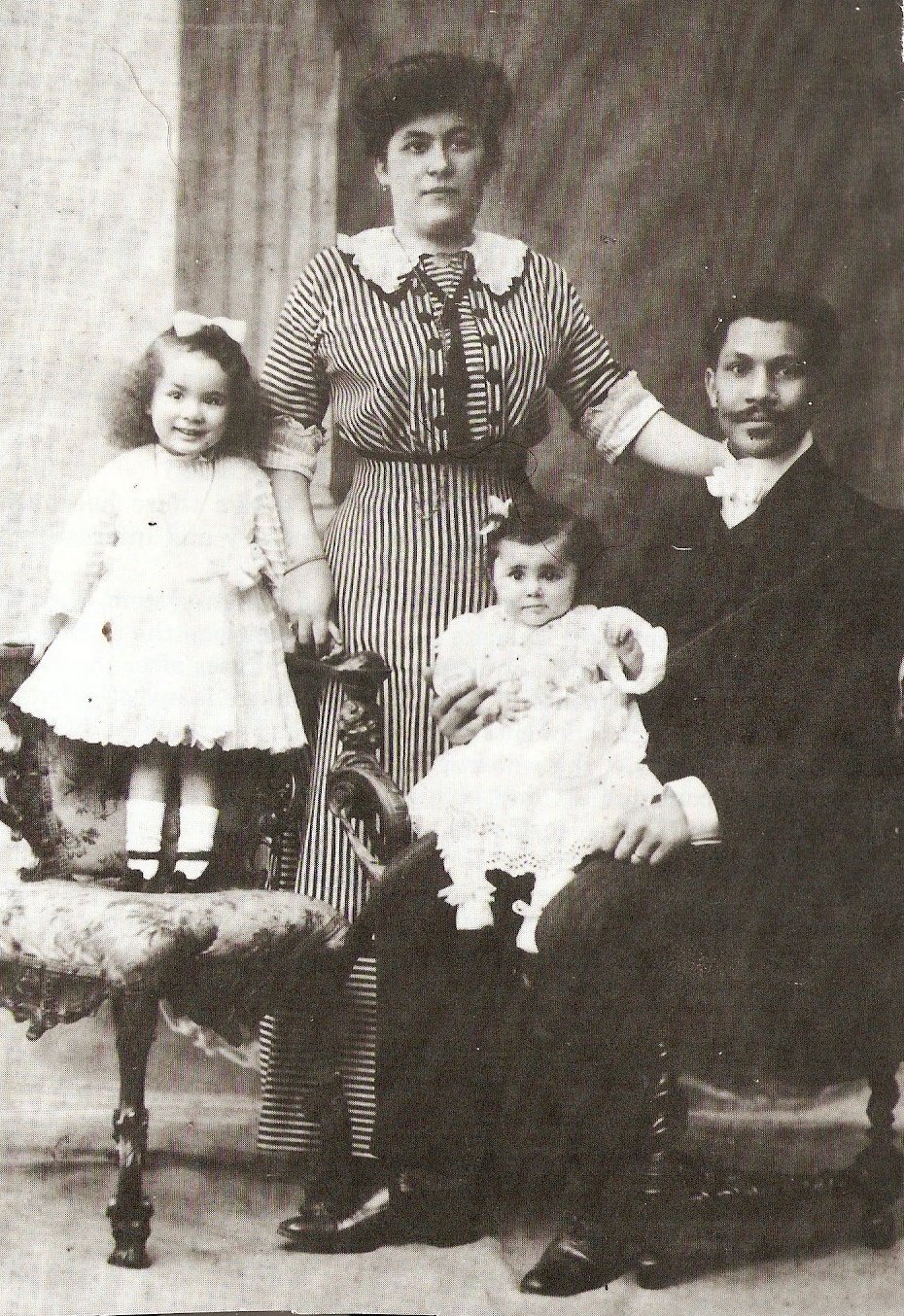
On April 10, the Laroche family took the train from Paris to Cherbourg in order to board the brand new liner later that evening.
Decked out with décor that ranged from Italian Renaissance to Georgian, the Titanic was the largest and most lavish ship built prior to that date.
The first-class passengers were a collective of some of the richest people in the world, the creme de la creme of Anglo-American society who flaunted their wealth prominently. The second-class passengers were middle-class business leaders and managers of the community, and third-class passengers (steerage) were primarily English, Irish and Middle Eastern immigrants in search of a better life in America.
Whilst the Laroche family did not have first-class reservations, Laroche made it quite clear that his family was second-class to no one. Their lounge was a large, spacious room with panelling in sycamore and was comparable to first-class accommodations on other sea liners of the day. The couple also shared many of the things enjoyed by the first-class passengers, including dining in the same saloon and socialising with some of their fellow passengers.
Their second-class tickets, however, did not shield them from the stares and the racial insults of being the only multiracial family in a sea of upper-class whiteness and scorn, even from the crew, who saw them as below them despite their obvious gentility. Nevertheless, the Laroche’s enjoyed their mini-vacation aboard the liner. They were young, in love and Joseph was anticipating the birth of a son who would be his namesake and who would be raised in his homeland. It was a relief to know that his family would be entitled to a good life in Haiti, void of the racism, poverty and uncertain future that had plagued him in France.
However, on Sunday, the unspeakable horror that became known as the most tragic event in maritime history unfolded.
After a hearty breakfast, the Laroche’s attended church services. Other passengers relaxed in the steamy Turkish Bath (sauna), some strolled on the decks or sipped coffee and expensive teas in the Cafe Parisien, while the gentlemen enjoyed fine wine and cigars in the smoking room and had an altogether wonderful day on the sea liner.
It was nearly midnight when Joseph woke Juliette and told her that the ship had suffered an accident. He put all of their valuables in his pockets, and he and his wife carried their sleeping daughters to the ship’s deck, only to find that the ship had just sixteen lifeboats and four collapsible boats ready instead of the expected sixty-four for the number of people on board. Worst still, the crew had never gone through a lifeboat procedure and were panicked.
Despite the pandemonium around him, Laroche’s – knowing it was the last time he would see his family – remained calm and managed somehow to put his wife and daughters into a lifeboat after the Captain had ordered, “Women and children only.”
Surrounded by wailing widows and floating bodies, Juliette Laroche pressed her daughters to her bosom to give them warmth while her own feet became blue and frozen.
Finally, six hours later, the boat Carpathia rescued the Titanic survivors and took them to safety in New York. Almost half of the bodies of the victims were later recovered, but the body of Joseph Laroche was never found. Pregnant and destitute, Juliette returned to France. Eight months later, Joseph Lemercier Laroche Jr entered the world bearing a striking resemblance to his handsome father, but then the First World War erupted in Europe. It ruined the winery and thrust the entire family into poverty.
Juliette sued the White Star Line for damages and, in 1918 – six years after the death of her husband – was awarded 150,000 francs (about $22,119 – the equivalent of close to $300,000 today). She used her settlement to open a fabric-dyeing business.

Although she was now able to support her family, the Titanic tragedy scarred Juliette for life. Her love for her lost husband never waned. She never remarried and remained in silent fear of losing any more of her family. Of her children, only her son married and had two sons and a daughter.
In 1980, Juliette Laroche – who was by this time paralysed on the right side – died sixty-eight years after the death of her husband. She is buried in a grave bearing a tombstone which reads ‘Juliette Laroche, 1889-1980, wife of Joseph Laroche, lost at sea RMS Titanic, April 15th, 1912’.
Joseph Laroche Jr died in 1987, but his wife and his sister Louise lived together in the family home until January 1998, when Louise died. The Laroche grandchildren – who still live in Paris – have held steadfast to the family tradition of never discussing the Titanic disaster.
In 1998, Louise Laroche (right) was present when the Titanic Historical Society dedicated a stone marker in Cherbourg commemorating the Titanic passengers who sailed from its port. She died that very same year at the age of 87. There is no evidence that any of the younger Laroche’s ever travelled to Haiti or ever heard from their Haitian relatives again. Hardly known among the general public, their existence has always been known by a handful of Titanic historians but not talked about. Until now.


