• Skip to main content
  • Skip to after header navigation
  • Skip to site footer
Our history archive

Our History

Our History Archive, where history comes to life

  • Home
  • Colonisation
  • World History
  • Civil Rights
  • World cultures
  • Features
  • Wellbeing
  • Popular Culture

The Rodney King Story

Features
29 April, 2012

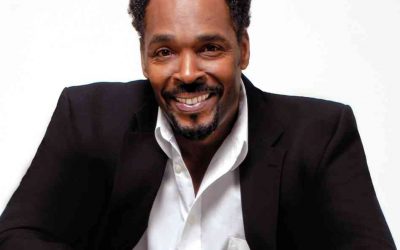
Rodney Glen King, born on 2 April 1965 in Sacramento, California, became an unintentional symbol of racial tension and police brutality in the United States after his violent arrest in 1991. The brutal incident set off a chain of events culminating in the 1992 Los Angeles riots.

On 3 March 1991, King was driving while intoxicated when Los Angeles Police Department (LAPD) officers began pursuing him. After initially evading arrest, King was confronted by four LAPD officers who proceeded to beat him relentlessly with their batons. George Holliday, an uninvolved bystander watching from a nearby balcony, captured the entire brutal episode on video.

The graphic footage showed seven LAPD officers surrounding King. Several officers repeatedly beat a helpless King with their batons while the other officers stood by watching without stopping the beating.


The footage went public after Holliday sent it to the local news station KTLA. News outlets around the globe quickly circulated the video of King’s assault, inciting an international outcry over racially charged police brutality. There was increased tension between the local black community and the LAPD and anger over police brutality, racism and social inequalities in Los Angeles.
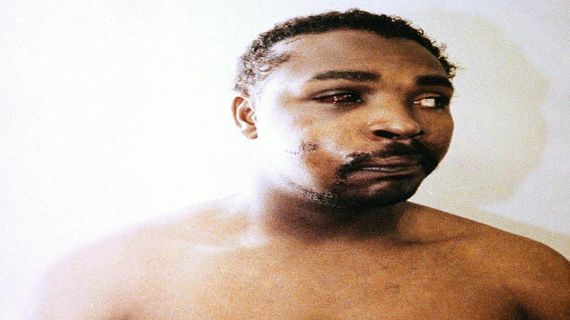
In the aftermath of the incident, LAPD Chief Daryl Gates disciplined the four officers involved for excessive use of force and laid criminal charges against three of them. The department initially pressed charges against King for “felony evading” but later dropped that charge.

During his release from jail, King appeared in a wheelchair to address reporters. His broken leg was encased in a cast, his face showing deep cuts and swellings due to billy club blows; bruises all over his body made clear his ordeal.


After a trial marked by heated controversies, three out of four LAPD officers accused were acquitted; meanwhile, the jury could not reach a verdict on one charge for the fourth officer. This result sparked widespread outrage amongst minority communities in Los Angeles that had long encountered racial discrimination and social inequalities. The simmering resentment boiled over into widespread riots that lasted nearly six days.

The Los Angeles Riots in 1992, triggered by the unjust treatment of Rodney King and deeper racial issues, resulted in 63 deaths, over 2,000 injuries, and the incineration of nearly a billion dollars in properties across the city. The terrible events surrounding Rodney King’s arrest brought to national attention the urgent need to address racial prejudice and reform police actions in America.

On 17 June 2012, Rodney King died. The coroner said King had been drinking and was on drugs when he plunged into a swimming pool and accidentally drowned.

Share this:

  • Share on Facebook (Opens in new window) Facebook
  • Share on X (Opens in new window) X
  • Share on Reddit (Opens in new window) Reddit
  • Share on Pinterest (Opens in new window) Pinterest
  • Share on WhatsApp (Opens in new window) WhatsApp


Related

You May Also Like…

More details Jesse Jackson surrounded by marchers carrying signs advocating support for the Hawkins-Humphrey Bill for full employment,

Keep hope alive: The rise, power, and legacy of Jesse Jackson

The revolutionary icon: Ernesto "Che" Guevara

Ernesto “Che” Guevara: : The revolutionary icon

Portrait of Bartolomé de Las Casas (c.1484 - 1566)

Bartolomé de las Casas and the birth of human rights

William Randolph Hearst

William Randolph Hearst: The king of Yellow Journalism


Sidebar

This Day In History

Events in History
On this day in 1863 The Battle of Gettysburg started.
On this day in 1867 Canada gained independence from the British.
On this day in 1960 Italian Somaliland gained independence and merged with British Somaliland to become the United Republic of Somalia.
On this day in 1962 Rwanda gained independence from Belgium.
On this day in 1962 Burundi gained independence from Belgium.
On this day in 1962 On 1 July 1962, the Commonwealth Immigrants Act came into effect, ending the automatic right of people of the British Commonwealth and Colonies to settle in the United Kingdom.
On this day in 1994 International Reggae Day was founded by Andrea Davis to celebrate reggae music’s impact and promote its cultural significance.
More details Jesse Jackson surrounded by marchers carrying signs advocating support for the Hawkins-Humphrey Bill for full employment,

Keep hope alive: The rise, power, and legacy of Jesse Jackson

The revolutionary icon: Ernesto "Che" Guevara

Ernesto “Che” Guevara: : The revolutionary icon

Portrait of Bartolomé de Las Casas (c.1484 - 1566)

Bartolomé de las Casas and the birth of human rights

Trending

  • What are British values?
    What are British values?
  • The British Empire: An overview of empire and colonisation
    The British Empire: An overview of empire and colonisation
  • The history of South Africa: From colonisation to independence
    The history of South Africa: From colonisation to independence
  • Five countries that colonised the world
    Five countries that colonised the world
  • International Reggae Day: Celebrating the rhythm of Jamaica
    International Reggae Day: Celebrating the rhythm of Jamaica
  • Claimed benefits of the British Empire
    Claimed benefits of the British Empire
  • Ten dark moments in colonial history
    Ten dark moments in colonial history
  • Unforgettable legacy: The life, music, and impact of Nat King Cole
    Unforgettable legacy: The life, music, and impact of Nat King Cole
  • Ernesto "Che" Guevara: : The revolutionary icon
    Ernesto "Che" Guevara: : The revolutionary icon
  • What's the meaning of each one teach one?
    What's the meaning of each one teach one?

Connect

  • YouTube
  • TikTok
  • Bluesky

ABOUT

CONTACT

PRIVACY POLICY

COOKIES

Copyright © 2026 · Our History · All Rights Reserved