• Skip to main content
  • Skip to after header navigation
  • Skip to site footer
Our history archive

Our History

Documenting world history and civil rights

General

  • About
  • Cookies and your privacy
  • Privacy policy
  • Contact

Categories

  • Home
  • Colonisation
  • World History
  • Civil Rights
  • World cultures
  • Features
  • Wellbeing
  • Popular Culture
  • Home
  • Colonisation
  • World History
  • Civil Rights
  • World cultures
  • Features
  • Wellbeing
  • Popular Culture

Norman Washington Manley – 1893-1969

Norman Manley Jamaican president
Features
5 March, 1999

Norman Washington Manley is one of Jamaica’s National heroes. Born in Roxborough, Manchester, on 4 July 1893,  he was the son of Margaret and Thomas Albert Manley who were both mixed race. He was well educated, attending high school, before going to Jamaica College. He made headlines as an outstanding athlete, as well as excelling in his studies.

Norman Manley studied in the UK

Following his mother’s death in 1913, Manley and two siblings travelled to the UK to continue their studies. Despite being orphaned at 16, Manley earned a Rhodes Scholarship to study at Jesus College at the University of Oxford where he earned a Bachelor of Civil Law with First Class Honours.

Manley arrived in the UK shortly after World War I had begun. He served in the Royal Field Artillery during World War I, and was awarded the Military Medal (M.M.) for “acts of gallantry and devotion to duty under fire”.
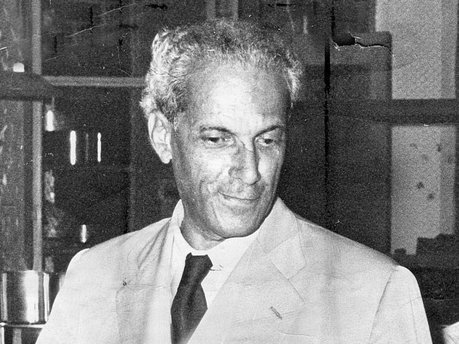


Norman Washington Manley

After the war, Manley was admitted to the bar in England in 1921, and returned to Jamaica in 1922, continuing to practise law as a barrister.

Manley and politics

Manley founded Jamaica Welfare in 1937 which gave a huge boost to the education and training opportunities for the people of Jamaica. As president of the PNP, Norman Manley fought for Universal Adult Suffrage. Together with his cousin Alexander Bustamante, their efforts resulted in the New Constitution of 1944 granting full Adult Suffrage. Through the PNP, he became a representative for Jamaica in the Federation of the West Indies, a group of nations joined in an attempt to right some common problems.

Norman Manley led the unprecedented movement to allow the people of Jamaica to vote on whether or not to remain in the federation. Once the people voted to leave the Federation, Norman Manley led the movement to draft a constitution so that Jamaica could become independent. He headed the committee that negotiated Jamaica’s independence from Great Britain. Once independence came, Norman Manley lost in the election to Bustamante of the Jamaica Labor Party, for the seat of prime minister. 

Norman Manley was married to Edna Swithenbank. He is the father of Douglas and Michael Manley (who later became a Prime Minister of Jamaica).


Manley died on 2 September 1969.

Share this:

  • Click to share on Facebook (Opens in new window) Facebook
  • Click to share on X (Opens in new window) X
  • Click to share on Reddit (Opens in new window) Reddit
  • Click to share on Pinterest (Opens in new window) Pinterest
  • Click to share on WhatsApp (Opens in new window) WhatsApp

Related

You May Also Like…

Black History Month: Standing in Power and Pride 2025

Standing firm in power and pride: Eight Black people who shaped history

Official portrait of Captain James Cook

Captain James Cook: Master navigator and Pacific explorer

Phyllis Coard: Architect of women's liberation in revolutionary Grenada

Phyllis Coard: Architect of women’s liberation in revolutionary Grenada

Statue of Yaa Asantewaa

The history of Nana Yaa Asantewaa: The lion-hearted queen mother


Reader Interactions

Leave a ReplyCancel reply

Sidebar

This Day In History

Events in History
On this day in 1831 On 27 December 1831, the Christmas Rebellion instigated by Samuel Sharpe began at the Kensington Estate in St James, Jamaica.
Person
On this day in 1822 French chemist and microbiologist Louis Pasteur was born.
Black History Month: Standing in Power and Pride 2025

Standing firm in power and pride: Eight Black people who shaped history

Official portrait of Captain James Cook

Captain James Cook: Master navigator and Pacific explorer

Phyllis Coard: Architect of women's liberation in revolutionary Grenada

Phyllis Coard: Architect of women’s liberation in revolutionary Grenada

Trending

  • Understanding Sharia Law: Principles, practice, and global context
    Understanding Sharia Law: Principles, practice, and global context
  • Holy Wars: The blood-soaked legacy of conflicts fought in the name of Christianity
    Holy Wars: The blood-soaked legacy of conflicts fought in the name of Christianity
  • The history of New Year celebrations: A journey through time
    The history of New Year celebrations: A journey through time
  • History of Comoros: From colonisation to independence
    History of Comoros: From colonisation to independence
  • The meaning of "Semite"
    The meaning of "Semite"
  • Genghis Khan: The making of the Mongol Empire
    Genghis Khan: The making of the Mongol Empire
  • The Moors: A confluence of Arab and Berber heritage
    The Moors: A confluence of Arab and Berber heritage
  • Vladimir Lenin: The revolutionary leader who shaped a nation
    Vladimir Lenin: The revolutionary leader who shaped a nation
  • The Albigensian Crusade: Christians killing Christians (1209-1229)
    The Albigensian Crusade: Christians killing Christians (1209-1229)
  • History of Canada - From colonisation to independence
    History of Canada - From colonisation to independence

Connect

  • YouTube
  • TikTok
  • Bluesky
  • About
  • Cookies and your privacy
  • Privacy policy
  • Contact

Copyright © 2025 · Our History · All Rights Reserved